


Related news
How to Choose a Fastener Surface Finish for Indoor Outdoor and Corrosive Jobs
Choose a fastener surface finish from the service environment and the product specification, not from colour alone. Start with indoor, outdoor, coastal or chemical exposure; then match the base material, installation method, appearance requirement and agreed corrosion test. Qinjia supplies zinc-plated, blued, phosphated and anti-rust finish options across different metal fastener families, subject to the exact product and order.
The finish is only one part of the result. A coating cannot correct the wrong fastener diameter, damaged threads, poor storage or an application that exceeds the stated conditions. The buyer and supplier should record the finish, test method and intended exposure on the same drawing.
1. Describe the Exposure Before Picking a Coating
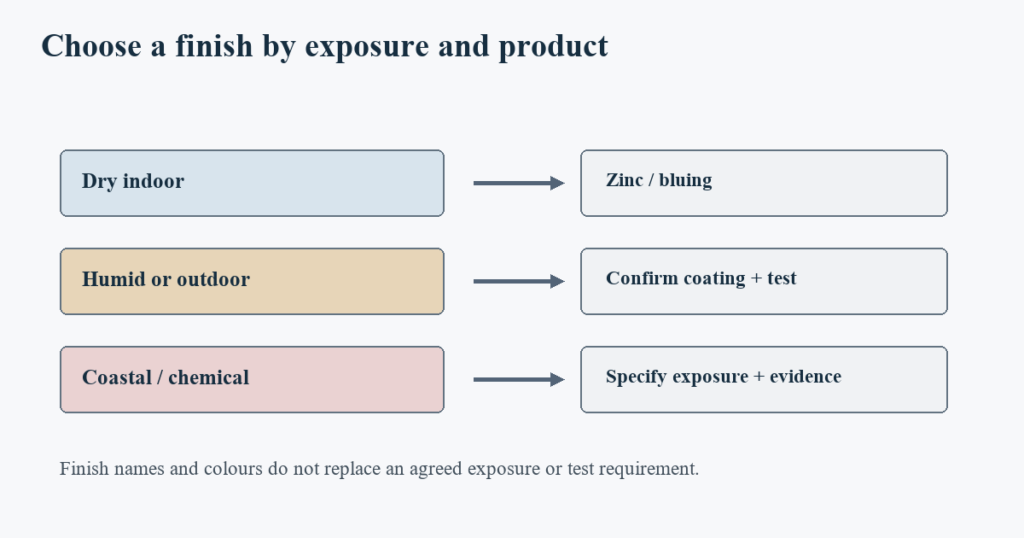
“Indoor” covers more than one environment. A dry office, a humid workshop, a bathroom and a warehouse near the sea place different demands on steel. Add cleaning chemicals, condensation, road salt, fertilizer, treated timber or direct rain when they are part of the job.
For a concealed indoor partition, appearance may be secondary to thread drive and clean seating. For an exposed cable fixing or a metal-to-concrete connection outdoors, corrosion control and inspection records deserve more attention. A distributor who writes the environment clearly can compare quotations on the same basis.
Separate appearance from corrosion requirements
Black, silver or blue describes what the part looks like. It does not define coating chemistry, thickness or service life. Ask for the finish name, base material, any undercoat or topcoat, and the test or documentation required for the lot.
2. Understand the Finish Options in the Qinjia Range
Qinjia’s supplied product information lists zinc plating, bluing, phosphating and anti-rust coatings as available options, depending on the fastener family. Those names are useful starting points, but the exact process and availability belong on the quotation.
Zinc plating is a common choice when a cleaner appearance and added protection are needed for indoor or controlled environments. Record whether the order calls for a particular zinc colour or post-treatment. Do not describe every zinc-plated item as suitable for exterior exposure without an agreed requirement.
Bluing can give a dark appearance and is used on some fasteners where a black finish is wanted. The buyer still needs to state the exposure and storage conditions. A dark colour is not a substitute for a corrosion test.
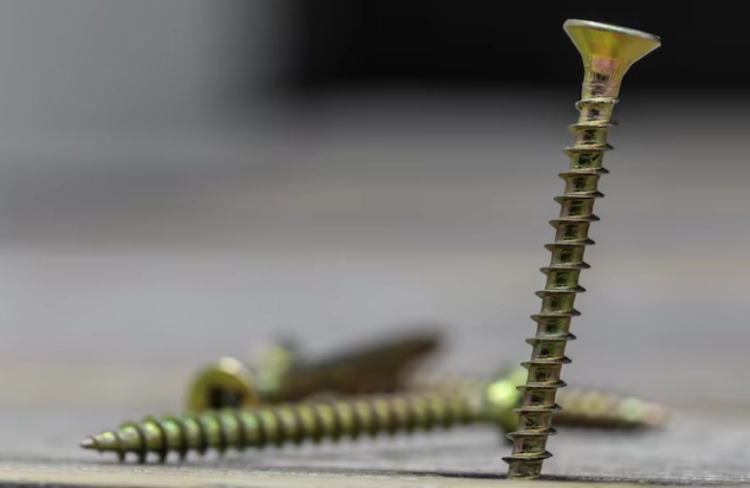
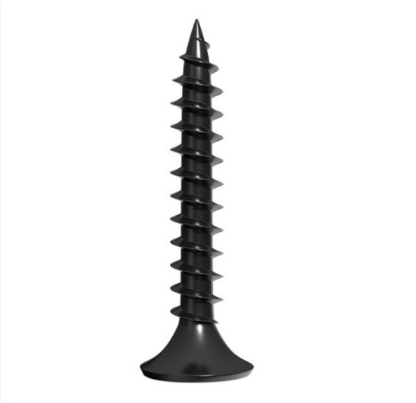
Phosphating is used on some screw products and can support a specified finish or paint-related requirement. Qinjia lists black-phosphated options for drywall screws. The selected screw must still match the board, framing material, point, thread and head required by the assembly.
Anti-rust coating is a broad description. Ask what coating is applied, to which product, and how it is checked. If the fastener is exposed to water, salt or chemicals, put the acceptance condition in the order instead of relying on the phrase “anti-rust.”
The Qinjia drywall screw product page lists black phosphated and zinc-plated surfaces alongside different diameters, lengths and thread choices. The finish should therefore be reviewed together with the screw configuration, not selected as an isolated catalogue filter.
3. Match Finish to the Fastener and Installation
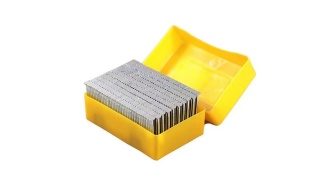
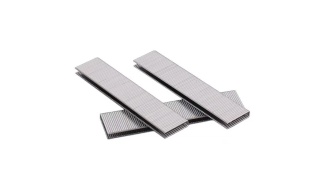
A finish that looks right can still affect driving. Check the point, thread, head, drive recess and tool settings after coating. For a drywall screw, the head must seat without tearing the board face. For a staple, coating and wire section must not prevent the strip feeding or the crown seating. For a concrete nail, the finish must not be used to hide a hardness or point problem.
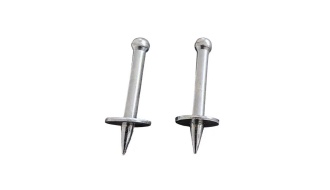
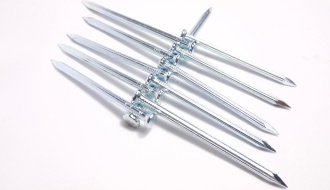
Qinjia’s concrete nail category describes high-carbon, heat-treated nails with zinc plating, bluing or phosphating options. The application includes concrete and brick walls, wood-to-concrete connections and indoor or outdoor use depending on the selected treatment. Confirm the exact finish and environment for the model you are ordering.
Check contact with other materials
Consider the fastener, the substrate and nearby metals together. Moisture trapped between dissimilar materials can create a problem even when the fastener itself has a coating. If the fastener touches treated wood, a metal frame or a wet masonry surface, ask for the supplier’s application guidance and any required test evidence.
4. Turn “Corrosion Resistance” Into a Checkable Requirement
Write the test method, exposure time, sample preparation and acceptance rule when a corrosion test is needed. A salt-spray result without the finish name or lot reference is hard to use. A visual inspection can find rust, bare spots, peeling or contamination, but it does not replace an agreed test when the project requires one.
Qinjia’s quality information supports hardness, salt-spray, dimension and appearance checks as needed, and allows third-party inspection such as SGS or BV when agreed. Put the request in the purchase specification before production. The same report should identify the material, finish, lot and sample.
Do not promise a fixed outdoor lifetime unless the product has been tested for the stated exposure. Weather, salt, temperature, storage and installation damage all change the result. A careful supplier will describe the finish and evidence rather than use an unlimited “rustproof” claim.
5. Review Finish Quality at Incoming and Final Inspection
At incoming inspection, compare the finish name and material document with the purchase order. During production, check coverage, colour consistency, burrs and handling damage. At final inspection, look at heads, threads, points, cut ends and collated strips. Hold pieces with bare patches, heavy rust, peeling or contamination.
Use an approved sample for colour and surface comparison when appearance matters to a retail customer. Store finished cartons dry and protected from condensation. A correct coating can still be damaged by wet packaging or abrasion during transport.
Record the finish in the box label and inspection report. Qinjia supports small boxes, plastic wrap, bulk packing and OEM packaging; choose the format that protects the selected surface and keeps the lot identifiable.
6. Order the Complete Finish Specification
An enquiry should list:
- Fastener family, diameter, length, point, head, thread or crown.
- Base material and heat treatment where applicable.
- Finish name, colour or appearance requirement, and exposure.
- Corrosion or appearance test, sampling and acceptance rule.
- Packaging, label, quantity and required inspection documents.
Use the OEM and ODM service to review a sample when a new finish, private label or mixed product order is involved. Send the environment, drawing and target quantity through the Qinjia contact page so the quotation refers to a defined item.
Frequently Asked Questions
What is the best fastener surface finish for outdoor use?
There is no single answer for every outdoor job. State the moisture, salt, chemicals, substrate and appearance requirement, then agree the finish and any corrosion test with the supplier. Installation damage and storage also affect the result.
Are black phosphate screws suitable for every exterior project?
No. Black phosphate is a finish option used on some screw products, including Qinjia drywall screws. Confirm the product’s intended environment and the required evidence before using it outdoors.
Is zinc plating enough for a coastal application?
Do not assume it is. Coastal exposure adds salt and persistent moisture. Ask for the exact coating, material, test method and acceptance requirement for the application.
Does a thicker coating always make a better fastener?
Not automatically. Coating thickness can affect dimensions, thread engagement and tool performance. The finish must fit the fastener design and the approved assembly.
For a matched recommendation, send Qinjia the substrate, exposure, fastener dimensions and quantity. The finish can then be reviewed with the complete part and inspection plan.

 Consult
 Whatsapp
 Leave Message
 top
top