


Related news
What Screw Finish Works Best for Indoor Outdoor and Corrosive Environments
Selecting Self-Tapping Screws by color alone often leads to the wrong result. A black, silver, or yellow surface does not show whether a screw suits a dry partition, a humid room, sheltered outdoor work, or salt-bearing air. Start with the base material and joint, then confirm the thread, point, head, length, and finish.
Qinjia manufactures construction and woodworking fasteners for different substrate connections. Its drywall screw and chipboard screw ranges offer several thread, point, head, and finish options. Buyers should therefore treat self-tapping screws as a complete specification rather than selecting a coating in isolation.
Why Does Screw Finish Matter in Different Environments?
The finish is the first barrier between the steel body and moisture, salt, or chemicals. The correct finish depends on the joint and its exposure.
Finish Protection Against Moisture, Salt, and Chemical Exposure
Dry indoor air, condensation, direct rain, coastal salt, and industrial cleaners create different conditions. An interior drywall finish should not automatically be specified for an exposed joint.
For buyers searching for the best screw finish for outdoor use, the key questions are whether the joint is sheltered, whether water can drain, whether the head remains exposed, and whether salt or chemicals are present.
Installation Performance and Long-Term Maintenance Cost
Finish can be damaged by an unsuitable driver bit, excessive torque, or repeated tool slip. Corrosion often begins at the damaged recess or head edge. Driver fit, material hardness, point geometry, and tool setting therefore matter alongside the coating.
Maintenance cost also includes stained boards and labor to reopen completed work.
Protection Matched to Actual Exposure
The goal is to match protection to the real environment without over-specifying every order.
| Environment | Practical Finish Direction | What to Confirm |
|---|---|---|
| Dry interior | Phosphate or suitable indoor finish | No regular condensation |
| Humid interior | Zinc-plated or specified protective finish | Ventilation and head exposure |
| Sheltered outdoor | Project-specified coated finish | Drainage and intermittent wetting |
| Direct outdoor | Tested protective coating system | Rain and installation damage |
| Coastal or chemical | Finish approved to agreed criteria | Salt, chemicals, and test method |
Which Screw Finish Is Suitable for Dry Indoor Applications?
Identify the indoor substrate and moisture risk before choosing the finish.
Black or Grey Phosphate for Drywall Systems
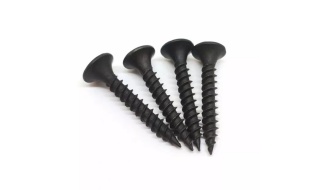
Black or grey phosphate is commonly used for protected drywall work where regular moisture is not expected.
Qinjia’s Drywall screw range uses 1022A material and covers #6, #7, #8, and #10 sizes, corresponding to M3.5, M3.9, M4.2, and M4.8. Lengths range from 13 to 152 mm. Threads include coarse single thread, fine twinfast thread, and Hi-Low thread.
Zinc-Plated Finishes for General Indoor Humidity
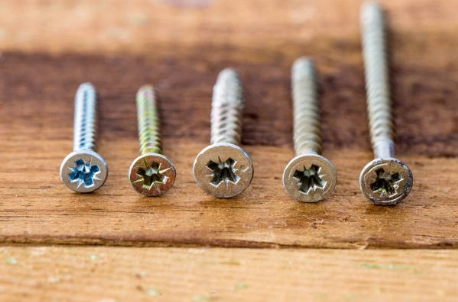
Zinc plated screws for indoor use may suit areas with occasional humidity, handling exposure, or visible fastener heads. Qinjia lists clear, white, and yellow zinc-plated finishes for its drywall and chipboard screws.
Zinc plating is not automatically an outdoor specification. Confirm condensation risk, head exposure, and possible coating damage during driving.
Qinjia Drywall Screws for Wood and Light-Steel Studs
Finish cannot correct a thread mismatch. Coarse threads are normally selected for wood studs, while fine threads are better suited to light-steel framing.
For drywall screws for metal studs, Qinjia offers fine thread configurations, sharp points, and Phillips, Torx, or Square recesses. The published drill-capacity range covers steel plate thickness from 0.5 to 1.2 mm. The actual stud gauge, board stack, driver speed, and head seating should still be checked during a trial.
What Finish Should You Choose for Outdoor and Corrosive Environments?
Outdoor selection should begin with exposure severity. Sheltered joints, exposed façades, sea air, and chemical washdown create different risks.
Zinc Plating for Moderate Moisture Exposure
Zinc plating may suit protected locations with moderate moisture, but the application must be defined. Head exposure, wetting frequency, scratches, and contact with other metals can change the result.
For self-tapping screws used in sheltered structures, confirm finish coverage around the recess and thread, surface adhesion, appearance limits, and any agreed corrosion test.
Protective Coatings for Harsher Service Conditions
Qinjia also lists specialized coated finishes for conditions where phosphate or ordinary zinc plating may not provide enough protection.
A corrosion resistant screw coating should be evaluated on the finished fastener. The sample should use the same material, geometry, heat treatment, recess, and coating process planned for production. This helps reveal problems with adhesion, curing, dimensional change, and damage during driving.
Corrosion Risk Without Unnecessary Over-Specification
Divide applications into dry interior, intermittent humidity, sheltered exterior, direct weather exposure, and salt or chemical exposure. Then decide whether the order needs an approved sample, dimensional inspection after coating, salt-spray method, or installation trial.
For screw finish for coastal environments, selection should be based on agreed exposure and test criteria, not finish color or a broad product label.
How Do Base Material, Thread, and Point Change the Right Choice?
A protective finish has little value if the point cannot penetrate, the thread strips the hole, or the head damages the panel.
Drywall Screw Selection for Gypsum, Wood Studs, and Light Steel
For gypsum board, choose the stud material first. Coarse thread suits wood framing, while fine thread is used for light steel. Length must provide enough engagement without unnecessary penetration behind the substrate.
Qinjia drywall screws are available with Bugle, Wafer, Pan Framing, Scavenger, Trim 4 Nibs, and Flat 6 Nibs heads. The head should match the clamping and surface requirement before the finish is selected.
Chipboard Screw Selection for Panel Furniture and Carpentry
For furniture and carpentry, Chipboard screw options should be matched to board density, edge distance, pilot-hole practice, and head position. Qinjia lists M2.5 to M6.0 thread sizes and lengths from 10 to 300 mm, with a 40-degree thread angle. Point options include a sharp point and a Type 17 sharp cutting point.
These details make chipboard screws for panel furniture a more useful selection category than finish color alone. Production boards should be tested for splitting, edge breakout, and consistent head seating.
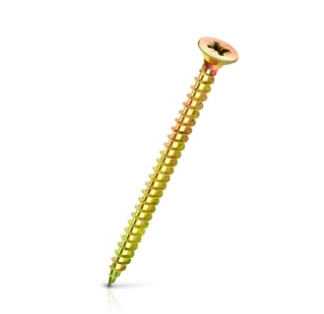
Self-Tapping Screws as a Complete Specification System
A reliable sequence is to confirm the base material, define joint thickness, select diameter and length, choose thread and point, match the head and recess to the tool, and then select the finish.
This prevents a common purchasing error: approving the coating while leaving the head, thread, or point unclear. The delivered self-tapping screws may look correct but perform differently during assembly. Record all features on a drawing or approved sample.
How Can Importers Verify Finish Quality Before Bulk Purchasing?
Bulk procurement needs repeatable acceptance criteria and representative production samples.
Salt Spray, Hardness, Tapping-Speed, and Torque Checks
Qinjia’s service and quality-control process includes Rockwell hardness testing, metallographic inspection, salt-spray testing, screw tapping-speed testing, and handheld torque testing.
For self-tapping screws, one test should not replace another. A screw may pass a corrosion check but break under unsuitable driving conditions, or drive smoothly while the finish is damaged around the recess. Buyers should state which tests apply and how samples will be selected.
Samples, Custom Specifications, and Batch Documentation
Before ordering, provide the substrate, material thickness, joint drawing, driver type, finish, exposure condition, packaging format, and inspection request.
The approved sample should remain linked to the written specification. Repeat orders can then be checked for dimensions, recess formation, thread profile, finish appearance, and driving behavior.
Qinjia Service and Contact Support for Project Matching
Qinjia supports product inquiry, production coordination, inspection, packaging, and logistics. Discuss private-label packaging and mixed specifications before artwork and carton quantities are fixed.
For projects involving uncertain humidity, mixed substrates, panel splitting, driver compatibility, or coating documents, contact Qinjia with the substrate, drawing, exposure condition, required test method, and packaging needs. This allows the team to compare drywall screw and chipboard screw options against the actual joint. It also gives buyers a clearer basis for repeat orders of Self-Tapping Screws.
FAQ
Q: Are black phosphate screws suitable for outdoor use?
A: Black phosphate is mainly used for protected indoor applications such as dry drywall systems. For outdoor exposure, define the rain, salt, and service conditions, then request a coated option and an agreed corrosion test.
Q: Are zinc-plated screws corrosion resistant?
A: Zinc plating provides a protective layer, but suitability depends on exposure severity, coating coverage, installation damage, and service conditions. It should not be assumed to be adequate for direct weather or coastal use without verification.
Q: How should buyers specify Self-Tapping Screws for a bulk order?
A: State the substrate, joint thickness, diameter, length, head, recess, thread, point, finish, test requirement, approved sample, and packaging. This keeps all performance-critical details clear.

 Consult
 Whatsapp
 Leave Message
 top
top