


Related news
Self Tapping Screw Sizes and Pilot Holes Made Simple
Choosing the right Self Tapping Screw Size affects thread bite, surface damage, and head seating. A useful chart should connect diameter, length, thread type, pilot hole, and material.
Qinjia manufactures fasteners for construction, woodworking, furniture, and interior finishing. Its range includes drywall screws, chipboard screws, nails, staples, gas drive pins, and other fasteners. Qinjia Drywall screw and Qinjia Chipboard screw fit gypsum board, studs, panel furniture, wood-based boards, and carpentry projects.
What Does Self Tapping Screw Size Actually Mean?
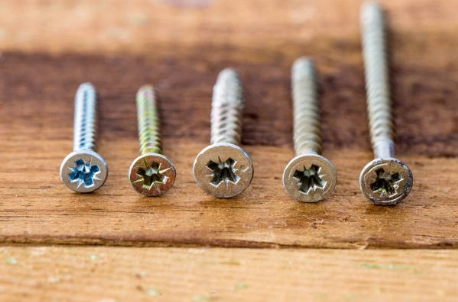
Self tapping screws are screws that form their own thread in the base material as they are screwed in. Care must be taken in selecting the correct size for the substrate, fixing thickness, pilot hole and driver size. A self tapping screw size chart will help in avoiding problems such as weak engagement, high torque and wrong product selection.
Diameter, Length, and Thread Size
The first part of Self Tapping Screw Size is diameter. A larger diameter usually gives stronger thread engagement, but needs more driving force. A short screw may not hold enough material. An overlong screw may pierce the back side.
Thread size locks the screw into the substrate. For Qinjia Drywall screw, provided specifications include M3.5, M3.9, and M4.2, with lengths from 25–75mm. These sizes are used for gypsum board fixing in partition walls and ceiling systems.
Imperial and Metric Size References
Buyers may see #6, #8, #10, M3.5, or M4.2 in different markets. Do not translate the number mechanically. Confirm outside diameter, length, thread type, head style, and application material.
If your team uses a self tapping screw size chart internally, include the size name and measurable dimensions. This reduces mistakes between sales, warehouse, and installation teams.
Length Selection for Different Materials
Length should follow material thickness and required bite depth. For gypsum board fixed to wood studs or light steel studs, the screw must pass through the board and engage the stud. For wood-based panels, it should hold without breaking through visible surfaces.
A drywall screw for gypsum board is designed for board-to-stud fixing. A chipboard screw for furniture is better for particle board, panel assembly, and carpentry use.
How Do Pilot Holes Affect Self Tapping Screw Performance?
Pilot holes guide the screw and control how the thread forms. They are useful when the substrate is hard or brittle. A correct self tapping screw pilot hole size helps the screw enter straight and keeps torque manageable.
Pilot Hole Fit and Thread Engagement
A pilot hole should be smaller than the screw’s outer thread diameter so the thread can bite. If the hole is too large, the screw may spin. If it is too small, the screw may damage the recess, strip the thread, or split the material.
For a self tapping screw for metal sheet, pilot hole control is more sensitive because thin metal gives less thread depth. For wood-based boards, the edge may split if the hole and diameter are poorly matched.
Risks of Oversized or Undersized Holes
Oversized holes usually cause weak fastening. The thread has less material to grip, which may lead to loosening after vibration or panel movement.
Undersized holes create high driving torque. The screw head may cam out, and the fastener may bend or break. In brittle boards, the surface can crack before the screw is seated. For this reason, Self Tapping Screw Size should always be checked with the pilot hole.
Material Hardness and Installation Control
Soft wood, particle board, gypsum board, thin steel, and light steel studs do not respond the same way. Installation speed and tool torque also matter. A screw that works by hand may behave differently with a high-speed driver.
For B2B buyers, test the screw in material with the planned tool and speed. Check head seating, thread bite, and surface finish after driving.
Which Qinjia Screw Fits Your Application Best?
Different applications require different screw logic. Qinjia Drywall screw and Qinjia Chipboard screw are not interchangeable. Their value depends on base material, assembly method, and finish requirement.
Drywall Screw for Gypsum Board and Studs
Qinjia Drywall screw is suitable for gypsum board fixing in interior partition walls and ceiling systems. In the provided product information, the screw is available with coarse thread for wood studs and fine thread for light steel studs. Wood needs strong bite into fiber, while light steel needs controlled metal engagement.
For gypsum board work, the head should sit flush without tearing the paper surface. A short screw may loosen; an overdriven screw may weaken the board surface around the head.
Chipboard Screw for Furniture and Carpentry
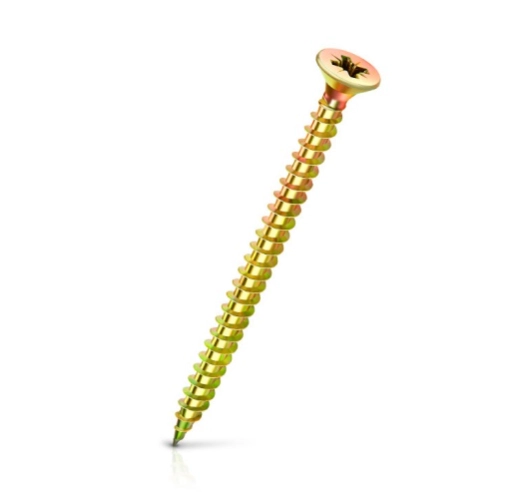
Qinjia Chipboard screw fits panel furniture, particle board, wood-based boards, and carpentry assembly. A self tapping screw for wood needs to start cleanly and hold without splitting the edge. Buyers should confirm point style, thread form, head type, and length before bulk orders.
Visible finish matters when the head sits poorly or the recess is damaged.
Head, Recess, and Finish Options
Head type affects appearance and load distribution. Bugle head is common for drywall fixing because it helps create a neat seated finish. Other head styles may suit different assembly needs.
Recess type affects installation stability. Phillips, Torx, and Square recesses drive differently. Qinjia product information mentions black phosphated and zinc plated finishes for drywall screws. Buyers should choose finish based on indoor use, moisture exposure, and local market preference.
How Can Buyers Avoid Wrong Self Tapping Screw Size Orders?
Wrong size orders often come from unclear specifications. A buyer may send only length and diameter, while the factory still needs thread type, head style, recess, finish, packing, and application material.
A Clear Size Confirmation Checklist
Before ordering, treat Self Tapping Screw Size as a complete specification. Confirm diameter and length, thread type, head type, recess type, point type, surface finish, base material, pilot hole requirement, packing method, and label or OEM requirement.
This checklist is more useful than one number from a chart. It also prevents confusion between drywall fixing, furniture assembly, and general wood fastening.
Sample Testing Before Bulk Purchase
For bulk orders, sample testing should not be skipped. For drywall screws, test board surface, stud engagement, and head seating. For chipboard screws, test edge splitting, thread bite, and assembly tightness.
Qinjia’s basic company information mentions thread attack speed testing and handheld screw torque testing tools. This support helps buyers judge batch performance instead of sample appearance only.
Packaging and Project Supply Planning
Packaging affects warehouse handling, distributor sales, and job site efficiency. Qinjia supports small box, bucket, and OEM packaging for related screw products in the provided information. Buyers should confirm packing quantity, carton marking, label language, and whether one project needs multiple screw types.
Why Choose Qinjia for Self Tapping Screw Supply?
Qinjia is suitable for buyers who need practical screw matching across construction and woodworking categories. The key value is connecting screw type, application material, packing, and export communication.
Product Options for Construction and Woodworking
Qinjia Drywall screw covers gypsum board, interior wall, and ceiling applications. Qinjia Chipboard screw supports furniture board and carpentry assembly. Together, they cover building interior systems and wood-based product manufacturing.
Quality Control for Stable Fastening Results
Stable fastening starts before shipment. Material consistency, thread forming, point shape, head recess, surface finish, and packaging all affect final use. A screw that looks acceptable can still fail if the recess slips, the thread is rough, or the length does not match the application.
Sample confirmation, specification clarity, and batch consistency matter. Repeat orders need the same driving feel across shipments.
Fastener manufacturing also depends on process stability. In high-volume construction and automated cabinetry assembly, cold-heading alignment affects whether the head is centered and whether the recess holds the driver bit under speed. Thread rolling must remain consistent, because uneven threads increase driving resistance and raise the risk of slipping, stripping, or head failure.
For carbon steel screws used with impact drivers, buyers should check the balance between surface hardness and inner-core toughness. Controlled heat treatment helps the thread surface cut into wood fibers or light steel studs, while the core keeps enough ductility for driving stress. Where surface treatment or heat treatment is involved, relief control may help reduce hydrogen embrittlement risk. Torque checks, thread checks, and real-material driving tests are more useful than visual inspection only.
Service and Contact Support for Buyers
If your team is comparing a self tapping screw size chart with real project materials, prepare the board type, screw length target, head style, finish requirement, and packing method. Qinjia can help review specifications, sample needs, and compatibility details through its contact channel.
FAQ
Q: How do I choose the right Self Tapping Screw Size?
A: Start with the base material, then confirm diameter, length, thread type, head type, and pilot hole. For gypsum board and studs, use Qinjia Drywall screw. For particle board, panel furniture, and carpentry work, use Qinjia Chipboard screw.
Q: Does every self tapping screw need a pilot hole?
A: Not always. Soft materials may allow direct driving, but harder, thinner, or brittle materials often need a pilot hole. The correct hole helps control torque, reduce cracking, and improve thread engagement.
Q: What is the difference between drywall screws and chipboard screws?
A: Drywall screws are used to fix gypsum board to wood studs or light steel studs. Chipboard screws are used to fix particle board / wood-based panels, furniture, etc. Other types of carpentry work. Self Tapping Screw Size depends on material and purpose of fixing.

 Consult
 Whatsapp
 Leave Message
 top
top