


Related news
Concrete Nails vs Gas Drive Pins Which Fastener Fits Your Job
Choosing between concrete nails and gas drive pins is not only a price question. For buyers sourcing direct tools and fasteners, the real issue is whether the fixing method matches the base material, job-site speed, tool setup, and customer usage habits. Concrete nails are simple and easy to stock. Gas drive pins work better when the customer needs faster repeated fixing into concrete or steel.
Qinjia supplies metal fasteners for construction, woodworking, interior finishing, cable fixing, and drywall systems. Its product range includes concrete nails, ST nails, brad nails, staples, gas drive pins, pipe hook nails, and drywall screws. For this article, the key comparison is between smooth shank concrete nails and gas drive pins. One fits basic concrete and masonry work. The other belongs to a gas-actuated fastening system where tool matching and installation speed matter more.
What Is the Main Difference Between Concrete Nails and Gas Drive Pins
Both fasteners may appear in concrete-related projects, but they are not used in the same way. A concrete nail is a straightforward fixing product. A gas drive pin is normally selected together with a gas-actuated nail gun, gas canister, and related tool accessories.
For B2B buyers, this distinction helps prevent wrong stock. A distributor selling to small contractors may need regular concrete nails in multiple sizes. A supplier serving project teams may need to discuss pins, tools, and job-site conditions together.
Concrete Nails for Simple Concrete and Masonry Fixing
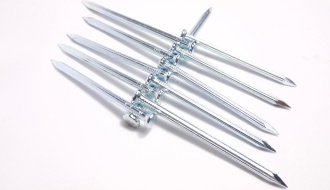
Qinjia’s Concrete nails smooth shank are made from high-carbon steel with heat treatment. They are designed for hard concrete and brick walls. Available sizes cover 1″ to 8″ in length and 2.0mm to 5.5mm in diameter.
When sourcing concrete nails for solid wall applications, this wide range gives buyers room to match fixture thickness, wall hardness, and required fixing depth. The product also supports zinc plating, bluing, and phosphating, so buyers can choose a finish according to indoor, semi-outdoor, or higher rust-risk environments.
Gas Drive Pins for Faster Steel and Concrete Installation
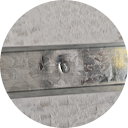
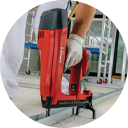
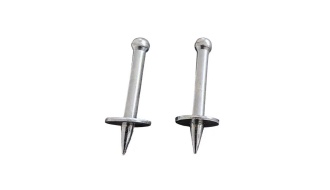
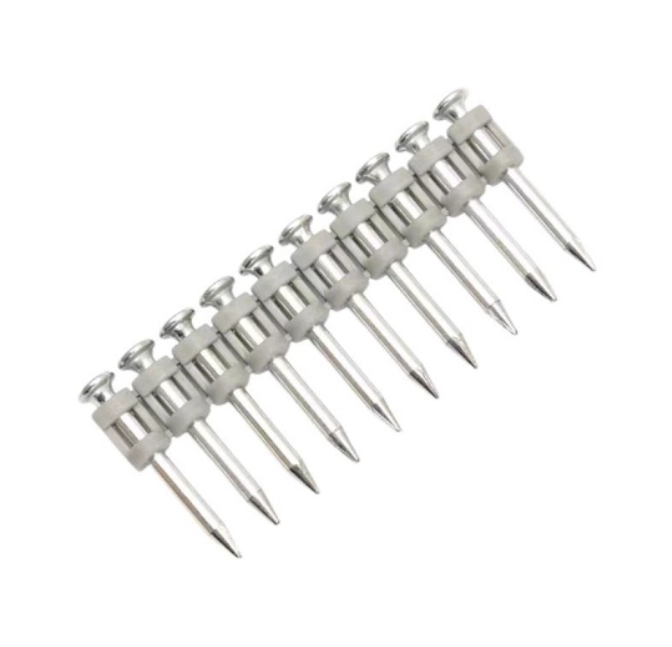
Qinjia’s Gas drive pins are used with gas-actuated nail guns for fastening into steel and concrete. The available length range is 12–62mm, with common head diameters of 6–8mm.
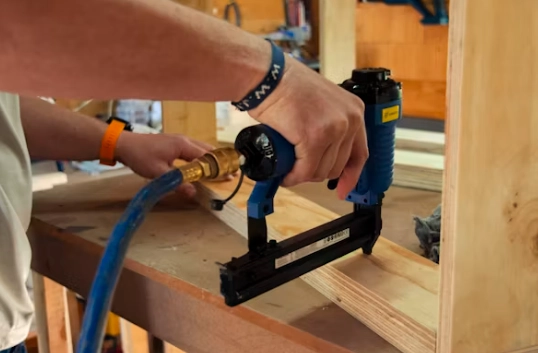
This product is more suitable for repeated fixing work. Instead of relying on manual hammering, the installer uses a tool system to drive pins into the base material. For contractors working across many fixing points, this can reduce slow, uneven installation.
Tool Method as the Real Selection Point
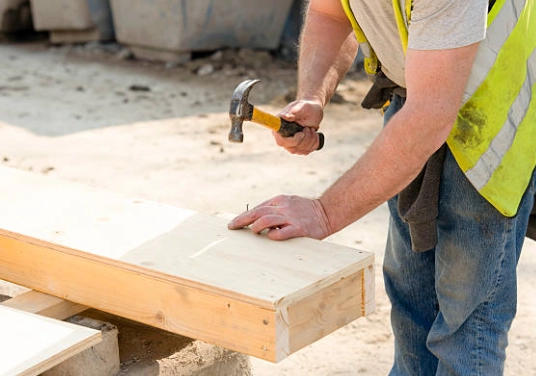
The main difference is the working method. Concrete nails are easier to introduce into markets where users prefer simple tools and lower entry cost. Gas drive pins fit customers already using nail guns or planning to upgrade their fixing process.
For procurement managers handling fastener and power tool inventories, this distinction is practical. Stocking gas drive pins without checking tool compatibility may create returns. Selling concrete nails into a high-frequency steel fixing job may lead to complaints about working speed.
Which Fastener Works Better for Your Job Site
A good recommendation starts from the base material. Concrete, brick, steel, and wood-to-concrete fixing do not create the same demand. The buyer should also consider working frequency. A product that works for occasional repair may not be efficient for a full project site.
Concrete Walls and Brick Walls
For concrete walls, brick walls, and basic masonry work, smooth shank concrete nails are usually easier to manage. They are suitable for concrete walls, brick walls, and wood-to-concrete connection points.
This makes them useful for hardware distributors, building material shops, small contractors, and maintenance teams. The product is simple to explain and can be packed in small boxes, plastic wrap, or bulk according to market demand.
Steel Structures and High-Speed Fixing
Gas drive pins are more suitable for steel structures and concrete wall fixing where speed matters. They should be selected with the nail gun system, not only by pin length.
For project-based buyers, this is where gas drive pins show value. Repeated fixing work becomes more consistent when the pin, tool energy, and base material are matched correctly. For wholesalers, gas drive pins may also create follow-up demand for gas canisters and tool accessories.
Wood-to-Concrete and General Building Work
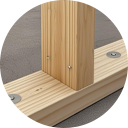
For wood-to-concrete fixing, concrete nails can be a practical choice when the job is small, tool access is limited, or the customer wants a lower-cost fastener. They are easier to store and easier for general workers to use.
If the same fixing action repeats across many points, gas drive pins may be more reasonable. The buyer should not compare only unit price. Labor time, tool readiness, and installation consistency also affect the final cost.
How Should Buyers Compare Size Material and Surface Finish
Product name alone is not enough for a correct order. Fastener buyers should confirm material, length, diameter, head size, surface finish, packing method, and application environment. For direct tools and fasteners, the tool side also needs attention.
Concrete Nail Length and Diameter Range
Qinjia concrete nails are available from 1″ to 8″ in length and 2.0mm to 5.5mm in diameter. A longer nail is not always safer. If the fixture is thin or the concrete is too hard, over-sizing may cause bending, surface damage, or poor driving.
For distributors, a balanced size mix is usually safer than carrying only one popular length. Local wall materials, common fixture thickness, and contractor habits should guide the stock plan.
Gas Drive Pin Length and Head Diameter
Qinjia gas drive pins cover 12–62mm lengths, with common 6–8mm head diameters. These numbers are only part of the selection. A pin that looks correct on paper may still perform poorly if the tool energy, such as 90J to 120J tools, does not match the base material. For instance, shooting a 22mm pin into high-strength aged concrete over 40 MPa requires proper matching of gas pressure and pin profile to prevent ricocheting or tool jamming.
This is why gas drive pin sourcing should include compatibility discussion. The buyer should confirm nail gun type, base material, fixture thickness, and expected working frequency before placing a bulk order.
Surface Finish and Rust Resistance
Concrete nails can be supplied with zinc plating, bluing, or phosphating. The finish should follow the job environment. Indoor dry use may focus more on smooth driving and standard packing. Humid or semi-outdoor work needs more attention to rust resistance.
Surface finish also affects market positioning. Retail packs, contractor packs, and bulk cartons may use the same basic fastener but serve different customers.
Which Option Gives Better Cost and Work Efficiency
Cost is not only the price per piece. A lower-cost fastener can become expensive if it slows down installation. A tool-based system can also be wasteful if the customer only uses it occasionally.
Lower Tool Cost With Concrete Nails
Concrete nails have a lower entry barrier. They do not require a gas-actuated tool system, gas canisters, or extra tool accessories. This makes them suitable for small batches, repair tasks, basic construction, and markets where simple tools are still common.
For distributors, concrete nails are also easier to stock as a regular construction consumable. OEM packing can help match local shelf, contractor, or bulk sales needs.
Faster Installation With Gas Drive Pins
Gas drive pins are better for customers who already use nail guns or need faster fixing into steel and concrete. In the procurement of direct fastening systems, these pins should be selected together with the tool and gas supply.
The value is clearest in repeated installation. If a team needs to fix many points in one day, manual driving may cause slow progress and uneven results. A matched gas-actuated system can make the workflow more stable.
Maintenance and Consumable Planning
Concrete nails are simple after purchase. The main tasks are storage, rust prevention, and size sorting. Gas drive pins need more planning because the user may also need gas canisters, nail gun accessories, and basic tool maintenance.
This does not make gas drive pins difficult to sell. It means the supplier should provide technical parameters, usage guidance, and compatibility advice before bulk supply.
How Can Qinjia Support Your Fastener Sourcing Plan
A strong sourcing plan should reduce wrong size, wrong application, and wrong packing. Qinjia supports OEM/ODM, mixed-category container loading, regional agency cooperation, technical parameters, usage guidance, compatibility advice, and long-term supply of related accessories and consumables.
Product Recommendation by Buyer Type
For hardware distributors, smooth shank concrete nails can be stocked as a regular construction fastener for masonry, brick wall, and wood-to-concrete work. For project contractors and tool-based users, gas drive pins are more suitable for faster fixing into steel and concrete.
A practical concrete fastening supplier should not push one item for every job. The better route is to separate routine fixing, high-frequency installation, and tool-system demand.
Quality Control and Document Support
Qinjia applies inspection from incoming materials to shipment, with random inspection and factory inspection. The company can also provide material certificates, inspection reports, packing lists, and third-party inspection support when needed.
For export buyers, these documents help reduce disputes after shipment. They also make it easier for distributors to explain product consistency to local customers.
Service Contact and Custom Orders
Before ordering, buyers can prepare base material, fixture thickness, tool type, preferred size range, surface finish, packing style, and expected monthly demand. Qinjia can then check whether concrete nails, gas drive pins, or a mixed order is more practical. For specification review, packing discussion, or sourcing documents, send project details through the Qinjia contact page.
FAQ
Q: Are concrete nails or gas drive pins better for concrete walls?
A: Concrete nails are better for simple concrete wall and brick wall fixing, especially where low tool cost and easy handling matter. Gas drive pins are better for repeated fixing with a gas-actuated nail gun, especially when speed and consistency are required.
Q: Are gas drive pins part of direct tools and fasteners?
A: Yes. Gas drive pins are normally used with gas-actuated nail guns, gas canisters, and related accessories. They should be selected as part of direct tools and fasteners, not only as loose nails.
Q: Should distributors stock both concrete nails and gas drive pins?
A: Yes, if their customers include both general construction users and tool-based contractors. Concrete nails cover routine masonry and wood-to-concrete fixing, while gas drive pins serve faster steel and concrete installation.

 Consult
 Whatsapp
 Leave Message
 top
top