


Related news

Brad Nailer vs Finish Nailer Which Electric Nail Gun Is Better for Trim Work
Choosing the right electric nail gun for trim work starts with the fastener, not only the tool. A brad nailer leaves a cleaner mark on thin molding. A finish nailer gives stronger holding power for heavier trim. For some furniture and panel work, a heavy-duty staple can be more practical than either one.
Qinjia manufactures metal fasteners for construction, furniture, woodworking, interior finishing, and distributor supply. Its range covers brad nails, staples, concrete nails, drive pins, pipe hook nails, drywall screws, and related fastening products. For buyers comparing brad nailer vs finish nailer, Qinjia’s 18GA F Brad Nails and 16 Gauge 7/16 Inch Crown N Series Heavy Duty Staples are useful reference products because they show how fastener size, crown width, material, finish, and collation affect real jobsite use.
What Is the Main Difference Between a Brad Nailer and a Finish Nailer?
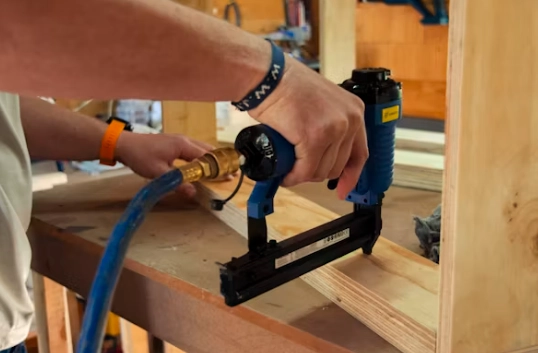
A brad nailer and a finish nailer may look similar, but they are not made for the same fastening load. The difference is mainly in nail thickness, visible hole size, holding strength, and how much pressure the fastener puts on the wood fiber.
Brad Nailers for Clean and Light Trim Work
A brad nailer is usually used with thinner brad nails. It fits light trim, decorative molding, picture frames, small cabinet parts, thin panels, and other finish work where the nail hole should stay small.
If the workpiece is narrow or easy to split, a brad nailer is often the safer direction. It gives enough fixing for light pieces without forcing a thick fastener into thin material.
Finish Nailers for Stronger Holding Power
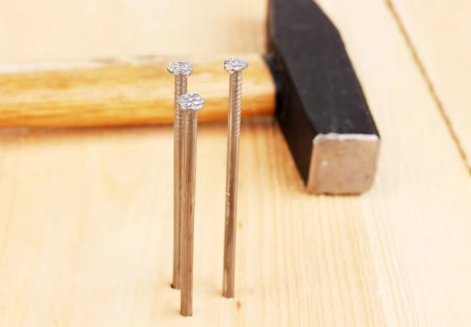
A finish nailer uses thicker nails than a brad nailer. It suits heavier trim, thick baseboards, door casing, and parts that need more grip after installation.
The trade-off is surface repair. A thicker nail normally leaves a larger hole, so the installer may need more filling and sanding. For visible decorative work, that extra repair time matters.
Tool Choice Based on Material Thickness
Before choosing any tool, check the trim thickness, wood type, surface finish, and whether the part carries stress after installation. A tool that works well on thick casing may be too aggressive for thin molding. A tool that looks clean on small trim may not hold enough for heavier wood.
When Should You Choose a Brad Nailer for Trim Work?
A brad nailer is usually the practical option for clean, light fastening. It is not meant for load-bearing work, but it does a good job on narrow trim and small wood parts where appearance matters.
Thin Trim, Molding, and Small Wood Parts
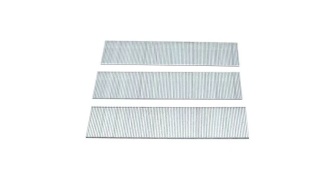
Qinjia 18GA F Brad Nails are suitable for trim and molding installation, furniture assembly, interior finishing work, crafts, light carpentry, and temporary positioning before screws or glue are applied.
For an electric brad nailer for trim, this type of fastener is a natural match. It helps installers fix door and window casing, skirting boards, decorative strips, picture frames, drawer backs, and small wood components without creating large surface damage.
Cleaner Nail Holes and Lower Splitting Risk
The listed dimensions of Qinjia 18GA F Brad Nails include 1.90mm head width, 1.25mm wire width, and 1.00mm wire thickness. These figures explain why brad nails work well for fine trim. The thinner wire puts less pressure on the wood and leaves a smaller fixing point.
For 18 gauge brad nails for molding, this matters on softwood, MDF trim, thin decorative panels, and lightweight cabinet parts. The aim is not maximum pull strength. The aim is clean fixing with lower splitting risk.
Recommended Product: Qinjia 18GA F Brad Nails
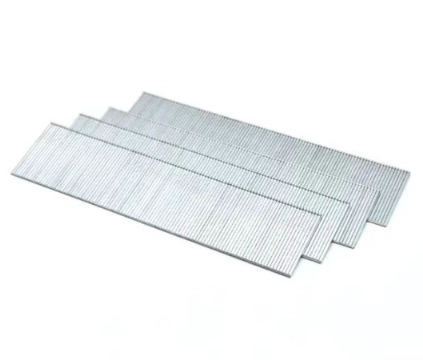
Qinjia 18GA F Brad Nails are available in Q235, SS304, and SS316 material options, with electro galvanized or coating finishes. The product information lists tensile strength above 800N/mm², chisel point, glue collated type, and 0° collated angle. Length options run from 10mm to 50mm.
For distributors, this range is useful because one brad nail series can cover several common furniture and trim needs. For workshops, the glue collated format and 0° angle should be checked against the selected tool before bulk ordering.
Beyond Fine Trim: When Do You Need Finish Nailers or Heavy-Duty Staples?
Not every project belongs under light trim. Some work needs stronger single-point holding, while other work needs a wider fastening footprint. This is why finish nailers and heavy-duty staples should be discussed as two separate choices under a broader fastening scenario, not as the same tool category.
Finish Nailers: The Choice for Thick Baseboards and Heavy Door Casings
Delicate molding is typically okay’d for shooting with 18GA brad nails without pushing too much force into the wood. Larger pieces of trim and others that require to hold better after being installed are generally shot with a finish nailer. Heavy window casings, larger pieces of door trim and thick timber baseboards are examples of work that require more holding power than a small brad nail can provide.
For wide profiles, heavy material or trim that may move with use or with the seasons a finish nailer for baseboards could be a consideration but then you have to also consider the finished surface that you’re seeing. A stronger nail can help keep the trim from moving but a stronger nail will also produce a larger hole that has to be filled out properly.
Heavy-Duty Staples: The Go-To for Structural Furniture Backing and Crates
If the workpiece involves thin backing panels, packaging crates, pallets, or material stretched across a wider surface, moving from a single-point finish nail to a wide-crown staple is often the more practical engineering choice.
This is where nail gun staples for furniture fit naturally. A staple uses two legs and a crown, so the holding area is different from a brad nail or finish nail. It can help grip panel backing, soft material, underlayment, crates, and other utility parts where surface appearance is not the only concern.
Recommended Product: Qinjia 16 Gauge 7/16 Inch Crown N Series Heavy Duty Staples
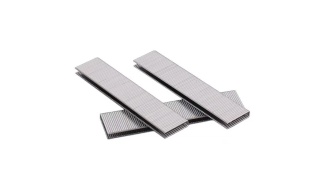
Qinjia 16 Gauge 7/16 Inch Crown N Series Heavy Duty Staples use 16GA wire, a 10.80mm crown, 1.60mm width, 1.40mm thickness, and a length range from 10mm to 50mm. The listed tensile strength is above 800N/mm².
Their application range includes cedar shingles, fascia and soffits, fencing, floor underlayment, furniture, pallets, siding, crate assembly, and sheathing. For buyers comparing brad nailer vs finish nailer, this product adds a clearer third route: use brad nails for fine visible trim, finish nails for heavier visible trim, and heavy-duty staples for backing, panels, crates, and utility fastening.
How Should Buyers Match Fasteners with an Electric Nail Gun?
For a workshop buying an electric nail gun, fastener compatibility should be checked before the tool or carton order is finalized. Many feeding problems are not caused by the tool itself. They come from wrong gauge, wrong length, wrong crown, or wrong collation.
Gauge, Length, Crown, and Collation Compatibility
Qinjia 18GA F Brad Nails should be checked by gauge, length, chisel point, glue collated type, and 0° collated angle. The N Series Heavy Duty Staples should be checked by 16GA, 10.80mm crown, and available leg length.
These details affect feeding and fastening. Wrong gauge may not fit the magazine. Wrong crown size can stop staples from feeding. Wrong length can bend, blow through the material, or fail to hold.
Surface Finish and Material Selection
For brad nails, Qinjia lists Q235, SS304, and SS316 material choices, with electro galvanized and coating finish options. The right finish depends on where the product will be used and stored.
Interior painted trim does not always need the same material choice as a project exposed to more moisture. Furniture, crates, and pallets may also have different handling and storage conditions. Buyers should not select only by carton price. The fastener has to match the tool, the material, and the final environment.
Packaging, OEM, and Stock Planning
Qinjia supports packaging options such as small box, plastic wrap, bulk carton packing, plastic box, and custom private label. For distributors, this affects shelf planning and customer type. Retail packs suit small users. Bulk cartons suit workshops and contractors. OEM packaging helps importers keep product presentation consistent across repeat orders.
How Can You Reduce Tool Problems, Waste, and Maintenance Cost?
A good electric nail gun still performs poorly if the fasteners are bent, poorly collated, mismatched, or unsuitable for the material. Stable fastening starts from checking small details before production, not after complaints appear.
Correct Fastener Size Reduces Jamming and Misfires
A brad that is too long for thin trim may bend or pass through the workpiece. A staple with the wrong crown may not feed. A poorly matched fastener can slow the worker, waste cartons, and create more tool cleaning.
For brad nails for cabinet work, test nail length on the actual board thickness. For furniture or crates, check crown width, leg length, and feeding performance before confirming a larger shipment.
Consistent Inspection Supports Stable Use
Qinjia’s company information mentions raw material inspection, random inspection, outgoing inspection, and tests related to hardness, salt spray, size, and appearance when needed. For export buyers, these checks matter because small fastener defects can become repeated problems at the tool magazine, the workbench, or the jobsite.
A stable fastener supply helps reduce sorting work, rework, returns, and avoidable tool interruption.
Service Support for Bulk Orders
Qinjia provides technical parameters, usage guidance, compatibility suggestions, long-term supply of accessories and consumables, and support for OEM/ODM and mixed product orders. This helps buyers who handle trim, furniture, light woodwork, and packing materials at the same time.
If you need to confirm the electric nail gun model, nail length, crown size, surface finish, packaging method, or sample details, prepare the tool type, target material, and order use before reaching Qinjia’s contact team. For product matching and order process details, the service information can also help make communication more accurate.
FAQ
Q: Which electric nail gun is better for thin trim?
A: A brad nailer is usually better for thin trim because it uses thinner fasteners and leaves smaller holes. Qinjia 18GA F Brad Nails are suitable for molding, light trim, furniture assembly, and small wood parts when the tool supports 18GA F-type brad nails.
Q: Can brad nails replace finish nails for baseboards?
A: They can work for light or narrow baseboards, but thick baseboards usually need stronger holding. Use brad nails where the main concern is a clean surface. Move toward a finish nailer when the baseboard is heavier or needs more grip.
Q: Are heavy-duty staples better than brad nails for furniture panels?
A: For backing panels, crates, pallets, and utility furniture parts, heavy-duty staples may be more suitable because the crown gives a wider holding area. For visible trim and fine edges, brad nails usually leave a cleaner result.

 Consult
 Whatsapp
 Leave Message
 top
top