



Related news
What Are the Real Benefits of Self Tapping Screws for Contractors
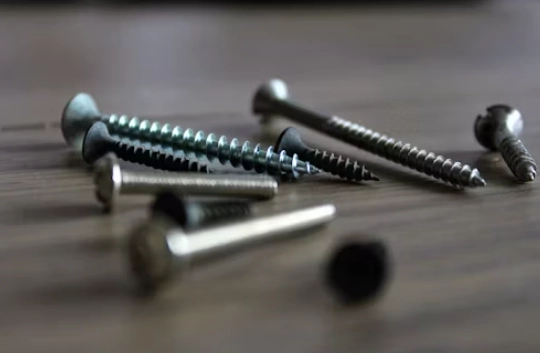
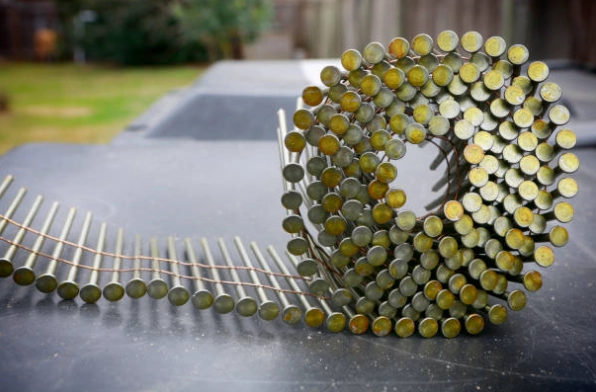
When you run a large construction site, time is literally money. Every minute your workers spend drilling pilot holes eats into your daily budget. That is why choosing the right screws matters a lot. You want hardware that bites fast and holds tight without requiring a bunch of extra steps. I have spent years dealing with building materials and managing supply chains for big projects. Working at Qinjia, a manufacturer focused on construction fasteners, I see firsthand what contractors actually need. We produce millions of pieces and ship them to active sites worldwide. We know that a minor defect in the thread can slow down an entire assembly line or ruin an interior build. So, let’s talk about the real world advantages of these fasteners and how they change your daily workflow on the site.
What Are the Key time saving benefits of self tapping screws?
When your guys are up on a scaffold, dropping tools is a hassle. You want them to work smoothly without stopping. The time saving benefits of self tapping screws become obvious when you look at the raw numbers on a big job.
Elimination of Time-Consuming Pre-Drilling Steps
Switching between a drill bit to make a hole and a driver bit to place the fastener drops momentum. You skip that pre-drilling phase entirely. You just put the piece on the tip of your tool and push. This single change removes half the physical labor.
Streamlined Workflow for High-Volume Projects
Let’s look at the numbers. Here is a breakdown of how much time you actually lose when you do things the old way:
|
Installation Method |
Average Time per Fastener |
Time for 1,000 Fasteners |
|
Standard bolt with pre-drilling |
15 to 20 seconds |
roughly 4.1 to 5.5 hours |
|
Self-tapping fastener |
4 to 6 seconds |
roughly 1.1 to 1.6 hours |
Cutting your installation time by more than half means your crew finishes earlier and moves to the next floor faster.
Faster One-Step Installation Process for Builders
If you are paying hourly, those saved hours turn into direct profit. You can also see the time saving benefits of self tapping screws when working in tight corners where holding two different tools is physically impossible. A one-step process just makes building things easier.
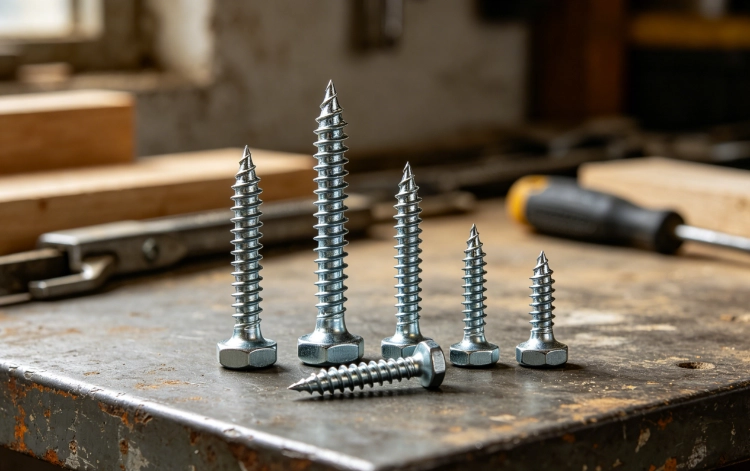
Why Are These Considered the best self tapping screws for contractors?
Different jobs need totally different gear. You cannot use a wood fastener on steel, and trying to force a thick gauge metal piece into delicate wood will just split it. Many industry veterans call these the best self tapping screws for contractors because they match the exact base material.
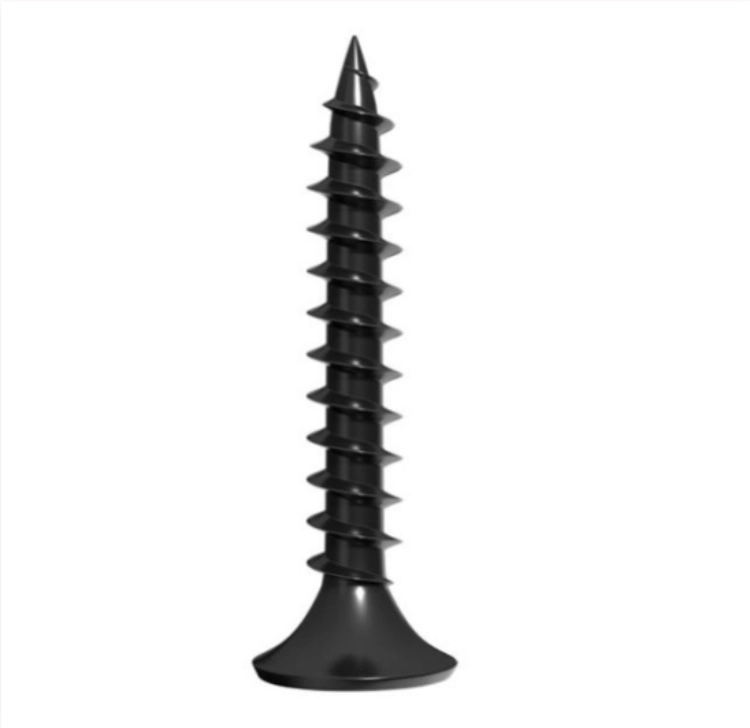
High-Performance Drywall Screw for Interior Framing
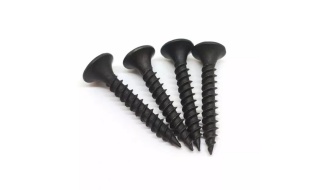
For interior work, especially putting up gypsum boards, you need something that sinks fast and clean without tearing the paper surface. Our Drywall screw line does exactly this job. They have a very sharp point that pierces the board and grabs the metal or wood stud right away. The bugle head sits perfectly flush with the wall.
Durable Chipboard Screw for Professional Woodworking
Wood splits easily if you force a thick metal stick into it without care. For custom cabinetry, a Chipboard screw is what you really need. The threads on these are deeper and spaced further apart. This specific design bites into soft woods, MDF, and particle board without cracking the edges.
Superior Material Hardness through Precision Heat Treatment
What makes them the best self tapping screws for contractors is the factory process. They go through tight heat treatment to get hard enough to pierce materials but not so brittle that they snap under pressure.
How Do You Apply self tapping screws for metal Effectively?
Working with metal sheets or light gauge steel tracks is notoriously tough. If the tip of your hardware is dull, the piece just spins on the smooth surface and scratches the metal.
Secure Fixing of Thin Sheet Metal Components
When you attach HVAC ductwork, you place the tip directly on the bare metal. The tip cuts its own tiny hole, and the threads immediately follow to lock the joint tight. It is a smooth motion that creates a tight seal.
Stable Connection of Light Steel Studs and Tracks
You have to match the fastener to the metal thickness. Using the correct self tapping screws for metal stops material waste.
|
Substrate Material |
Metal Thickness |
Recommended Thread |
|
Thin Sheet Metal |
Up to 0.8mm |
Fine thread, sharp point |
|
Light Gauge Steel |
0.8mm to 2.0mm |
Fine thread, drill point |
|
Heavy Structural Steel |
2.0mm to 12.0mm |
Coarse thread, extended drill point |
High-Speed Penetration into Industrial Steel Structures
If you try to push a sharp point into heavy structural steel, it will just flatten out. You need an extended drill point for industrial frames. This allows high-speed penetration without burning out your power tools.
Why Should You Choose heavy duty self tapping screws for Tough Jobs?
Sometimes you are fixing thick steel plates or heavy machinery parts. A standard thin fastener will snap in half under that much torque. That is exactly when you need heavy duty self tapping screws.
High-Torque Resistance for Thick and Dense Substrates
These are built thicker and often made from higher grade carbon steel. They handle the extreme twisting force your heavy impact driver puts out without snapping the head off.
Enhanced Pull-Out Strength in Demanding Environments
When you use heavy duty self tapping screws on exterior walls or commercial steel frames, the connection stays rigid even under heavy wind loads or constant vibration. They grab a huge amount of material and refuse to let go.
Corrosion-Resistant Coatings for Long-Term Outdoor Durability
The anti-corrosion coating on these thick pieces stops rust from eating away the joint over the years. You don’t want a building facade falling off five years later because the metal rusted through.
What Is the Professional Method on how to install self tapping screws?
Even the most expensive hardware fails if your guys put it in wrong. Learning how to install self tapping screws properly prevents stripped heads and loose connections on your site.
Selection of Correct Drive Bits and Optimal Torque
First, always check your power tool. You need a driver with an adjustable clutch. If you drive the piece too hard into a thin metal sheet, you strip the hole out, and the fastener just spins uselessly.
Maintaining Constant Pressure during the Driving Phase
Second, keep the drill perfectly straight. Pushing at a weird angle puts all the stress on one side of the metal head. Apply steady and firm pressure. Let the sharp tip do the cutting work. Teaching your new guys how to install self tapping screws the right way saves you boxes of wasted materials.
Professional Service and Contact Information for Your Project
Using the wrong fastener specs causes structural failures and delayed site inspections. We can provide detailed load capacity charts, custom design suggestions, and salt spray test reports, so you can lock down the exact hardware your site needs. These resources are tailored for your specific project when buying screws. Tell us the thickness of your metal tracks and your local weather conditions. Reach out and contact our factory team today for direct technical support.
FAQ
Q: Can I use self tapping screws on masonry or concrete?
A: No. They are designed for metal, wood, and plastic. For concrete, you need specialized masonry fasteners and a hammer drill to make the connection hold.
Q: Do I need a special drill bit for these fasteners?
A: You do not need a drill bit because they make their own holes in the material. You only need the correct driver bit, like a Phillips or Torx, to match the head shape.
Q: Why do my screws keep stripping the metal hole?
A: You are likely using too much torque or keeping the drill running after the head sits flush against the metal. Turn down the clutch setting on your drill to fix this problem easily.

 Consult
 Whatsapp
 Leave Message
 top