


Related news
Self-Tapping Screws vs. Shooting Nails : Fastening Methods for Steel & Masonry Construction
When specifying mechanical fasteners for structural steel framing or concrete substrate attachments, choosing between self tapping screws vs shooting nails directly dictates installation speed, joint shear capacity, and long-term maintenance costs. Site engineers and procurement teams evaluate whether thread engagement or direct ballistic penetration offers the cleaner structural fit for specific building assemblies. As a specialized OEM manufacturer of industrial fasteners, Qinjia produces precision carbon steel screws and hardened drive pins engineered for demanding commercial jobsites. Matching fastener mechanics to the base material prevents structural pull-out, reduces installer fatigue, and avoids reworked connections.
Why Does Fastener Selection Matter in Steel and Masonry Projects?
Selecting mechanical fasteners requires analyzing how structural stress transfers across different building assemblies. Thin-gauge steel framing behaves differently under load than solid poured concrete, making driver bit torque and pin penetration depth critical variables during assembly.
Direct Impact on Structural Holding Power and Jobsite Safety
Threaded fasteners rely on pitch geometry to cut or form mating threads inside sheet metal. If thread engagement is insufficient, wind uplift or continuous vibration causes joint loosening. Ballistic drive pins rely on compressive friction and localized concrete displacement. Miscalculating base material hardness risks spalling the concrete slab or bending the shank under impact.
Labor Cost Differences Between Screw Driving and Powder-Actuated Pinning
Screw driving requires alignment, motor rotation, and continuous axial pressure per fastener. Powder-actuated pinning fires hardened pins instantaneously into dense base materials. On large commercial sites involving thousands of attachment points, the labor time per linear meter scales rapidly between these two methods.
Substrate Material Compatibility for Light Gauge Steel and Solid Concrete
The use of framing fasteners in 0.5mm to 1.2mm steel studs in light-gauge steel framing provides clean and repeatable thread engagement. In contrast, solid poured concrete or masonry blocks are not easily cut by thread and therefore require the use of hardened drive pins that are driven using gas or powder tools to form a mechanical friction lock in dense aggregate.
What Are the Core Differences Between Self-Tapping Screws and Shooting Nails?
Comparing self tapping screws with shooting nails into wood, examines the three main areas of evaluation; the material properties, the thread form and the physical mechanism of action. A joint requires removable threaded engagement or permanent ballistic embedment and so chooses between the two.
Self-Tapping Screws for Threaded, Removable, and Precision Metal Fastening
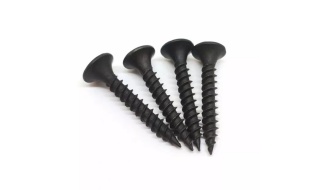
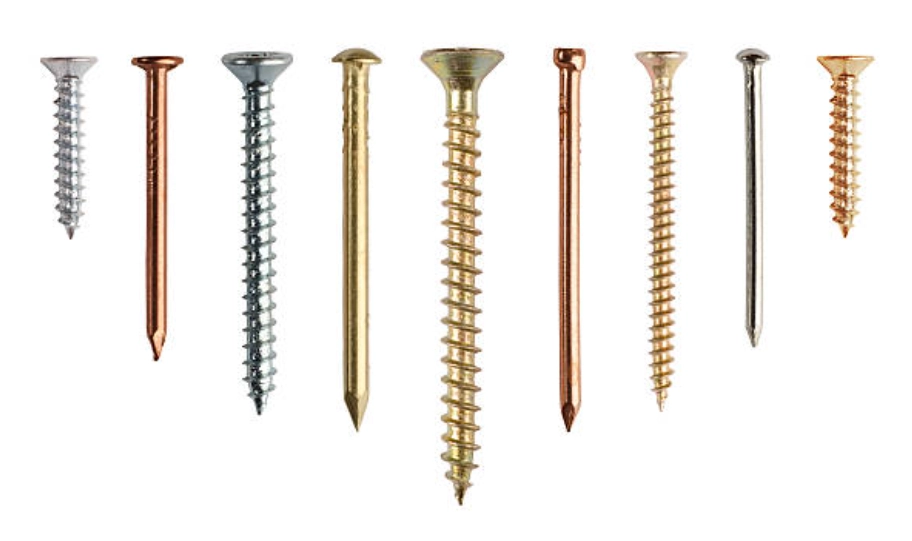
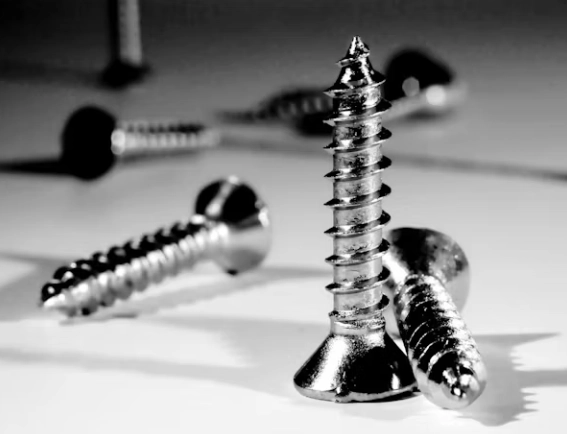
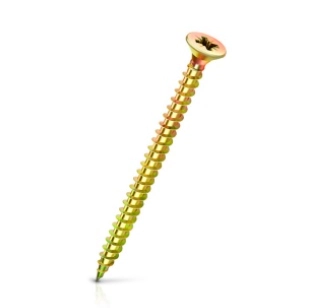
Threaded screws are formed or cut into a thread profile within a sheet metal component. The screw outer thread diameter can vary but typically is in the range of M3.5 to M4.2. The overall length of the screw can vary from 25mm up to 75mm. High surface hardness at the point and thread of the screw is achieved through the carburizing heat treatment process. The core of the screw remains ductile to absorb dynamic shear. The surface finish of the screw can be black phosphated for dry interior work or electroplated with zinc for enhanced atmospheric corrosion resistance.
Shooting Nails (Drive Pins) for High-Hardness Instant Concrete Penetration
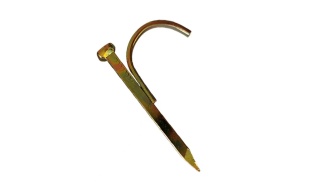
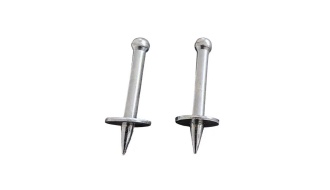
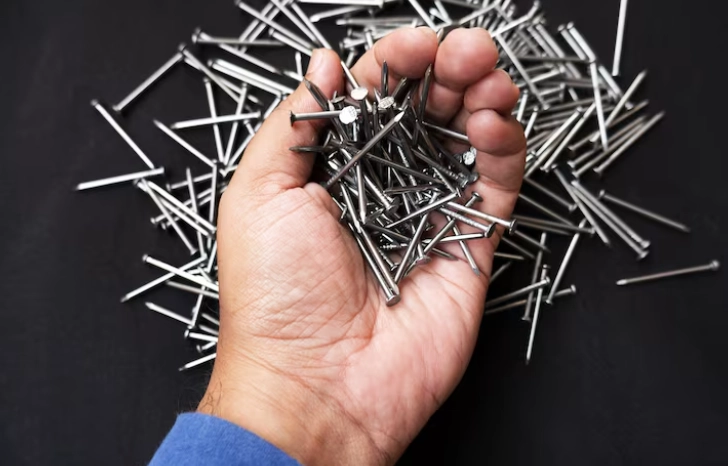
Shooting nails (also known as drive pins) are manufactured from high-carbon steel subjected to strict quenching and tempering processes. When driven by powder charges or compressed gas, the pin shank displaces concrete aggregate, generating intense friction that bonds the steel shank to the surrounding material. A galvanized zinc layer protects the pin shank from reaction with alkaline concrete moisture.
Installation Speed and Mechanical Load Capacity Comparison
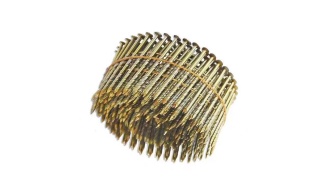
Screws offer high tensile pull-out resistance and allow easy disassembly during layout revisions or MEP maintenance. Drive pins deliver unmatched speed during initial structural track layout. When planning high-volume installations, analyzing workflow differences between manual driving and continuous feed systems—similar to evaluating collated vs. non-collated fasteners—helps determine total labor efficiency on site.
| Specification / Metric | Self-Tapping Screws | Shooting Nails (Drive Pins) |
|---|---|---|
| Primary Substrate | Sheet metal, light gauge steel, timber studs | Poured concrete, structural steel, brick masonry |
| Installation Tool | Electric screwdriver / Impact driver | Powder-actuated or gas nail gun |
| Joint Permanence | Removable / Adjustable | Permanent embedment |
| Material & Coating | Carbon steel with Black Phosphated / Zinc Plating | Hardened high-carbon steel with Zinc Galvanizing |
| Diameter / Size Range | M3.5, M3.9, M4.2 (25mm–75mm length) | Customized pin shank lengths & washer sizes |
Which Fastening Solution Best Fits Your Jobsite Applications?
Field conditions dictate whether a crew should reach for a screw gun or a powder-actuated tool. Examining specific assembly scenarios clarifies how each fastener type performs under actual working loads.
Self-Tapping Screws for Metal Framing, HVAC, and Sheet Joining
For ceiling grid assembly, drywall track alignment, and ductwork connections, using a specialized Self tapping Screw ensures crisp thread formation without stripping thin steel base sheets. Fine-thread variations grip tight against light-gauge metal studs, preventing seam displacement under structural vibration.
Drive Pins for Structural Track Attachment to Masonry and Concrete Walls
When executing concrete track attachment to secure base tracks, runner channels, or heavy conduit clips directly to poured concrete floors or block walls, specifying shooting nails (Drive Pins) minimizes cycle time per linear meter. The ballistic pin penetrates dense aggregate cleanly, establishing an immediate mechanical interference fit without requiring pre-drilling.
Balancing Long-Term Holding Reliability against Dismantling Needs
Comparing self tapping screws vs shooting nails for temporary partitions or MEP runs requiring future maintenance favors threaded screws due to simple backing out. Permanent structural track attachments to floor slabs demand the placement speed and shear strength of ballistic pins.
How Does Qinjia Guarantee Quality and Customization for B2B Buyers?
Sourcing fasteners for commercial building contracts requires verifying metallurgical control and manufacturing precision. A reliable supply partner must ensure batch-to-batch consistency across millions of units.
Strict Heat Treatment Control for Carbon Steel Hardness and Corrosion Protection
Carburizing furnaces control carbon diffusion depth to guarantee that point hardness meets penetrating requirements while core ductility resists hydrogen embrittlement. Surface treatments like black phosphating and electro-zinc plating are applied with strict salt-spray layer thickness monitoring.
Flexible OEM and ODM Production Matching Specific Client Drawings
Production aligns strictly with customer technical drawings, physical samples, and international standards. Custom shank lengths, specialized head geometries, and non-standard thread pitches are produced directly according to client blueprint specifications.
Strict Quality Assurance and Batch Consistency for Global Wholesale Operations
Dimensional tolerances, slot depth, point sharpness, and drive engagement are checked at each manufacturing stage to prevent jobsite jamming and head shearing.
How Can You Partner with Qinjia for Your Fastener Supply Chain?
Streamlining fastener procurement requires clear technical communication and flexible logistics arrangements. Aligning with an experienced factory partner helps mitigate supply chain risks for large construction contracts.
One-Stop OEM Manufacturing, Custom Packaging, and Export Support Services
Beyond core manufacturing, technical teams assist with fastener selection, custom bulk or retail box packaging, and export documentation to ensure seamless delivery to overseas warehouses.
Requesting Free Samples and Direct Factory Quotations from Qinjia
Selecting fastener dimensions and protective coatings for specific jobsite substrates requires careful technical evaluation. When reviewing project blueprints or auditing current fastener failure rates, analyzing technical datasheets or testing physical factory samples verifies holding performance. For custom specification reviews, drawing evaluations, or volume production schedules, please contact our engineering sales team directly to review your project requirements.
FAQ
Q: What is the main difference when comparing self tapping screws vs shooting nails for metal track framing?
A: Self-tapping screws provide adjustable, threaded joining best suited for connecting metal studs to each other, while shooting nails offer rapid, non-removable ballistic anchoring to secure metal tracks directly into concrete or masonry slabs.
Q: Can shooting nails be removed after installation?
A: No, shooting nails create a permanent friction lock in concrete or steel. If a track location needs adjustment or temporary placement, self-tapping screws combined with pre-drilled anchors are recommended instead.
Q: Which coating is best for self-tapping screws used in interior drywall framing?
A: Black phosphated coatings are ideal for interior dry environments as they hold joint compound well and reduce friction during driving. Zinc-plated finishes are preferred when mild moisture resistance is required.

 Consult
 Whatsapp
 Leave Message
 top
top