


Related news
What Are Concrete Nails Used For and How Do You Choose the Right Type
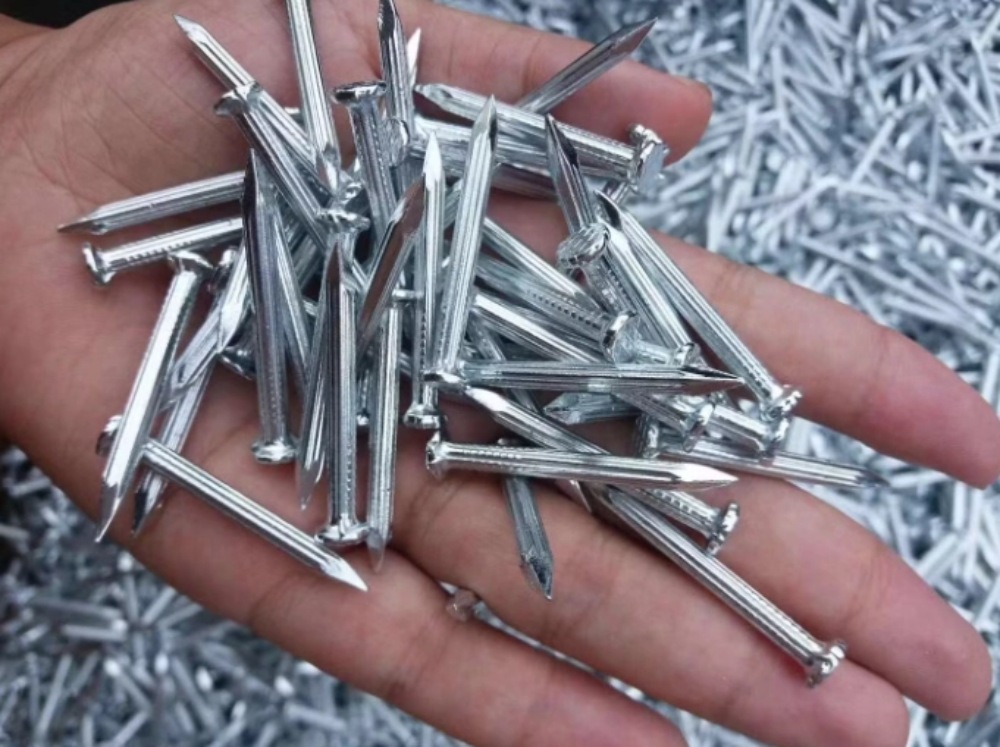
Concrete nails look simple until they fail on site. If a nail bends during driving, loosens after installation, or rusts too early in storage, the problem often starts from product selection. Buyers need to check more than price and length. The base material, shank design, wire material, heat treatment, surface finish, and packing method all affect whether the nail works well for concrete, brick, masonry, or wood-to-concrete fastening.
For importers, hardware distributors, and contractors, the real question is not only what are concrete nails used for. The more useful question is: which type fits the job, and what details should be confirmed before bulk ordering?
Qinjia supplies metal fastening products for construction, woodworking, masonry fixing, and renovation use. Its product range includes smooth shank, grooved fluted shank, and spiral shank options, so buyers can match different fixing needs instead of using one model for every job. Qinjia’s product information also supports common procurement details such as material, finish, size, packing, and OEM requirements, which are important for buyers serving different local markets.
What Are Concrete Nails Used For?
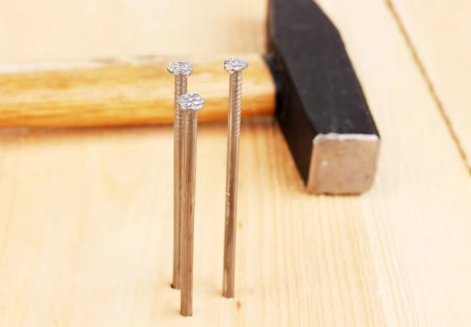
These fasteners are mainly used for fixing materials into concrete walls, brick walls, and masonry surfaces. In daily construction and renovation work, they are often used for wooden strips, light frames, battens, temporary fixing, auxiliary supports, and small masonry repair jobs.
They are useful when the project needs a simple fixing method and does not require a full screw anchor system. For distributors, they are also easy to stock because the product is familiar to many builders and end users.
Wood to Concrete Fastening
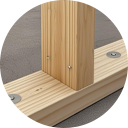
Wood-to-concrete work is one of the most common uses. A wooden strip may need to be fixed onto a wall before finishing work starts. A small frame may need support against a masonry surface. In these jobs, the nail must pass through the wood and bite into the base material.
For concrete nails for wood to concrete fastening, buyers should match the nail length to the wood thickness and the hardness of the surface. If the job needs easy driving and standard fixing, Concrete nails smooth shank fits better than more aggressive shank designs. It is suitable for general renovation, basic masonry fixing, and cost-sensitive distributor stock.
Brick and Masonry Fixing
Brick and masonry surfaces are not always equal in hardness. Some brick walls are easy to fasten into, while dense or older masonry may cause bending, surface chipping, or poor grip. This is why the buyer should not choose only by length.
For standard brick fixing, a smooth shank can be enough. For harder surfaces or jobs where loosening risk matters, a grooved or spiral structure should be tested before confirming a repeat order.
Which Types Should Buyers Compare?
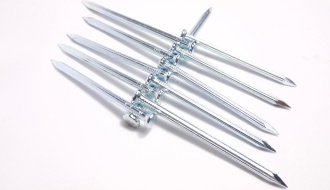
There are several types of concrete nails, but most B2B buyers can start with three practical choices: smooth shank for easy driving, grooved fluted shank for stronger grip, and spiral shank for holding stability. This keeps the selection simple without ignoring real jobsite differences.
Smooth Shank Nails for Easy Driving
Smooth shank nails are usually selected when the buyer wants simple installation and general-purpose fixing. They are easier to drive in suitable base materials and work well for many standard renovation and masonry tasks.
This type is a good fit for hardware stores and distributors that need a basic product with wide use. It is also useful when the customer cares more about smooth installation and cost control than maximum pull-out resistance.
Grooved Fluted Shank Nails for Stronger Grip
If the buyer receives complaints about loosening on masonry or wood-to-concrete fixing, Concrete Nails – Grooved (Fluted) Shank is worth testing before changing the whole fastening method. The grooves bite into the base material more firmly than a plain shank, so this type is useful where pull-out risk is a concern.
It is suitable for users who work with masonry surfaces, building repair, wood strip fixing, and other jobs where a stronger hold is needed.
Spiral Shank Nails for Holding Stability
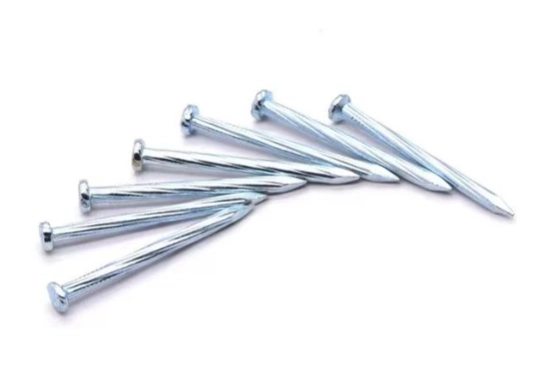
Concrete nails spiral uses a twisted shank design. The twisted surface gives the nail more contact inside the hole, which helps the fixing stay more secure in suitable concrete, brick, or masonry surfaces.
This type is useful when the buyer wants better holding stability than a smooth shank can provide, but still wants a familiar nail-based fixing method. For wholesalers, it can help complete the product range beside smooth and grooved options.
How Should You Choose the Right Nail?
A good selection process starts from the base material, not the product photo. Hard concrete, old brick, hollow masonry, and mixed wall surfaces behave differently. The user also needs to consider what is being fixed. A thin wooden strip does not need the same fixing strength as a thicker frame or heavier support piece.
Base Material and Fixing Strength
Buyers should first ask where the product will be used. If the surface is standard brick or ordinary concrete, smooth shank may be enough. If the surface is harder or the customer wants less loosening, grooved fluted shank is safer to compare. If the customer wants better stability after driving, spiral shank is worth adding to the product mix.
If the surface is too hard, forcing the wrong nail may lead to bending or damaged walls. In that case, the buyer should review nail hardness, point design, and whether a different fastening method is needed.
Concrete Nail Sizes and Materials
Concrete nail sizes and materials should be confirmed before any bulk order, not after samples arrive. A clear specification should include length, shank diameter, material, heat treatment, surface finish, and packing method.
Qinjia’s concrete nail information includes high-carbon steel with heat treatment. Common specification references include lengths from 1″ to 8″, diameters from 2.0mm to 5.5mm, and surface finish options such as zinc plating, bluing, and phosphating. These details affect not only fastening performance but also storage, resale packaging, and market positioning.
If the order is for retail shelves, small box packing may be easier to sell. For contractors or project buyers, bulk packing may be more practical. OEM packing should be confirmed before production when the product will be sold under a local label.
Common Selection Mistakes
One common mistake is choosing only by length. A longer nail does not automatically mean better fastening if the shank type, base material, and hardness do not match the job.
Another mistake is using smooth shank nails on harder masonry when the customer actually needs stronger grip. Buyers should also avoid using one surface finish for every market. Dry indoor use, humid storage, and outdoor-like jobsite conditions may need different finishes. These small details are often the reason one batch receives good feedback while another batch causes complaints.
Which Qinjia Option Fits Each Buying Need?
For buyers comparing product options, a simple selection table is more useful than choosing only by price. The goal is to match the product structure to the job, then confirm size, finish, and packing.
| Application Need | Shank Type to Compare | Why It Fits | Qinjia Product |
|---|---|---|---|
| Easy driving for standard concrete or brick fixing | Smooth shank | Easier to drive in suitable base materials, useful for general renovation and distributor stock | Concrete nails smooth shank |
| Better grip for masonry or wood-to-concrete work | Grooved fluted shank | Grooves increase friction with the base material and help reduce loosening risk | Concrete Nails – Grooved (Fluted) Shank |
| Improved holding stability in concrete, brick, or masonry | Spiral shank | Twisted shank design helps improve grip after driving | concrete nails spiral |
| Mixed resale demand | Smooth, grooved, and spiral options | Different customer groups may need different fixing behavior | Qinjia product range |
A simple way to decide is this: choose smooth shank nails when the job needs easy driving and standard fixing in concrete or brick. Choose grooved fluted shank nails when the buyer cares more about grip and reduced loosening. Choose spiral shank nails when holding stability is more important than the fastest installation. If the order covers several customer groups, carrying all three types can make the range easier to sell.
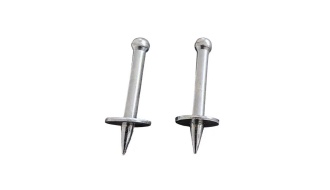
When Should You Compare Concrete Nails vs Drive Pins?
Many buyers compare concrete nails vs drive pins when speed, tool use, and jobsite cost are all part of the decision. The difference is mainly about installation method.
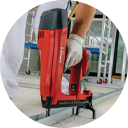
Drive pins are usually used with fastening tools and are more suitable for faster installation in tool-based fixing work. Nails are more familiar for general renovation, masonry fixing, and lower-cost applications where users do not want to depend on a specific fastening tool system.
For distributors, these two product groups can serve different customers. If buyers need simple fixing for brick, masonry, and wood-to-concrete use, Qinjia’s smooth, grooved, and spiral shank options are the first group to compare. If customers mainly ask for fast tool-driven fixing, drive pins should be reviewed as a separate category.
Service and Contact Support
If you are not sure which shank type fits your market, prepare the base material, nail length, diameter, surface finish, packing method, and expected use before sending an inquiry. These details help avoid wrong samples and unclear quotations. For wood-to-concrete, brick, masonry, or mixed resale demand, share your application notes through Qinjia’s contact page, and the team can match smooth shank, grooved fluted shank, or spiral shank options more accurately.
FAQ
Q: Can concrete nails be used in brick walls?
A: Yes, they can be used in many brick wall and masonry applications. For standard brick fixing, smooth shank nails may be enough. For harder masonry or stronger grip needs, grooved fluted or spiral shank options are worth checking.
Q: Which shank type should I choose for better holding power?
A: Grooved fluted shank nails usually provide better grip than smooth shank nails because the grooves increase friction with the base material. Spiral shank nails are also useful when holding stability is more important than easy driving.
Q: What details should I send before ordering from Qinjia?
A: Send the base material, nail length, diameter, shank type, surface finish, packing method, and whether OEM packing is needed. These details help Qinjia recommend a suitable product instead of only matching a size on paper.

 Consult
 Whatsapp
 Leave Message
 top
top