


Related news
What Length Brad Nails Should You Use? Complete 18 Gauge Size Chart & Expert Tips
Selecting the correct brad nail length prevents trim detachment and avoids surface splitting during interior joinery. Driving a fastener that is too short results in loose molding, while an oversized pin risks piercing concealed utility lines or causing back-side blowouts on cabinet panels. Based in Hebei, Qinjia manufactures precision wire fasteners, exporting low and medium carbon steel brad nails to commercial distributors and hardware buyers across international markets. Matching fastener dimensions to substrate density guarantees clean countersinking and firm mechanical holding.
How Do You Calculate the Ideal Brad Nail Length for Trim and Woodworking?
Determining proper brad nail length requires calculating the physical thickness of the outer trim piece alongside the penetration depth needed into the solid timber framing behind it.
Substrate Penetration Mechanics and Material Thickness Ratio
Standard mechanical fastening guidelines dictate that the pin must pass completely through the attached profile and penetrate into the supporting structural wood by at least one to one-and-a-half times the thickness of the trim piece. Because 18 gauge pins feature a thin shank geometry, they compress timber fibers smoothly without shearing the grain. Maintaining this depth ratio provides sufficient friction along the shaft to hold decorative profiles securely without requiring structural adhesive.
Accounting for Drywall Penetration and Air Gap Allowances
When installing baseboards or window casings over sheetrock, the fastener must cross a non-structural drywall layer before entering the wall stud. Standard 18 gauge brad nails span lengths from 10mm to 50mm. An installer mounting a 15mm thick pine baseboard over 12.5mm drywall must select a pin long enough—typically 45mm to 50mm—to bypass the soft gypsum matrix and anchor firmly into the underlying wood framing stud.
Jobsite evaluations confirm that failing to account for drywall thickness remains the primary cause of loose interior trim. For deeper technical density benchmarks across varied wood species and jobsite parameters, engineers can consult our technical reference on What Length Brad Nail Should You Use? Expert Tips for Better Results to align fastener specifications with jobsite timber densities.
Which Brad Nail Sizes Match Specific Woodworking Applications?
Matching brad nail length to the exact wood profile ensures flush pin heads and eliminates workpiece cracking. The following reference table outlines standard 18 gauge application parameters across common joinery tasks:
|
Woodworking Application |
Typical Profile Thickness |
Recommended 18GA Length (mm / inches) |
|
Micro-Molding & Picture Frames |
5mm – 12mm |
10mm – 25mm (3/8″ – 1″) |
|
Cabinet Joinery & Furniture Panels |
12mm – 19mm |
25mm – 38mm (1″ – 1-1/2″) |
|
Baseboards, Door & Window Casings |
15mm – 22mm |
38mm – 50mm (1-1/2″ – 2″) |
Baseboards, Door Casings, and Window Trims
Securing perimeter baseboards and exterior door casings requires 18 gauge fasteners in the 38mm to 50mm length range. For standard baseboard installations over sheetrock, engineering specifications typically call for 2-inch (50mm) pins. This length ensures the shank penetrates deeply into backing wall studs without cracking delicate face profiles. Importers referencing an 18 gauge brad nail size chart often select these longer pins for interior trim kits.
Cabinets, Furniture Assembly, and Panel Fastening
Assembling face frames, drawer boxes, and cabinet carcasses requires controlled pin penetration. When fastening standard 19mm (3/4″) sheet material or plywood panel joinery, selecting 32mm to 38mm (1-1/4″ to 1-1/2″) pins provides high shear holding power without blowing through adjacent panel corners or splitting veneer faces.
Decorative Moldings, Picture Frames, and Fine Joinery
Delicate trim, shoe molding, and picture frames demand shorter 18 gauge pins ranging from 10mm to 25mm. The smooth shank surface creates minimal entry marks, leaving tiny pinholes that require minimal wood filler before stain or paint application.
What Mechanical Features Ensure Flawless Fastening Without Wood Splitting?
Selecting the correct pin dimensions involves evaluating wire geometry, metallurgical hardness, and surface plating to ensure reliable feed performance in pneumatic tools. Adjusting the selected brad nail length based on wood density protects both the fastener shank and the finished timber surface.
Shank Gauge Tolerances and Anti-Splitting Metallurgy
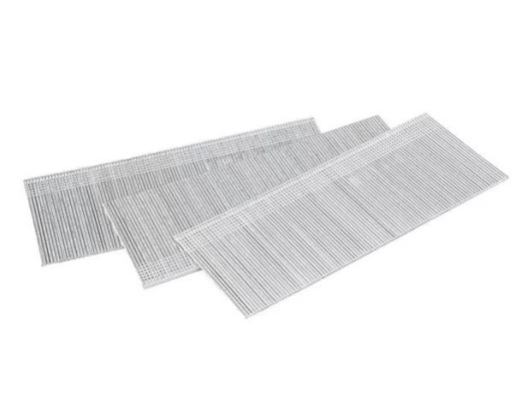
Precision manufacturing controls wire diameter and column strength. For fine woodworking, Qinjia Brad Nails are manufactured from low and medium carbon steel across 18 gauge (10mm–50mm) and 16 gauge (25mm–64mm) specifications. The thin shank design displaces timber fibers smoothly, eliminating wood splitting even when driving pins near narrow grain edges.
Surface Finishing Options for Moisture Resistance and Appearance
Fasteners used in kitchen cabinetry or window trim encounter ambient humidity and moisture. Offering electro-zinc plated and copper-plated surface finishes provides corrosion protection while creating a smooth shaft coating that reduces drive friction during high-speed gun placement.
Load Limitations and Non-Structural Application Boundaries
Brad nails feature a non-load-bearing design engineered specifically for trim, decorative molding, and temporary alignment during glue curing. Structural framing or heavy load assemblies require larger finish nails or structural screws.
How Does Factory Inspection Guarantee Uniform Fastener Quality?
Factory quality controls prevent jobsite downtime caused by bent pins, misaligned collations, or frequent nail gun jams during commercial trim installation.
Incoming Wire Verification and Multi-Stage Quality Assurance
Quality control starts with verifying raw steel wire coils for uniform tensile strength and exact gauge thickness. Comprehensive factory checks inspect strip straightness, head alignment, and wire collation integrity from initial drawing through final packaging, with optional third-party testing such as SGS or BV.
Precise Manufacturing Protocols for Jam-Free Power Gun Compatibility
Inconsistent shank diameters cause feeding failures in pneumatic nailers. Maintaining tight wire tolerances and applying smooth surface finishes ensures seamless magazine feeding, allowing high-velocity operation without driver blade jamming.
Reduced Jobsite Rework and Lower Overall Material Waste
Preventing bent pins protects delicate trim surfaces from driver denting. Uniform wire hardness ensures straight penetration through hardwoods, eliminating costly rework, damaged moldings, and wasted jobsite labor.
How Can Distributors Source Custom OEM Packaging and Wholesale Services from Qinjia?
Direct factory partnerships allow hardware distributors and importers to customize packaging formats and order quantities according to regional market requirements. Factory lines support variable production specs, adjusting shank sizing and brad nail length options across wholesale production batches.
Flexible OEM Packaging Options and Private Label Manufacturing
Distributors can customize product presentation by leveraging Qinjia Custom OEM/ODM Services. Packaging options include small inner boxes, protective plastic wrap, and branded shipping master cartons designed for retail shelves or contractor bulk sales.
Free Sample Testing Protocols and Technical Parameter Support
To verify mechanical driving performance before placing bulk orders, importers can request free sample testing. Factory engineers provide technical parameter guidance, dimension sheets, and pre-loading inspection reports to confirm compliance with local building standards.
Direct Sourcing Consultation and Fast Response Contact Channels
Direct factory communication simplifies order planning, container loading arrangements, and specification reviews for wholesale buyers seeking stable long-term supply.
Selecting proper pin specifications, verifying wire gauge parameters, or planning container orders requires experienced technical support. If you need detailed product sheets, custom packaging solutions, or guidance on evaluating brad nail length for commercial projects, please contact our engineering sales team to review your procurement requirements.
FAQ
Q: What is the most common brad nail length for interior trim?
A: The most versatile size is 1-1/2 inch (38mm). This length secures standard door casings and decorative trim pieces into wall framing without risking over-penetration into hidden wall cavities.
Q: What length 18 gauge nails for trim work should be used when driving through drywall?
A: For standard 1/2-inch drywall behind trim, select 1-1/2 inch to 2-inch (38mm to 50mm) 18 gauge pins to ensure at least 3/4 inch to 1 inch of solid penetration into the wood stud.
Q: How long should brad nails be for cabinet assembly?
A: When fastening 3/4-inch cabinet panels or face frames, choose pins between 1-1/4 inches and 1-1/2 inches (32mm to 38mm) to maximize joint stability without blowing through adjacent panels.

 Consult
 Whatsapp
 Leave Message
 top
top