


How to Put a Nail in a Concrete Wall Without Destroying Your Drill
Drilling into solid masonry and cured cement matrices often leads to snapped bits, excessive friction heat, and spalled wall surfaces. When contractors or maintenance crews attempt to secure timber, battens, or fixtures, using standard high-speed steel or carbide masonry bits can quickly ruin power equipment. Selecting hardened concrete nails eliminates the need for electric drilling entirely in many structural applications. Based in Hebei, Qinjia manufactures specialized industrial fasteners, exporting high-carbon steel nails and drive pins to commercial distributors across North America, Australia, Europe, and the Middle East. Evaluating the mechanical physics of substrate resistance helps site managers protect tools while maintaining installation velocity.
Why Do Standard Drills and Masonry Bits Fail in Concrete Walls?
Rotary hammer drills and standard impact drills rely on high-frequency hammering and rotational grinding to pulverize masonry. In dense concrete matrices, several thermal and mechanical factors cause bit destruction.
Thermal Buildup and Rapid Bit Dulling
Friction generates intense thermal energy at the carbide cutting edge during continuous drilling. Without intermittent cooling passes or liquid lubricants, heat transfers rapidly up the tool shank. This thermal buildup degrades the brazing material holding the carbide insert, resulting in tip separation, dull cutting edges, and complete bit failure.
Hard Aggregate Impact and Tip Shearing
Concrete walls contain hard river gravel, granite, or crushed stone aggregates bound within cured cement. When a high-speed masonry bit impacts hard aggregate, the cutting tip encounters localized resistance. This uneven resistance induces high torsional torque and lateral vibration, which causes tip shearing or shank fatigue fractures.
Micro-Fractures and Wall Surface Spalling
Prolonged hammer drilling transfers high-frequency vibration into brittle concrete surfaces. Micro-fractures radiate outward from the hole entry point, causing surface spalling and crater formation. Spalling around fastener entry typically occurs when nails are driven too close to edge margins or inside low-density mortar pockets. To guarantee maximum pull-out force and prevent substrate cracking during direct impact, maintain an edge distance of at least 50mm (2 inches) from wall boundaries and maintain a minimum spacing of 100mm between adjacent pins.
Direct Impact Fastening: How to Eliminate Drilling Entirely
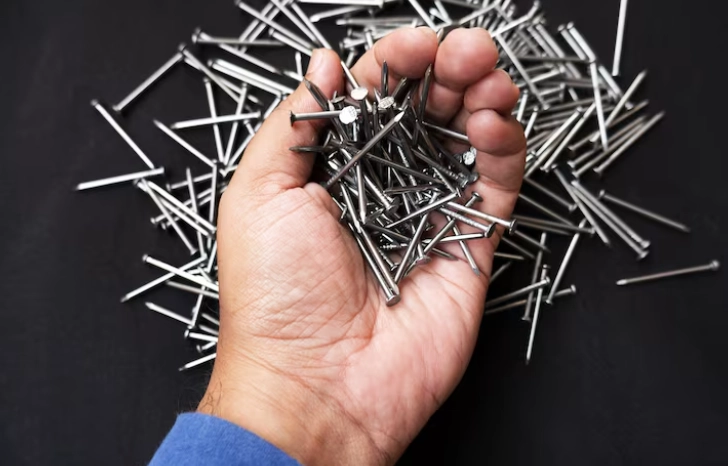
Fastening directly to masonry without pre-drilling requires a transition from rotary abrasive grinding to direct impact displacement. Using hardened concrete nails provides a direct mechanical joint by compressing substrate material around the shank.
Direct Impact Metallurgy (#45 High-Carbon Steel & HRC 50+)
Direct manual driving relies on superior column strength and core hardness. Qinjia fasteners are forged from premium #45 high-carbon steel and undergo precise quenching and tempering to reach a core hardness exceeding HRC 50–54. This metallurgical spec prevents shank buckling when penetrating high-density substrates up to 4,000 PSI compressive strength. Upon impact, the fastener shaft displaces concrete aggregate, creating high radial compression and frictional grip without requiring pre-drilling.
Substrate Density Limits & Penetration Mechanics
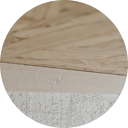
Direct manual fastening is suitable for cured concrete walls, brickwork, and mortar joints. Selecting standard concrete nails with lengths from 1″ to 8″ and shank diameters from 2.0mm to 5.5mm allows precise matching to structural loads. Matching fastener diameter to substrate density prevents wall cracking while achieving full load capacity.
Fastener Selection Matrix: Protecting Tools and Substrates
Selecting appropriate mechanical fasteners depends on total fixture weight, installation volume, substrate density, and environmental exposure.
High-Hardness Manual Fasteners for Timber & Frames
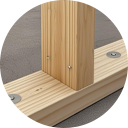
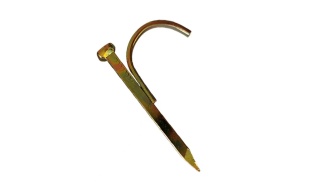
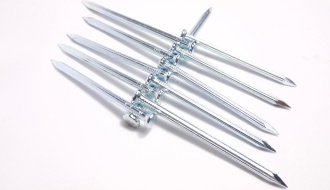
For securing wood studs, furring strips, or timber battens to concrete walls, high-carbon steel Qinjia concrete nails provide heavy-duty holding power. Manufactured from high-carbon steel with heat treatment, these concrete nails feature high core hardness to penetrate dense concrete and brick without shank buckling or bending under hammer blows.
Gas-Actuated Drive Systems for High-Volume Framing
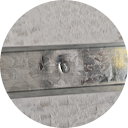
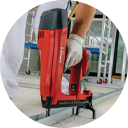
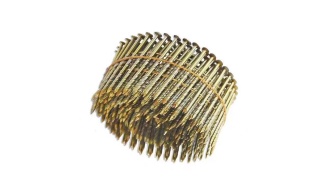
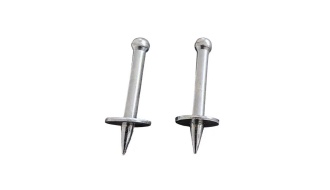
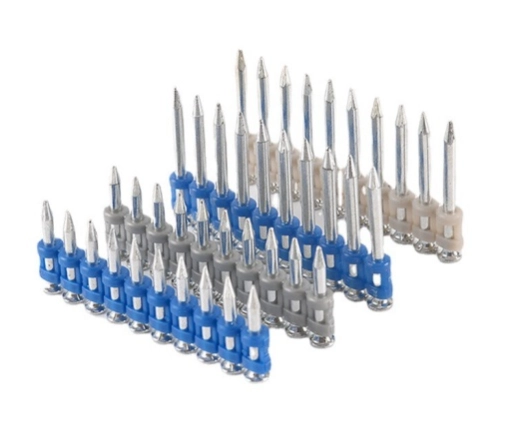
Commercial projects involving drywall tracks, conduit straps, or ceiling grids require high installation speed. Heavy-duty gas drive pins feature lengths from 12mm to 62mm and head diameters of 6–8mm. Driven by gas-actuated nail guns, these pins penetrate structural steel and high-PSI concrete instantly, bypassing power drills entirely.
Surface Finishing Options for Corrosion Resistance
Alkaline moisture in the concrete can cause surface oxidation over time. A number of coatings such as electro-galvanized, blued or phosphated have been found to create a barrier to moisture penetration to the fastener. They provide adequate holding power for both the indoor and outdoor framing applications.
Executive Decision Guide: When to Nail vs. When to Drill
Do not use standard rotary drills for light-to-medium structural fastening to prevent damage to very expensive carbide bits. Use the following application guide:
-
Direct Nailing (No Drilling Needed): Ideal for securing timber battens, drywall tracks, electrical conduit, and steel straps into standard cured concrete walls or mortar joints (under 4,000 PSI).
-
Impact/Rotary Drilling Required: Mandatory for heavy structural loads exceeding 200 lbs per fixing, tension-critical overhead anchors, or aged high-strength concrete (over 6,000 PSI) where direct displacement risks spalling.
-
Next Step for Procurement: Verify substrate PSI and shear load requirements before specifying shank diameters (2.0mm–5.5mm).
Quality Assurance & OEM Bulk Procurement with Qinjia
Establishing a direct manufacturing partnership streamlines procurement and guarantees uniform fastener performance across commercial projects.
Comprehensive Factory Inspection and Hardness Verification
Quality control is implemented at every stage of manufacturing, from checking raw wire incoming stock to packing finished products. We test for shank size, drive straightness, and core Rockwell hardness (HRC 50+). For very large international orders, we also offer optional third-party inspection services, such as SGS or BV.
Flexible OEM Packaging Options and Custom Size Manufacturing
Bulk supply options include small inner boxes, plastic-wrapped bundles, or heavy-duty shipping cartons tailored for commercial fastener distributors. Custom OEM branding, private labeling, and specific shank sizing accommodate regional market demands.
Free Sample Testing and Direct Inquiry Channels
Engineers and procurement officers can request free sample testing to verify drive performance, tensile strength, and plating thickness prior to mass production. Direct communication with factory engineers simplifies specification reviews. To discuss project specifications, custom packaging, or factory testing reports, please contact our engineering sales team for technical consultation and order coordination.
FAQ
Q: Do concrete nails need a pilot hole before driving?
A: No. High-carbon hardened concrete nails are engineered for direct impact driving into standard concrete walls and masonry mortar joints without requiring pre-drilled pilot holes.
Q: Can you hammer a nail into concrete without breaking the wall?
A: Yes. Utilizing proper hammer technique with a high-carbon hardened fastener allows clean penetration into concrete walls by displacing aggregate rather than cracking the surface matrix.
Q: How do you drive concrete nails into concrete safely?
A: Use a heavy framing hammer or hand sledge, hold the shaft perpendicular to the concrete wall surface, and deliver firm, direct strikes to ensure straight penetration without shank deflection.

 Consult
 Whatsapp
 Leave Message
 top
top