


Related news

Concrete Pin Nails Buying Guide for Bulk Orders and Jobsite Use
Choosing concrete pin nails for bulk purchase is not the same as buying a few boxes for one repair job. Importers, wholesalers, and contractors need to check the base material, shank structure, surface finish, packing method, and repeat-order stability before confirming an order. A nail that works well in soft brick may bend on hard concrete. A bright surface may look good in the sample box but rust during humid storage.
Qinjia manufactures metal fastening products for construction, woodworking, concrete fixing, and interior installation. Its concrete nail range includes smooth shank, angular spiral shank, and grooved fluted shank options. For buyers, these are not three names for the same item. They are different choices for different fixing conditions, cost levels, and jobsite requirements.
What Should Buyers Check Before Choosing Concrete Pin Nails?
Before choosing a product, buyers should first define where the nail will be used. The same carton of nails may be sold to hardware stores, renovation teams, furniture workshops, or contractors. Each channel has different expectations for driving ease, holding strength, corrosion resistance, and packaging.
Base Material and Fixing Context
Concrete, brick, masonry, and wood-to-concrete fixing all require different holding behavior. For simple wall fixing, the buyer may need easier driving and stable sizing. For harder concrete or more permanent fixing, the nail needs stronger resistance after it enters the base material.
Concrete nails for masonry are often used for wooden strips, frames, battens, temporary fixing, and basic construction work. If the end user often works on mixed substrates, the buyer should avoid ordering only one shank type for every application.
Jobsite Use and Bulk Distribution Needs
Concrete nails for jobsite use must be easy for workers to identify and apply. A contractor wants fewer bent nails, fewer delays, and fewer complaints from workers. A distributor also needs consistent packing, clear labels, and a product range that is easy to explain to customers.
For concrete nails for bulk orders, the order sheet should include shank type, length, diameter, finish, packing quantity, carton marking, and whether OEM packaging is required. These details reduce misunderstanding before production.
Shank Type and Holding Requirement
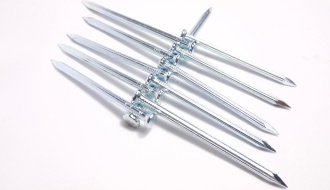
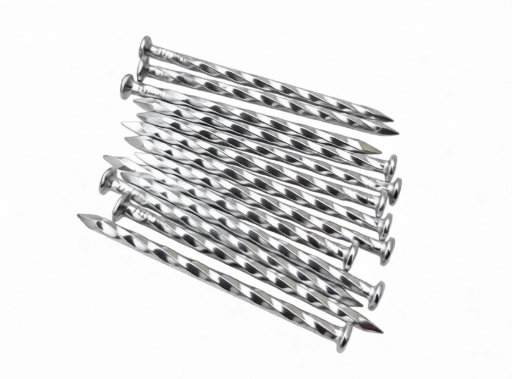
The shank is a key part of selection. Smooth shank nails are easier to drive and suit standard fixing. Angular spiral shank nails add a twisted grip structure. Grooved or fluted shank nails increase friction between the nail and the base material.
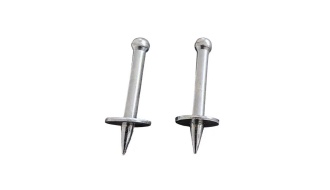
For concrete pin nails, this difference matters more than many buyers expect. If the user only checks nail length and ignores the shank, the final fixing result may not match the project requirement.
Which Shank Type Works Best for Different Concrete Fastening Jobs?
Each shank type has a proper place. The buyer should not treat the strongest-looking product as the only safe option. In many markets, smooth shank products sell faster because they are simple, familiar, and cost-efficient. For more demanding jobs, spiral or grooved shanks can give the sales team a clearer technical reason to recommend an upgrade.
Smooth Shank for Easy Driving and Cost-Sensitive Orders
Smooth shank concrete nails are suitable for buyers who need a general-purpose product for concrete, brick, and masonry surfaces. They fit common fixing work such as wooden battens, strips, frames, and light construction installation.
This product is a practical starting point for distributors building a standard concrete nail line. It is also suitable for markets where buyers care about simple use, stable appearance, and flexible packaging. For hardware store channels, smooth shank concrete nails are easier to explain than more specialized shank designs.
Angular Spiral Shank for Stronger Mechanical Interlock
Concrete nails featuring an angular spiral shank are more suitable when the fixing point needs more grip after driving. The angled spiral shape creates extra mechanical contact with concrete or brick, helping the nail resist loosening better than a plain shank in suitable applications.
Angular spiral concrete nails can be recommended for buyers who receive complaints about weak holding in harder surfaces. They are also useful when a distributor wants to offer a stronger option without changing the whole fastening method.
Grooved Shank for Long-Term and Permanent Fixing
Grooved shank concrete nails are suitable for medium-duty and more demanding fixing. The grooved or fluted structure increases friction after the nail enters the base material, which helps reduce movement and pull-out risk.
Grooved shank concrete nails are a good match for masonry installation, formwork fixing, and applications where the buyer wants stronger holding than a smooth shank can provide. For B2B sales, this product gives a clear upgrade route for contractors and project supply channels.
How Should Buyers Match Specifications to Real Order Requirements?
Specification selection should start from the fixing task, not from the lowest price. Length, diameter, finish, and packing style all affect how the nail performs and how easily it can be sold. For repeat orders, every detail should be confirmed before mass production.
Length and Diameter by Fixing Depth
Shorter nails are usually used for thinner attached materials or lighter fixing. Longer nails are chosen when deeper anchoring is needed. Diameter also affects driving resistance and holding strength.
For concrete pin nails, buyers should confirm the thickness of the attached material first, then choose a nail length that leaves enough anchoring depth in concrete or masonry. If the nail is too short, holding strength may be poor. If it is too long for the substrate, driving may become difficult and bending risk can increase.
Surface Finish by Storage and Site Conditions
Surface finish should match the sales market and storage environment. Bright, galvanized, coated, blued, or phosphated finishes may all be selected depending on the product and buyer requirement.
For dry indoor use, buyers may focus on appearance and cost. For humid warehouses, outdoor handling, or long shipping routes, corrosion resistance becomes more important. A surface that looks clean at loading may not remain clean after weeks of sea freight and storage.
Packing Method by Sales Channel
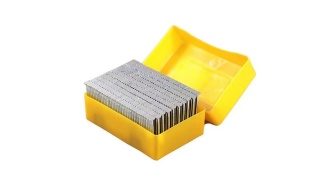
Packing is not a small detail in bulk nail sourcing. Contractors may accept bulk cartons, while retail channels need small boxes, plastic wrap, clear labels, and easy shelf display. Importers with their own brand may also need private label packaging.
Before ordering concrete nails for bulk orders, buyers should confirm quantity per box, carton strength, master carton size, label information, and pallet arrangement. This helps avoid warehouse confusion and resale problems.
What Quality Factors Affect Long-Term Procurement Cost?
The lowest unit price can create hidden cost if the nail bends, snaps, rusts, or looks inconsistent across batches. For importers and distributors, product failure is not only a technical issue. It becomes returns, slow-moving stock, and customer loss.
Material and Heat Treatment Consistency
Concrete nails usually require high-carbon steel and controlled heat treatment because the nail must enter hard base material without folding too easily. For structural concrete fastening, many buyers specify #45 or #60 high-carbon steel and a target core hardness around HRC 50–55. If hardness drops below HRC 48, the nail may bend when it hits high-strength concrete. If it exceeds HRC 58, the nail can become too brittle and may snap during impact.
For Qinjia buyers, this is why material confirmation and heat-treatment control should be discussed before bulk purchase. A sample may work well, but repeat-order stability depends on batch control.
Holding Power and Pull-Out Risk
Holding power comes from material, fixing depth, and shank form. Smooth shank products are useful for general work and easier driving. Angular spiral and grooved shank designs add more contact with the base material, so they are better suited to applications where loosening is a known risk.
A practical way to choose is to match the complaint type. If users report bending, check material and hardness. If users report loosening, check shank design and anchoring depth.
Hidden Costs of Surface Finish Standards
Many bulk buyers only check whether zinc plating looks bright in the sample. That is risky. For semi-outdoor sites, humid storage, or coastal markets, very thin electro-galvanized coatings, such as under 5μm, are more vulnerable to early rust during storage and transport.
For importers, this can turn a full container into difficult stock. Buyers should specify coating requirements clearly or discuss stronger surface treatment options for grooved shank nails when the product will be stored in humid conditions.
Batch Appearance and Repeat-Order Stability
Repeat-order stability affects local market trust. Nails from different batches should keep consistent length, diameter, head shape, surface finish, and packing style. Even if the nail can still be used, uneven appearance makes the product harder to sell.
This is why buyers should confirm samples, packing, and inspection points before production. For concrete pin nails, the most useful inspection points are size consistency, straightness, head shape, surface finish, packing quantity, and carton labeling.
How Can Qinjia Support Bulk Concrete Nail Buyers?
Qinjia’s concrete nail range allows buyers to build a product line by use case rather than ordering one generic nail. Smooth shank, angular spiral shank, and grooved fluted shank products can cover different price levels, fixing requirements, and sales channels.
Product Mix for Different Buyer Markets
A practical sourcing mix can start with smooth shank concrete nails for standard demand, angular spiral concrete nails for stronger grip, and grooved shank concrete nails for more demanding fastening. This gives distributors a simple way to recommend products by jobsite condition.
Retail channels may need fast-moving smooth shank sizes. Contractor supply channels may prefer angular spiral or grooved designs because the added grip is easier to explain during sales.
OEM Customization and Export Support
For bulk buyers, Qinjia can support customization around size, finish, packaging, and labeling. This is useful for importers who sell under their own brand or supply several market segments.
A clear inquiry should include nail type, required length, diameter, surface finish, packing style, carton marking, and target application. These details help both sides confirm whether the selected product fits the buyer’s real market.
Service and Contact for Custom Specifications
Good sourcing support means checking whether the selected nail fits the base material, fixing purpose, packing channel, and resale market. If your project involves mixed substrates, uncertain sizes, private label packing, or corrosion concerns, share these details through Qinjia’s contact page. For concrete pin nails, clear application information helps avoid wrong stock before production starts.
FAQ
Q: Are concrete pin nails the same as ordinary concrete nails?
A: In many sourcing discussions, concrete pin nails may refer to nails or pins used for concrete fastening. Buyers should confirm the shank type, driving method, length, diameter, surface finish, and base material before ordering.
Q: Which shank type gives stronger holding in concrete?
A: Smooth shank nails are suitable for general fixing and easier driving. Angular spiral and grooved fluted shank designs usually provide stronger grip because the shank creates more contact with the concrete or masonry base.
Q: What should buyers confirm before ordering concrete pin nails in bulk?
A: Buyers should confirm base material, fixing depth, shank type, length, diameter, surface finish, packing method, OEM label needs, and sample approval. These details affect jobsite use, resale quality, and repeat-order stability.

 Consult
 Whatsapp
 Leave Message
 top
top