


Pozidriv vs. Phillips: Which Is the Right Choice for Your Drywall Screws
In building projects and room setup work, those tiny features within a screw head can influence how quickly you install it, how your tools hold up over time, and even the neat finish on a wall surface. Plenty of fitters spot two usual cross-style drive options on screws, namely Pozidriv and Phillips. They seem nearly identical on a casual inspection, but in reality, they function in distinct manners when a driver bit begins to rotate forcefully.
For builders, sellers, and those handling drywall setups, selecting the proper drive kind can simplify routine tasks. Moreover, grasping the distinctions also assists in picking appropriate screw items. Qinjia concentrate on creating secure fastening choices for drywall, wood, and frame jobs, and thus, the screw drive selection holds significant value in everyday practical scenarios.
What Is the Difference Between Pozidriv and Phillips Screw Drives?
Even though both styles employ a cross-shaped groove, their core makeup and operational results vary in manners that reveal themselves amid the fitting process. Furthermore, these subtle design adjustments emerged to address particular challenges such as cam-out, torque delivery, and tool firmness.
Cross-Recess Design and Extra Ribs in Pozidriv
The Pozidriv drive appears quite like Phillips upon initial observation, yet it incorporates additional ribs amid the chief cross channels. These narrow marks expand the count of touch areas between the driver bit and the screw head. Consequently, the bit positions itself further in and secures the screw with greater solidity.
Owing to this configuration, Pozidriv screws generally provide a firmer sensation whenever substantial torque comes into play. Additionally, numerous European woodcraft and cabinet screws adopt this drive form, as it minimizes sliding and aids in preserving the screw head whole through multiple fittings.
Tapered Phillips Recess Designed for Controlled Cam-Out
The Phillips drive initially featured a modest taper within the cross channel. This contour permits the driver bit to ease away should excessive torque arise. Although this might appear as a shortcoming, in truth, such an element was deliberately included.
Within various putting-together contexts, particularly those involving electric tools, this managed cam-out assists in avoiding screws from being twisted excessively tight. Indeed, this served as a key factor in why Phillips screws gained extensive adoption in factory putting lines and building operations.
Torque Transfer and Driver Engagement Differences
From a hands-on perspective, Pozidriv commonly conveys torque more straightforwardly from the driver straight to the screw. Fitters typically observe reduced sliding along with enhanced command, especially during tasks with compact substances.
By contrast, Phillips permits somewhat greater motion between the tool and the screw head. In numerous drywall assignments, this creates no difficulty at all. Actually, that minimal slide can safeguard the screw head against harm and halt gypsum boards from fracturing beneath undue force.
Why Do Most Drywall Screws Use Phillips Heads?
Fitting drywall demands pace, reliability, and straightforward tool pairing. Laborers frequently insert hundreds or perhaps thousands of screws within one undertaking, and therefore, the screw structure needs to back swift and ongoing efforts.
Precisely for this reason, the Phillips drive continues as the leading option for drywall screws across the globe.
Self-Centering Design for Fast Installation
A notable benefit of the Phillips drive lies in its self-aligning contour. Whenever the driver bit contacts the screw head, it instinctively directs itself into the cross groove. This modest trait enables fitters to position screws rapidly without devoting time to bit alignment.
During extensive drywall ventures, even a minor boost in insertion pace accumulates gradually. As a result, fitters can proceed steadily over a wall or overhead section without repeated tool adjustments.
Controlled Cam-Out Preventing Over-Tightening
Gypsum panels possess limited thickness, and inserting screws excessively deep can injure the outer layer. Should this take place, the retention power diminishes, and the screw might require substitution.
The Phillips structure lessens this hazard, for the driver bit tends to slip just a touch if torque escalates overly. Such conduct frequently supports achieving the proper depth, particularly with automated screw drivers.
Wide Compatibility With Standard Driver Bits
Yet another cause for Phillips heads prevailing in drywall screws stems from basic compatibility. Phillips bits qualify as some of the most ordinary screwdriver bits globally. Virtually all drills, impact drivers, or drywall screw guns incorporate them by default.
On account of this, builders avoid the need for specialized tools when dealing with drywall screws. Consequently, this maintains the fitting process basic and economical, a factor that holds weight for both builders and sellers.
When Is a Pozidriv Drive a Better Choice for Construction Screws?
Although Phillips heads appear frequently in drywall arrangements, Pozidriv drives maintain a firm position in various building activities. Specific substances and uses draw advantages from the superior hold and torque handling of this arrangement.
Higher Torque Transmission With Less Slippage
Pozidriv screws enable the driver bit to remain securely within the screw head. This diminishes sliding and facilitates greater torque passage amid the fitting.
When engaging with heavy panels, solid timber, or frame substances, that additional torque renders inserting screws simpler. Fitters commonly discover that they require fewer efforts to position the screw correctly.
Better Grip for Dense Wood or Structural Boards
Compact wood substances, encompassing chipboard and particle board, typically call for screws capable of gripping robustly into the face. A sliding driver bit can prolong the job and impair the screw head.
Pozidriv drives assist in sidestepping this concern. The supplementary ribs elevate resistance between the bit and the screw head, thereby permitting the screw to penetrate the substance under consistent force.
Reduced Screw Head Wear in Repetitive Driving
Amid large-scale assembly operations, screw heads occasionally wear out or get damaged following successive bit interactions. Pozidriv arrangements spread pressure over additional touch spots, which in turn lessens strain upon the screw head.
This capability can prolong the durability of both the screw and the driver bit, thereby rendering the fitting procedure steadier over extended periods.
How Do Chipboard Screws and Drywall Screws Differ in Drive Requirements?
Diverse substances necessitate varied screw builds. Although drywall screws and chipboard screws might resemble each other superficially, their thread structure, insertion power, and standard uses diverge considerably.
Chipboard Screws Designed for Wood and Particle Board
Chipboard screws target substances like particle board, MDF, and further fabricated wood goods. Such substances frequently appear in cabinetry production and room woodwork.
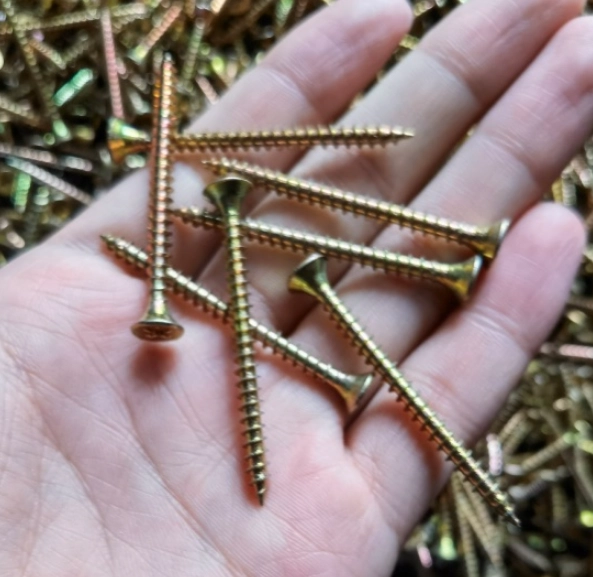
Chipboard screws commonly include keen threads and robust entry capability, enabling them to anchor solidly within wood strands. Numerous builders opt for screws that deliver firm torque management, particularly in handling packed panels or substantial sections.
Qinjia fabricates chipboard screws tailored for even insertion and secure hold in wood-derived substances. Their thread structure aids in minimizing fracture risks, all while upholding potent retention force.
Drywall Screws Engineered for Gypsum Board Installation
Drywall screws arise with an alternate intent. Their core function involves attaching gypsum panels to timber studs or metal studs within room wall frameworks.
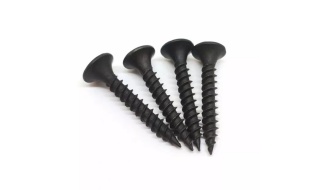
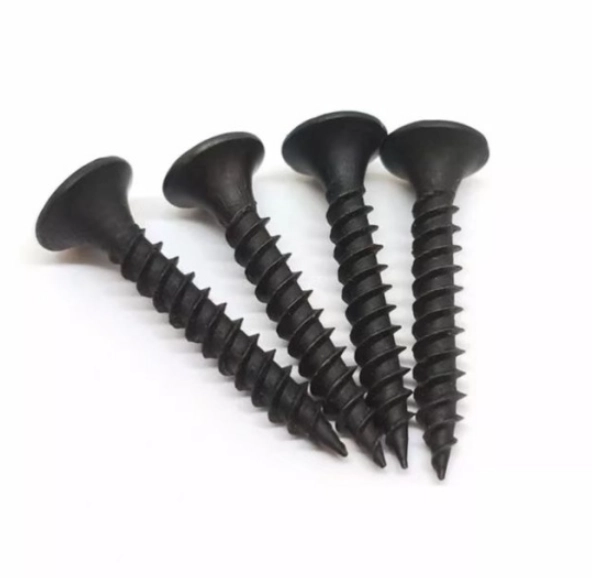
These screws generally utilize a bugle head, which enables the screw to rest level against the drywall face without shredding the paper covering. Keen threads support the screw in accessing the substance promptly, a crucial aspect during sizable fitting endeavors.
Qinjia produces drywall screws across multiple dimensions and thread varieties, such as coarse threads suited for wood studs and fine threads for lightweight steel frames. This adaptability renders them fitting for extensive interior divider systems.
Thread Design and Drive Type Affect Installation Efficiency
The pairing of thread structure and drive kind establishes the ease with which a screw advances into the substance. An effectively crafted screw shortens fitting duration and decreases the likelihood of marred heads or injured panels.
Hence, builders routinely choose screws considering not merely length and width but likewise the drive system. Aligning the screw structure with task circumstances yields improved outcomes at the work area.
How Does Qinjia Provide Reliable Screws for Different Applications?
Dependable fastening goods rely upon far more than sole design. Production excellence, substance choices, and evaluation steps all contribute to a screw’s effectiveness during fitting.
Hebei Qinjia Metal Products Co., Ltd. established its standing through emphasis on uniform creation guidelines and a broad selection of building fasteners.
Drywall Screws With Bugle Head and Sharp Threads
Qinjia drywall screws aim toward rapid fitting in gypsum panel systems. The bugle head permits the screw to lie even without injuring the drywall face.
Keen threads enable the screw to slice swiftly into timber or metal studs, thereby easing the fitting procedure for laborers. Diverse lengths and widths stand ready to suit assorted wall frameworks.
Chipboard Screws for Woodworking and Furniture Assembly
Regarding woodcraft and room joinery, Qinjia supplies chipboard screws featuring robust thread attachment and solid entry skill. These screws find common employment in cabinets, furniture sections, and timber framing.
The structure assists in curbing fractures in fabricated wood panels, even as it supplies trustworthy retention power. This equilibrium proves essential in cabinetry output, where durability and visual appeal both hold importance.
Strict Quality Control and Global Construction Supply
Quality oversight constitutes a vital element of Qinjia’s production sequence. Screws undergo evaluations for thread robustness, torque efficacy, and surface coating prior to dispatch.
The enterprise delivers fastening goods to regions including North America, the Middle East, Australia, Southeast Asia, and additional locales. Through reliable output and steady item excellence, Qinjia aids sellers and building providers in pursuit of trustworthy fastener options.
FAQ
Q1: What is the main visual difference between Pozidriv and Phillips screws?
A: Pozidriv screws usually have four small lines between the main cross slots on the head. These additional ribs help increase contact between the driver bit and the screw.
Q2: Are Phillips screws suitable for heavy construction work?
A: Phillips screws work well for many general construction tasks, especially drywall installation. However, for applications that require higher torque, Pozidriv drives may offer better grip.
Q3: Why are drywall screws different from wood screws?
A: Drywall screws are designed to fasten gypsum boards to studs and usually have a bugle head and sharp threads. Wood screws, including chipboard screws, focus more on strong grip inside wood fibers and preventing splitting.

 Consult
 Whatsapp
 Leave Message
 top
top