


Concrete Nails vs Wood Nails: Mechanical Strength & Shear Load Comparison
Selecting structural fasteners for construction sites requires evaluating base substrate density and mechanical load requirements. The core trade-off in the concrete nails vs wood nails debate centers on metallurgical composition, column strength, and shear resistance. Driving a soft wire nail into cured concrete causes instantaneous shank buckling, whereas driving a hardened masonry pin into delicate timber splits the grain. Based in Hebei, Qinjia manufactures specialized wire and sheet metal fasteners, supplying high-carbon concrete nails, pneumatic pins, and brad nails to commercial distributors across North America, Europe, Australia, and the Middle East. Aligning fastener metallurgy with substrate properties prevents site downtime and joint failure.
What Engineering Factors Determine Fastener Performance in Concrete and Wood?
Substrate structures exhibit vastly different physical responses under impact force and static load. Evaluating base material density reveals why fasteners designed for timber cannot function in cementitious matrices.
Core Hardness Differences Between High-Carbon 45# Steel and Low-Carbon Steel
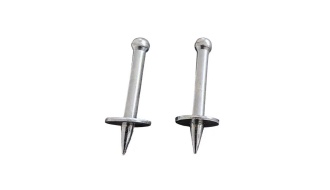
Fasteners intended for masonry penetration utilize high-carbon steel subjected to specialized thermal processing. This creates the core hardness necessary to pierce aggregate and cured cement without axial shank distortion. Standard wood nails rely on lower-carbon wire coils, which offer sufficient ductility for timber compression but lack the yield strength required to resist dense stone obstacles.
Shear Load Resistance and Tensile Yield Behavior Under Direct Impact
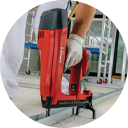
When a high-velocity hammer strike or pneumatic driver transfers kinetic energy into a fastener, the shank experiences combined axial compression and lateral shear stress. Hardened masonry fasteners maintain structural column alignment under severe impact. Conversely, standard wire fasteners undergo plastic deformation when impacting hard aggregate, failing before achieving penetration depth.
Substrate Holding Mechanics and Historical Field Reference Insights
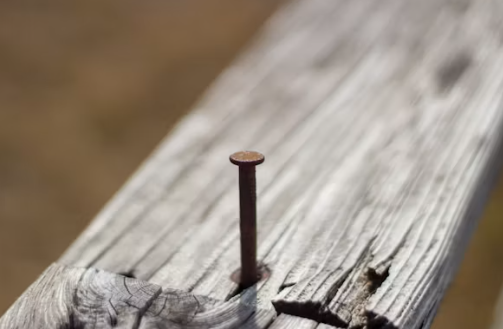
Wood holding power relies on elastic fiber compression along the shank shaft, creating frictional retention. Concrete anchoring depends on hoop stress and micro-wedging within the displaced cement matrix. Engineers reviewing physical performance metrics can examine our technical breakdown on concrete nails vs. wood nails: which is stronger to align structural specifications with site requirements. Evaluating these factors clarifies why a direct concrete nails vs wood nails evaluation is essential before specifying jobsite inventory.
How Do Concrete Nails and Wood Nails Compare in Physical Strength?
Physical strength in mechanical fixings encompasses bending resistance, material fatigue limits, and surface environmental protection. Comparing these parameters highlights structural boundaries across construction trades.
Bending Resistance Under High-Velocity Driving Force
Heat-treated high-carbon steel fasteners provide superior column rigidity, allowing straight penetration into dense concrete, brickwork, and mortar joints. When comparing concrete nails vs wood nails in terms of driving dynamics, the high core hardness of masonry pins prevents shank bending under impact, while standard wood pins collapse sideways against hard aggregate.
Structural Failure Modes and Material Deformation Risks
Substrate mismatching produces distinct failure modes. Standard low-carbon wood fasteners exhibit immediate shank buckling upon contacting masonry surfaces, creating safety hazards from rebounding steel fragments. Conversely, driving thick, high-hardness masonry pins into delicate softwood or thin trim profiles causes severe grain cleavage and face splitting.
Surface Platings and Corrosion Protection for Concrete and Timber Environments
Concrete matrices release alkaline moisture during curing, accelerating oxidation on unprotected steel shafts. Finishing options like electro-zinc plating, hot-dip galvanization, bluing, or phosphating protect steel shanks against moisture ingress and chemical reactions. For interior joinery, zinc or copper coatings preserve surface appearance while maintaining joint integrity.
Which Fasteners Should Commercial Contractors Specify for Structural and Finishing Work?
Commercial projects require clear delineation between load-bearing structural fixings and delicate decorative attachments. Matching hardware specifications to trade applications optimizes labor speed and material consumption.
High-Carbon Smooth Concrete Nails for Masonry and Wood-to-Concrete Attachment
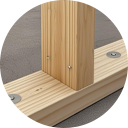
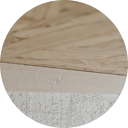
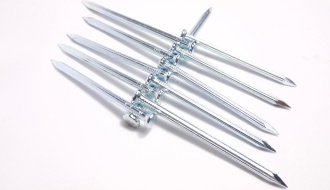
Securing sill plates, timber battens, or steel brackets directly to cured foundation walls requires dedicated heavy-duty fixings. Forged from high-carbon steel with precision heat treatment, Qinjia smooth concrete nails feature shank diameters from 2.0mm to 5.5mm and lengths spanning 1″ to 8″. Available in zinc-plated, blued, or phosphated surface treatments, these high-carbon steel fasteners for concrete deliver the holding power required for wood-to-concrete attachment without shank bending under impact.
Fine-Gauge Brad Nails for Non-Structural Timber Joinery and Trim
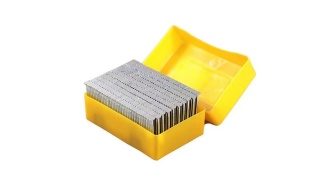
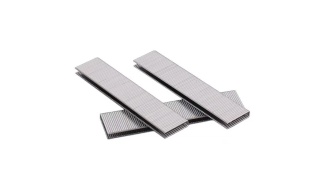
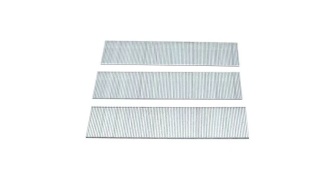
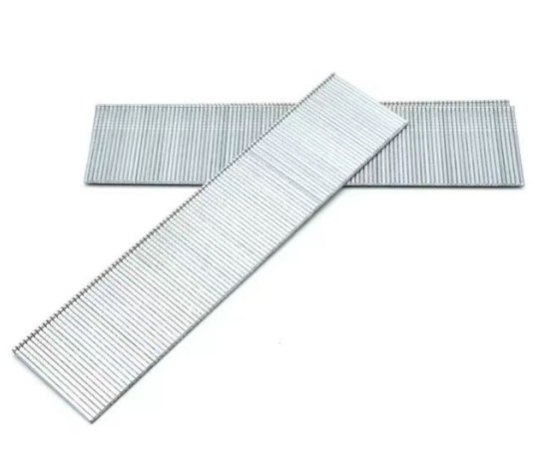
Interior finish carpentry, cabinet assembly, and decorative molding installation demand discreet mechanical attachment without wood splitting. Precision Qinjia brad nails are manufactured from low and medium carbon steel across 18GA (10–50mm) and 16GA (25–64mm) specifications. Featuring a thin shank geometry with electro-zinc or copper platings, these fine-gauge brad nails for trim compress timber fibers cleanly, leaving minimal entry marks that require little filler.
Matching Fastener Geometry to Base Substrate Properties
Thick, smooth, or deep-fluted shanks maximize frictional keying within dense masonry matrices, resisting pull-out forces caused by structural vibration. Thin, narrow-head finishing pins minimize surface disruption in soft or hardwood stock. Analyzing these geometric differences illustrates why a systematic comparison between concrete nails vs wood nails drives accurate hardware selection across multi-substrate job sites.
How Do Metallurgical Heat Treatment Protocols Prevent Jobsite Fastener Failures?
Fastener reliability begins in the wire drawing and thermal processing stages, where controlled heating cycles dictate final grain structure and mechanical performance.
Quenching and Tempering Cycles for Optimal Core Hardness
Raw high-carbon wire coils undergo precise quenching and tempering thermal cycles. Rapid cooling hardens the molecular structure, while controlled tempering relieves internal stress to impart elasticity. This balanced metallurgy prevents brittle shank fracturing during direct impact while eliminating shank bending under impact.
Full-Process Quality Inspection and Shank Diameter Tolerances
Quality control protocols monitor production from raw material receipt through final packaging. Comprehensive inspection procedures verify shank diameter tolerances, head concentricity, and core Rockwell hardness levels. Supporting third-party testing, such as SGS or BV verification, ensures compliance with international building standards.
Minimizing Jobsite Waste and Non-Productive Driver Downtime
Consistent core hardness across fastener batches eliminates driver blade jamming and bent shank extractions on active work sites. Supplying uniform mechanical properties allows installation crews to maintain steady velocity, reducing material waste and lowering total labor expenditure. Commercial buyers reviewing concrete nails vs wood nails performance data recognize that batch consistency directly protects profit margins.
How Can B2B Buyers Partner with Qinjia for Wholesale Orders and OEM Supply?
Importers and regional hardware distributors require direct factory partnerships that offer flexible manufacturing capabilities, custom packaging, and verified quality assurance.
Flexible OEM Packaging Options and Custom Size Manufacturing
Wholesale supply arrangements support custom B2B packaging formats, including small inner boxes, protective plastic wrap, and heavy-duty shipping master cartons. Factory production lines accommodate custom shank diameters, non-standard lengths, and private label branding tailored to regional market specifications.
Free Sample Testing Protocols and Technical Parameter Support
Procurement officers can request free sample testing to evaluate drive performance, tensile yield resistance, and surface coating integrity prior to placing commercial container orders. Technical parameter sheets and standard 30% T/T deposit terms backed by pre-loading inspection reports simplify international trade compliance.
Direct Factory Consultation and Service Inquiries
Direct communication with factory sales engineers accelerates technical specification reviews, custom tooling requests, and export shipment scheduling. Partnering with an established manufacturer guarantees technical guidance when evaluating concrete nails vs wood nails requirements for regional distribution channels.
Specifying the correct fastener dimensions, metallurgical hardness, or custom OEM packaging formats requires direct engineering coordination. If your procurement team requires technical parameter sheets, custom size collation, or sample batches for commercial evaluations, please contact our technical sales team to discuss your project requirements.
FAQ
What is the primary difference in a concrete nails vs wood nails comparison?
The main distinction lies in steel metallurgy and shank hardness. Concrete fasteners are forged from high-carbon 45# steel and heat-treated to achieve high core hardness capable of penetrating dense masonry without bending. Wood nails utilize low-carbon steel designed to compress timber fibers without requiring extreme impact hardness.
Can hardened concrete fasteners be used for wood-to-wood framing?
No. Hardened concrete fasteners feature thick shanks (typically 2.0mm to 5.5mm) that can easily split timber framing members when driven into wood without concrete backing. Standard wire framing nails or brads are appropriate for wood-to-wood joinery.
Why do standard wire nails bend when driven into brick or concrete?
Standard wire nails lack the core hardness and tensile yield resistance needed to pierce aggregate stone and cured cement. Upon direct impact against dense masonry, low-carbon steel undergoes rapid plastic deformation, causing shank bending under impact.

 Consult
 Whatsapp
 Leave Message
 top
top