


Related news

Brad Nails vs Finish Nails: Gauge Mechanics & Holding Power Matrix
Selecting mechanical fasteners for architectural woodwork requires analyzing wire gauge, shank diameter, and lateral load capacity. Evaluating the mechanical differences in a brad nails vs finish nails comparison requires examining how shank geometry impacts wood fiber displacement. Based in Hebei, Qinjia manufactures precision wire fasteners, exporting high-carbon concrete nails, pneumatic pins, and brad nails to commercial distributors across North America, Europe, Australia, and the Middle East. Aligning fastener specifications with substrate density prevents site downtime and joint failure.
How Does Wire Gauge Dictate Mechanical Holding Power and Fiber Splitting?
Base material structures and trim profiles respond differently under pneumatic drive force. Assessing wire gauge dimensions clarifies how shank profile affects structural integrity.
Thin-Shank 18GA Geometry and Fiber Compression Dynamics
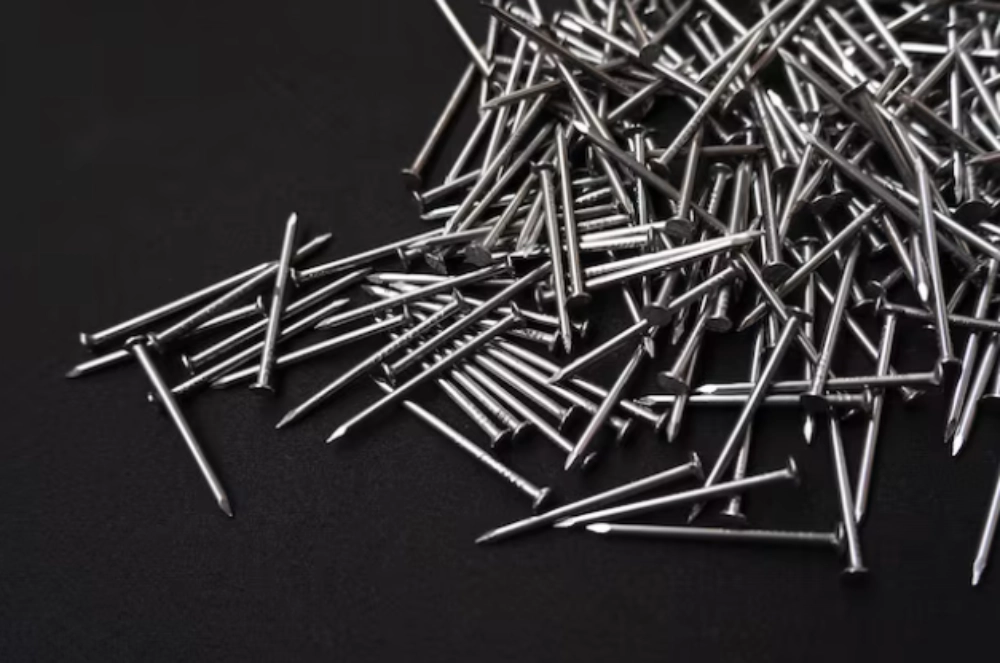
Wire pins made from low or medium carbon steel,Precision 18GA wire pins, form a thin shank that when pushed into timber of a fine profile, crush surrounding wood fibers instead of cutting them. The Precision wire pin allows for the prevention of wood splitting, in thin moldings, fine veneer overlays and fine edge trim, without the need for pre-drilling a pilot hole.
Thick-Shank 16GA Wire Profiles and Shear Load Mechanics
Heavy-duty finish carpentry demands higher lateral resistance. Selecting thicker 16GA wire profiles provides increased column rigidity and higher shear load capacity. Comparing 18 gauge brad nails vs 16 gauge finish nails reveals that the larger shank cross-section creates a wider displacement track in solid wood studs, delivering superior pull-out resistance for heavier casing boards and baseboards.
Historical Selection Benchmarks and Reference Guidelines
Carpentry standards balance shank gauge against material thickness to optimize holding force. Site managers assessing historical selection benchmarks can review our technical guide on Brad Nails vs. Finish Nails: Which is Best for Your Projects to align fastener specifications with jobsite load requirements. Comparing wire gauges ensures accurate inventory selection for contractors analyzing brad nails vs finish nails performance parameters.
How Do Brad Nails and Finish Nails Perform Across Key Carpentry Applications?
Matching wire gauge to specific joinery tasks prevents surface denting and structural detachment. Application requirements vary from non-structural trim to heavy load-bearing architectural features.
Light Trim, Furniture Assembly, and Delicate Joinery
Interior finishing, cabinet assembly, shoe molding, and decorative picture frames require discreet mechanical attachment. For these delicate joinery tasks, specifying Qinjia Brad Nails provides an optimal balance of holding power and head concealment. Manufactured in 18GA (10–50mm) and 16GA (25–64mm) specifications with electro-zinc or copper platings, these pins leave minimal entry marks that require minimal filler.
Heavy Architectural Trim and Transitioning to Structural Substrates
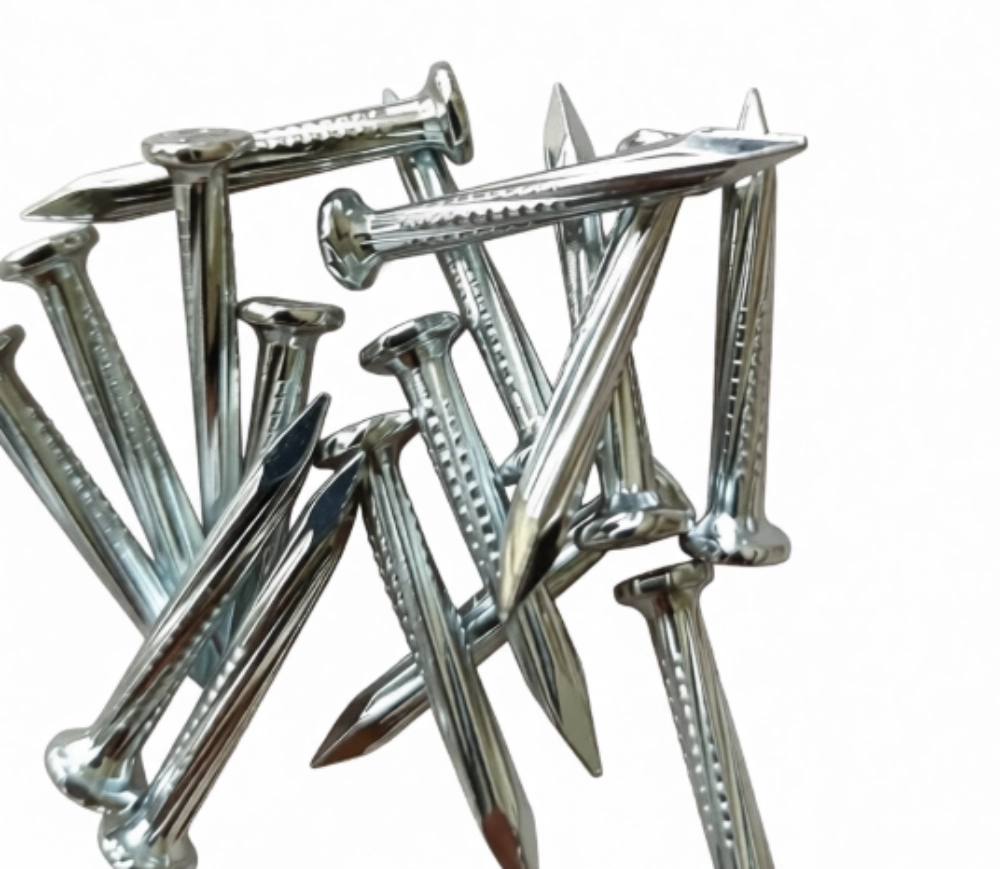
Installing thick baseboards, window casings, and heavy crown moldings demands deeper stud penetration. When interior framing transitions from soft wood studs to hard masonry or concrete walls, standard finish pins are insufficient. For securing timber battens or framing directly to concrete, contractors specify heat-treated high-carbon Spiral Concrete Nails. Featuring shank diameters of 2.0–5.5mm and lengths from 1″ to 8″, their spiral shank geometry provides intense mechanical keying in dense cement matrices.
Surface Platings and Corrosion Resistance in Humid Worksite Environments
Worksite humidity and ambient moisture can increase steel wire oxidation on unprotected wire shanks. Various surface finishes can prevent moisture entering into the steel wire. Electro-zinc plated, copper coated, blued and phosphated surfaces all can help to prevent rust bleeding through painted wall trims in high humidity interior areas where the surface is exposed to moisture in the air.
|
Fastener Category |
Wire Gauge / Shank Diameter |
Length Range |
Base Material Chemistry |
Primary Application Field |
|
18GA Brad Nails |
18 Gauge (Thin Shank) |
10mm – 50mm |
Low / Medium Carbon Steel |
Decorative trim, shoe molding, cabinet joinery |
|
16GA Finish Pins |
16 Gauge (Thick Shank) |
25mm – 64mm |
Low / Medium Carbon Steel |
Baseboards, door casings, window framing |
|
Spiral Concrete Nails |
2.0mm – 5.5mm Shank |
1″ – 8″ (25mm – 200mm) |
Heat-Treated High-Carbon Steel |
Timber studs to masonry & concrete walls |
What Tool Pressure and Collation Parameters Prevent Fastener Jamming?
Maintaining continuous installation speed requires calibrating pneumatic operating pressure and verifying strip collation integrity. Equipment misfeeds increase non-productive labor hours.
Pneumatic Operating Pressure Calibration for Flush Placement
Calibrating pneumatic tool air pressure (PSI) according to wood density ensures consistent countersinking. Excessive operating pressure drives fastener heads deep into soft timber, fracturing surface fibers. Insufficient drive force leaves pin heads standing proud, requiring manual punch setting. Smooth shank drawn wire ensures seamless driving under pneumatic pressure.
Collation Integrity and Prevention of Tool Driver Blade Jams
Automated high-velocity nailers depend on precise strip collation. Uniform glue or paper collation holds individual wire pins in exact parallel alignment. Maintaining strict wire gauge tolerances eliminates misfeeds and driver blade jamming, protecting tool driver mechanisms from premature wear during commercial installations.
Material Waste Reduction and Reduced Rework Costs for Wholesale Buyers
Inconsistent wire metallurgy causes shank deflection inside dense hardwoods. Consistent core steel structure prevents bent pins during impact driving, lowering manual extraction labor and jobsite waste. Buyers assessing brad nails vs finish nails cost efficiency recognize that shank straightness directly protects distributor profit margins.
How Do Factory Quality Protocols Ensure Fastener Batch Consistency?
High-volume commercial construction requires batch-to-batch uniformity across every shipping container. Rigorous manufacturing controls monitor wire drawing, cold heading, and surface coating.
Full-Process Inspection and Metallurgical Hardness Verification
Quality control spans every production stage, from raw wire coil receiving through final packaging. Comprehensive factory testing verifies shank wire diameter tolerances, head concentricity, and tensile strength. Supporting third-party inspection, such as SGS or BV verification, confirms compliance with international building standards.
Shank Gauge Tolerances and Smooth Surface Treatment Control
Automated drawing machinery maintains tight gauge tolerances across 18GA and 16GA wire lines. Smooth electro-galvanized or copper-plated surface treatments reduce friction inside tool magazines, ensuring consistent feed rates in high-speed pneumatic power guns.
Custom B2B Packaging Options for International Supply Chains
Commercial distributors require robust packaging formats capable of surviving maritime transit. Bulk supply options include small inner boxes, protective plastic wrap, and heavy-duty shipping cartons tailored with custom OEM branding and private labeling for regional importers.
How Can B2B Buyers Partner with Qinjia for OEM Sourcing and Wholesale Orders?
Direct factory partnerships provide regional distributors with competitive pricing, flexible production capacity, and reliable lead times. Establishing clear technical parameters simplifies international procurement when deciding brad nails vs finish nails supply strategies.
Free Sample Testing Protocols and Technical Parameter Sheets
Procurement managers can request free sample testing to evaluate drive performance, surface plating thickness, and tensile yield strength prior to full container orders. Technical parameter sheets and pre-loading inspection reports ensure material specifications match regional trade requirements.
Transparent Payment Terms and Global Export Logistics
Factory supply agreements utilize standard payment terms, including a 30% T/T deposit with the 70% balance paid before loading, backed by detailed container loading reports and packing lists. Multi-product container consolidation allows buyers to combine brad nails, ST nails, and concrete fasteners in single shipments.
Direct Factory Consultation and Wholesale Inquiry Channels
Direct communication with factory sales engineers accelerates specification reviews, custom size inquiries, and OEM packaging design. Evaluating whether to specify brad nails or finish nails for trim programs requires direct technical guidance.
Evaluating wire gauge parameters, shear load capacity, or custom OEM packaging formats requires direct engineering coordination. If your procurement team needs technical specification sheets, custom collation options, or sample testing batches for commercial distribution, please contact our engineering sales team to review your order requirements.
FAQ
What is the main structural distinction in a brad nails vs finish nails evaluation?
The primary difference lies in wire gauge and shank diameter. Brad nails utilize thinner 18 gauge wire (approx. 1.2mm) designed to prevent wood splitting in delicate trim, while finish nails use thicker 16 or 15 gauge wire (1.4mm to 1.8mm) to deliver higher shear load capacity for heavy baseboards and door casings.
What factors determine the holding power of brad nails in hardwood joinery?
The holding power of brad nails relies on friction between the compressed wood fibers and the thin steel shank. While 18 gauge pins offer sufficient retention for non-load-bearing trim and cabinetry face frames, heavy structural moldings require larger 16 gauge finish nails or structural adhesive.
Can 18 gauge brad nails be used for securing exterior window trims?
Yes, provided they feature electro-zinc or copper platings to resist moisture oxidation. However, for securing heavy exterior window casings directly to framing studs, specifying 16 gauge finish pins or specialized high-carbon fasteners ensures adequate lateral shear strength.

 Consult
 Whatsapp
 Leave Message
 top
top