



Black Phosphate Doesn’t Stop Rust on a Drywall Screw
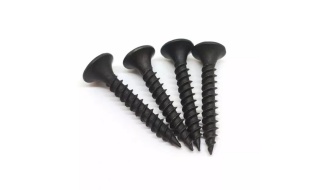
There’s almost an apology hiding in the name. Black phosphate is a conversion coating, a manganese or iron phosphate layer grown on the steel surface, and if you’re hoping it stops rust the way zinc does, you’ve hired the wrong coating. A handful of black screws left on a windowsill in a coastal town shows flash rust inside a week, sometimes less. So why does half the fitout industry in the world buy drywall screws finished this way? Rust was never what the phosphate got hired to prevent. Its whole value shows up during the drive. Thread peaks stay sharp through bins and bulk packing, the pores carry drive wax so the driver stops fighting, and joint compound keys onto the matte surface instead of skimming past it. Bottom of the price sheet, better driving, better taping, inside a dry building. That is a coherent product. Now put the same screw in a wall that gets wet again. An unvented roof before the building is dried in, a cold store, anything coastal. Different story. Zinc then earns its surcharge, honestly. The buyer who stocks nothing but black because it’s cheap will meet the cost of that decision later, wearing someone else’s invoice.
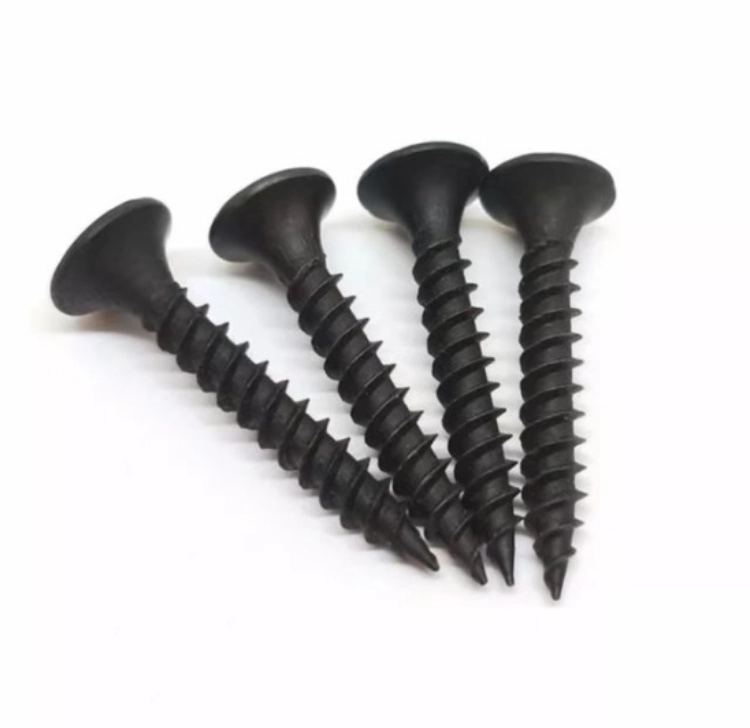
Three Finishes on the Line, Described Without the Brochure
The drywall screw line begins as 1022A wire, cold-headed and thread-rolled, heat-treated, then sent off to finishing.
Phosphate first, since it’s the volume seller. Zero barrier value, and that needs saying plainly, but the coating does three useful things nobody advertises. Wax lives in the pores, so a box of black screws drives noticeably easier than the plated lookalike. The surface roughness is microscopic but real, and paint and compound grip it. And because the coating doesn’t fill the thread flanks, peaks stay sharp. That last one matters more than any of the marketing copy suggests. A drywall screw is a self-drilling claim on paper-faced gypsum; a blunt thread shreds the paper face instead of punching through it, and a shredded face won’t take tape.
Then zinc, clear or white or yellow. Sacrificial protection, plating that corrodes ahead of the steel and buys the screw months to years of clean life depending on how much chloride and humidity it’s living in. Two prices get paid for it. Plate fills thread flanks a little, so the thread runs slightly blunter out of the box. And there’s the invoice, which dry-inland markets argue about every single season.
Up at the top sit the flake and polymer coatings, Geomet, Dacrotized, Ruspert, quoted rather than stocked. They exist for people screwing into exterior sheathing or panels that cycle wet and dry for a decade, and they cost what that promise costs.
| Comparing | Black phosphate | Zinc plated | Flake coating |
|---|---|---|---|
| On the driver | Sharpest, waxed | Flanks slightly filled | Depends on system |
| Dry-air storage | Not needed there | Months to years | Not why anyone buys it |
| Wet plus chloride | Days | Months, then it shows | This is its job |
| Price sheet position | The floor | Middle step | Special-order money |
What the Wall Does After Handover Decides the Finish
The partition inside an occupied office dries in once and stays dry for fifty years. The black screws behind it never get the opportunity to rust. Now think about the courtyard wall in Muscat, or the kitchen wall someone pressure-washes, or the warehouse where the roof leaks every January and the boards sit damp until the fitout crew returns in spring. Same SKU, three different products, and it’s not the coating that changed.
Two rules worth keeping, both learned from complaints rather than chemistry. If the envelope isn’t closed while boards go up, the fasteners ride through actual rain, and phosphate doesn’t have an answer for that; buy zinc. If rust stains start showing at screw lines ten months after a coastal winter, that’s chloride doing what chloride does to an unbarriered finish, and the shelf needs plated stock even though the price war says otherwise. These calls belong to whoever knows the building’s life, not to an engineer, and none of it touches what the assembly must carry, which remains on signed drawings.
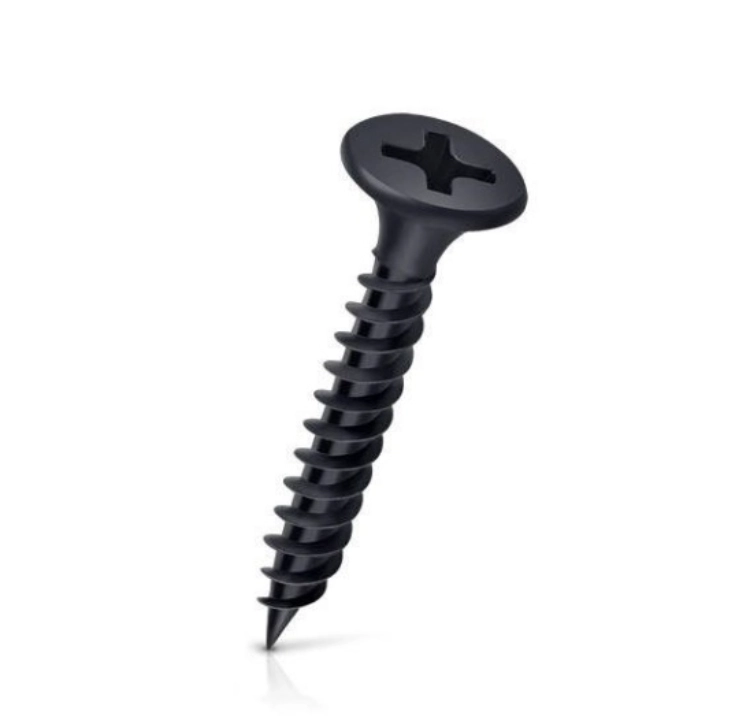
Gauge Before Finish, and the Head That Shows Your Work
Finish is the second question. First comes gauge and thread. #6 through #10, meaning M3.5 to M4.8, lengths 13 to 152 mm. Coarse single thread when the studs are timber, fine twinfast when they’re light steel down to 0.5 mm section, hi-low if the market wants an alternative. Bugle head is the standard recess, and with a bugle head the finish becomes visible whether you like it or not, because a correctly set head sits just below the paper with the paper left unbroken, so the facing shows exactly what the head is wearing. Screw proud of the paper or tear its face, and no coating rescues that joint when taping starts. Driving technique is part of the finishing spec, it just never gets written as one. On the drive itself, Phillips is what crews own. Torx and square are better, genuinely, but they demand bits people don’t have, and a chewed Phillips bit wrecks more recesses in the field than any recess geometry debate ever has.
The factory, Hebei Qinjia Metal Products Co., Ltd., grew out of Hengli Metal back in 1997, and its inspection routine covers threaded-speed and torque testing on sampled lots, with SGS or BV brought in whenever a buyer asks for a witness. Here’s the free test though. Take a handful from the production lot, drive them into two boards with 0.6 mm steel behind one, at the speed the customer’s crews actually run. Then touch the tip while they’re still warm. A hot tip and heads sinking too deep tell you more about that batch than the certificate in the email attachment.
Stocking advice, such as it is: black phosphate as the volume line, one position of white zinc on the same shelf as cheap insurance.
Finish steps and thread types get quoted through the contact desk, and the screw category page lists chipboard screws beside the drywall stock.
FAQ
Will black phosphate rust during the ocean voyage?
It happens. A leaking tarp, condensation finding its way into a carton, that’s enough. The wax over phosphate shrugs off fingerprints and a few damp days, yet a month of salt air is another fight entirely. Desiccant and box-sealed cartons are free to specify on water freight, so do it. Flash on arrival brushes off with a rag. The disaster nobody wants is staining at screw lines twelve months after installation, since that claim walks through the installer’s door carrying your paperwork.
Do phosphate screws really drive easier than plated ones?
Put both in front of a crew for a full day and watch which one makes the driver work. Phosphate pores hold wax, the thread flanks come out unfilled, cutting torque stays low and even down the whole thread. On collated screws with a high-speed bit, torque steadiness is the difference between driving and stopping. A plated screw leaves the box a little blunter and its own coating lends it no help at all.
Should stainless even be in this conversation?
At the margins only. Exterior cladding systems, salt spray permanently on the wall, marine specs with the alloy printed in the document. Stainless sits in another cost universe, and inside a dry partition it does something a plated screw already did, just with a bigger invoice attached.

 Consult
 Whatsapp
 Leave Message
 top