




Are ST Nails Drive Pins? What Changes When the Tool Is Air, Not Powder
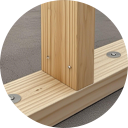
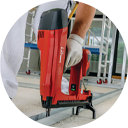
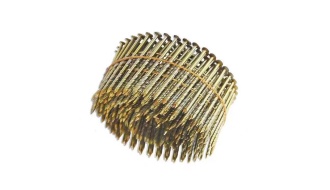
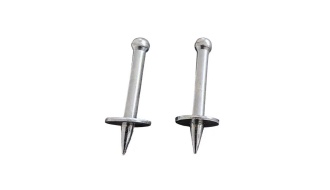
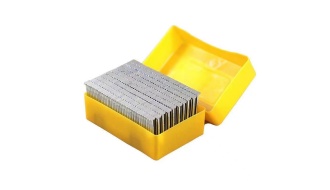
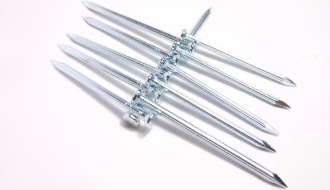
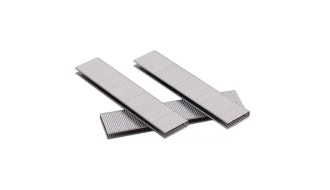
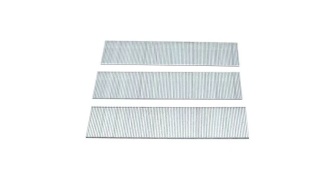
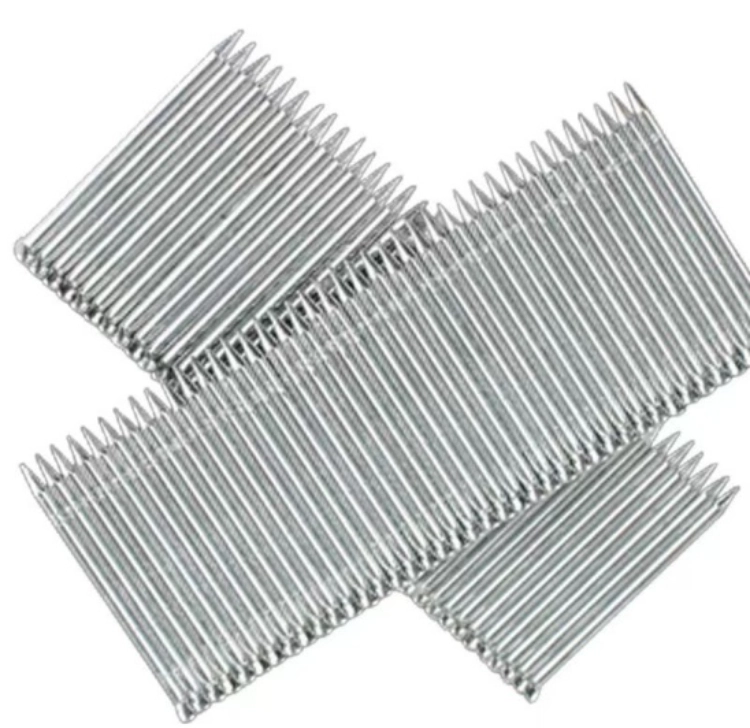
They aren’t, and the mistake costs more than a vocabulary argument. An ST nail is a collated hardened-steel nail built for a pneumatic T-nailer, a hose, a compressor, air. A drive pin gets fired by a powder-actuated or gas tool carrying several times the energy, dimensioned for it, quoted for it. Fed an ST strip into a powder tool and you don’t get a faster job, you get a safety incident waiting to happen. So where does the ST nail actually work? The enormous boring jobs: timber stud into slab and block, plywood and furring over masonry, wire lath before a render, offices and apartments where nobody’s driving through steel plate. The line at Qinjia is 14 gauge, 2.2 mm shank, 15 to 64 mm long, glue-collated at 0 degrees, 40 to a strip. That’s the product. The rest of this piece is about not ordering it wrong.
Where the ST Nail Sits Between a Hammer and a Powder Tool
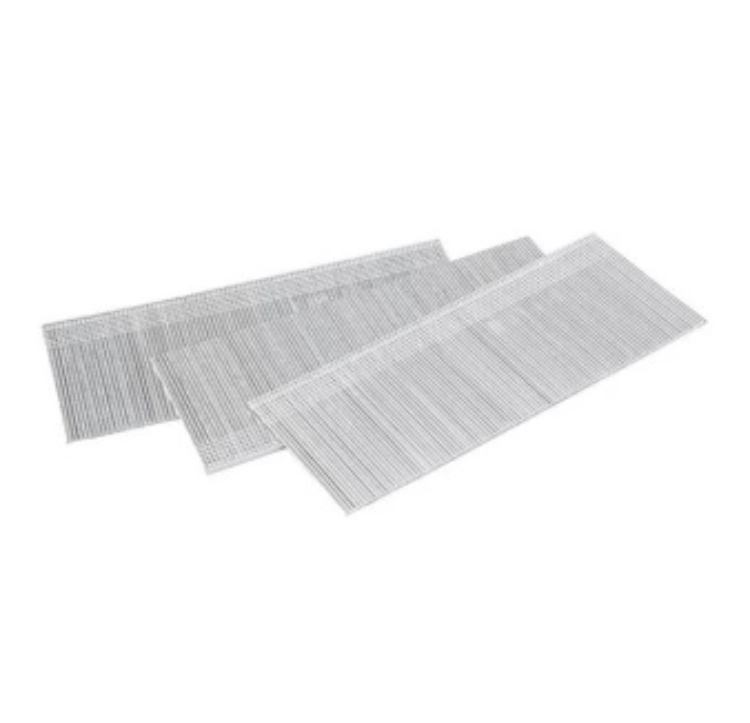
Three ways into concrete, three price points. A concrete nail and a hammer: slowest, cheapest, every market on earth recognizes it. A gas drive pin and a fuel-cell tool: that’s where you go through thick steel set on concrete, brackets, sole plates, that world. The ST nail lives in the middle with its own identity, and “middle” here means a specific engineering position. Thicker than a framing nail. Harder than a common nail, hardened around 50–55 HRC. Sized so a T-nailer seats it into concrete all shift at a pace a hammer crew simply cannot match, and so the strip feeds a driving sleeve that forgives nothing.
That last clause drives the whole spec. The wire is 45#/S45C/1045 or 55#/S55C/1055 depending on length band, drawn to 2.2 mm minus 0.02. Why the tight tolerance? Because a strip nail that drifts even slightly jams a nosepiece, and a jammed nosepiece means the whole crew waits. A hammer nail can be a little crooked and nobody notices. A collated nail gets its personality from the tool that hates it.
The Length Table and the Two Numbers That Decide Reorders
All nine standing lengths, 40 pcs per strip, 1,000 per box, 10 or 20 boxes to a carton:
| Model | Length | Inch | Typical use |
|---|---|---|---|
| ST15 | 15 mm | 5/8″ | Wire lath, thin furring |
| ST18 | 18 mm | 3/4″ | Plywood to block |
| ST25 | 25 mm | 1″ | Battens, trim over masonry |
| ST32 | 32 mm | 1-1/4″ | Stud fixing, soft block |
| ST38 | 38 mm | 1-1/2″ | Stud fixing, solid concrete |
| ST45 | 45 mm | 1-3/4″ | Heavy timber, service rails |
| ST50 | 50 mm | 2″ | Deep-fix battens |
| ST57 | 57 mm | 2-1/4″ | Structural furring |
| ST64 | 64 mm | 2-1/2″ | Maximum standing length |
Now the two numbers that decide whether this order sells a second time. Forty pieces per strip, zero-degree glue angle: that’s what a T-nailer magazine expects, and change either one and the strips don’t fit the tool your customer already owns, no matter how beautiful the steel is. And ST64 is the ceiling of the standing range, which matters because buyers with powder-tool habits request lengths belonging to another product family entirely, and those requests get quoted separately or declined.
Tool Compatibility Is the Whole Argument
The series is built to match what’s already on site. Duo-Fast TN series, Senco T series, ATRO TN22, Meite ST series, Omer TN22, Grip-Rite concrete T nails, with tool-side names like Meite ST64, Freeman PCTN64, Spotnails M1T9764, Omer TN64 sitting on the factory sheet. “Equivalent” there is a real statement about shank diameter, head geometry, collation. It’s also a trap, because a market’s fleet is never the brochure’s fleet. So before volume gets committed, ask for the exact tool model list on the customer’s side. Ten minutes. Check it against the factory list. This is the cheapest insurance in the category, and skipping it once produces a container of strips that jam every nosepiece in the destination country.
One more thing worth putting in the email before people sign: the compressor sets the pace, not the nail. Pneumatic T-nailers want stable air, so a buyer selling into a market with weak site compressors should hear that from the supplier, early, rather than from a stalled crew at week three of a live project.
A Short Factory Check Before the First Order
Hebei Qinjia Metal Products Co., Ltd. inherited the nail trade through Hengli Metal, founded 1997, and the plant runs drawing through heading, heat treatment, finishing, with random sampling alongside pre-shipment checks and third-party verification arranged on request if SGS or BV needs to witness it. For ST specifically, the useful incoming checks aren’t exotic. Strip-feed trials on the customer’s actual tool model. Hardness on sampled strips. And look at a glue line after a week sitting in 45-degree heat, the way it will ship, because collation that lets go in a hot container arrives as jammed nosepieces on the other side of the world, and nobody blames the glue, they blame the nail.
Depth of a stud fixing, load on a railing, that stays with the engineer holding the drawings. This article is about product behavior and ordering it correctly.
Quotes, collation samples, the compatibility check: Qinjia contact page, and the ST nail category carries the full range description.
FAQ
Can ST nails be used directly for wood-to-wood framing?
Not as a framing fastener. The shank exists to penetrate concrete behind the wood, which makes it thick and stiff for a joint that only needs holding in timber. Framing nailers take cheaper nails made for that job. The ST earns its price where the second material is masonry, full stop.
What does the tool need besides air?
A magazine cut for 0-degree glue strips at 2.2 mm shank, plus stable volume and pressure behind it. The tool family is standard, so the practical work is matching the customer’s exact model list, not shopping for a new tool.
Is an ST nail the same thing as a T nail sold elsewhere?
Mostly. T nail, concrete T nail, ST, concurrency nail, these name the same working family: collated, hardened, pneumatic, driven through wood or steel into masonry. The name follows whichever tool brand the market grew up with, which is exactly why the compatibility list matters more than the catalog word.

 Consult
 Whatsapp
 Leave Message
 top