



Why Are Coil Roofing Nails Ideal for Large-Scale Roofing Projects?
Put a crew on a steep pitch in July. Nobody there has time to reload, and hand-nailing burns arms before it burns the morning. Most contractors get a pneumatic nailer in their first season. The tool sets the pace, sure, but the fastener loaded inside it is what decides how often that crew stops working. Coil roofing nails hold 120 to 300 rounds per reload. That number is why high-volume roofs run on coils.
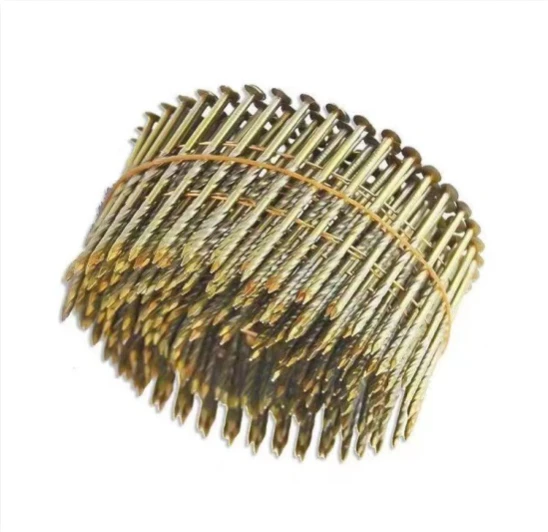
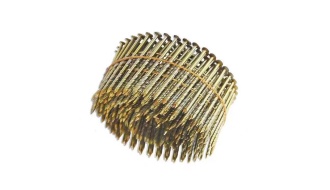
Why 15 Degree Wire Collated Coil Roofing Nails Save Time
A Bigger Magazine, Fewer Stops
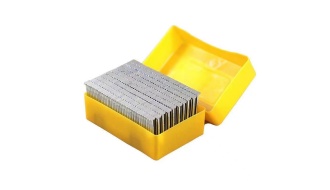
A plastic strip holds 30 to 40 fasteners. Paper tape holds about the same. A coil carries 120 rounds at the low end, 300 at the high, and wire spacing sets the exact number you get. Fewer reloads. More hours nailed.
Wire Collation and Jams
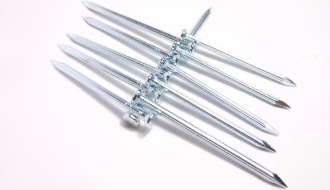
Plastic collation goes brittle and snaps at zero degrees. Paper turns to mush in a drizzle. Steel wire does neither of those things. It feeds into the chamber clean and the crew keeps its rhythm.
|
Collation Type |
Typical Capacity per Load |
Weather Resistance |
Jam Risk Level |
|
Wire Weld |
120 – 300 |
High (All Weather) |
Low |
|
Plastic Strip |
20 – 40 |
Low (Brittle in Cold) |
Medium |
|
Paper Tape |
30 – 40 |
Low (Fails in Rain) |
High |
15 Degrees for the Drum
Fifteen degrees is the industry standard. Reliable 15 degree wire collated coil roofing nails drop into the round drum of nearly every major nailer. Vents, chimneys, edges. The gun has to reach in sideways at all of them, and the angle is what makes that possible.
Nailers come in 15 and 16 degree drums. The 15 degree coil is the common one in North America, and it is the one most crews already own.
Heavy Duty Coil Roofing Nails Outdoors
Shank Diameter
You are driving through deck, underlayment, and two layers of shingle. That is a dense stack. A thin shank finds a knot and snaps. A thicker one goes through the knot and keeps its head.
Lengths run 3/4 inch up to 1-3/4 inch. Match the length to the stack, then match the tool to the length.
Heat Treatment
Wire that hasn’t been heat-treated is too soft for a piston strike. Hardening before forming keeps the shank straight at impact instead of bending under it.
Carbon Steel Core
A roof takes twenty years of wind and rain, and the carbon steel core keeps the assembly tight when the weather turns.
What Smooth Shank Coil Roofing Nails Manufacturers Deliver
Quality Control Across a Big Batch
A single bad pallet can ruin a job. Buy direct and the wire, the points, the welds all get looked at before the boxes ever see a container.
Hebei Qinjia Metal Products Co., LTD. builds construction and woodworking fasteners in Hebei. Checks run from raw material intake to final shipping, without a gap. The order book runs from North America through the Middle East, Australia and Southeast Asia. Buying from a smooth shank coil roofing nails manufacturer like Qinjia cuts the middleman and keeps the load inside international building standards.
On a quote, coil count is the number to stare at. Two coils can carry the same label while one holds 120 rounds and the other holds 300. The crew feels that difference by lunchtime.
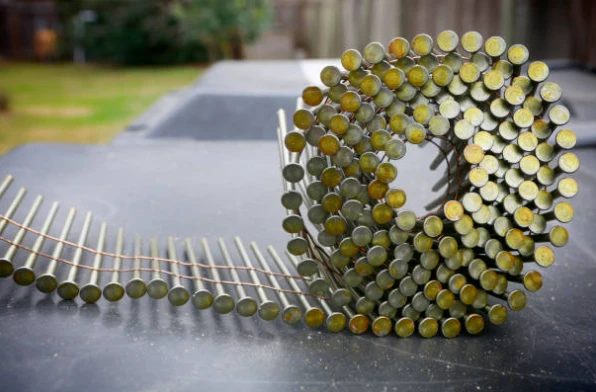
Penetration Without Splitting
A smooth shank drives fast. The point parts the grain instead of tearing through it, which leaves the plywood doing its job.
Factory Pricing
Cut the trading company and the budget stretches, and that margin decides whether a bid on a large commercial contract can be won.
Galvanized Coil Roofing Nails Wholesale
Rust
Water sits on a roof for weeks at a stretch. Rust works through the shank, the head lets go, and the shingle ends up in the gutter. Zinc plating is the barrier. A builder’s name rides on where the fastener came from.
Hot-dipped zinc wears a heavier coat than electro-galvanized. On the coast, or anywhere humid, you want the heavier coat. The difference per box is small next to a callback.
|
Surface Treatment |
Rust Resistance |
Best Application Environment |
Relative Cost |
|
Electro Galvanized |
Moderate |
Standard residential roofing |
Low |
|
Hot-Dipped Galvanized |
Very High |
Coastal areas, high humidity |
Medium |
|
Stainless Steel |
Maximum |
Extreme marine environments |
High |
Bulk Packs
A crew that runs dry at two in the afternoon has lost the day, not the afternoon. Order bulk direct and the backup pallet is already sitting in the warehouse.
Delivery
A good supplier loads the container when it said it would: forwarders booked, papers handled, goods on site. That is what a stable supply chain looks like from the roof end.
Ask who moves the pallets to the port. A factory that books its own forwarders can name the vessel.
Custom OEM and ODM Services
Dimensions for Local Codes
Codes change at the state line and at the border: a wider head, a metric length, or a different point. A real factory adjusts the tooling to the size the inspection calls for.
Own Brand Packaging
A hardware distributor with its own logo on the box builds repeat sales. Contractors reorder the brand they recognize on site, and the plain carton never gets a second look.
Printed boxes cost a little more per unit, but they also stop a contractor from pricing your carton against a plain one at the supply house.
Growth After the First Order
A custom spec is not one job; it becomes a catalogue. Look at the factory ODM/OEM services, then watch how the line adapts across two or three seasons.
Guess a spec for a cold climate and the inspection fails, and the rework bill follows. Qinjia supplies technical parameters, compatibility guides and design suggestions matched to the drawing. Send the environmental demands of the build. The technical desk replies with the file.
FAQ
Q: Will a 15 degree coil fit any pneumatic gun?
A: Any standard 15-degree roofing nailer will take it, and the tool manual gives the maximum length.
Q: Smooth shank or ring shank?
A: Smooth shanks drive faster and cost less, which suits most jobs, while ring shanks grip harder, and a high-wind zone needs that.
Q: How are custom printed boxes ordered?
A: Send the logo and the box dimensions to the sales team. Die-cut templates come back, and printing runs with mass production.

 Consult
 Whatsapp
 Leave Message
 top