


Related news
How to Match First Fix Nail Gun Nails With Your Tool
Choosing nail gun nails starts with the tool, not the box of fasteners. A first fix nail can have the right length for the job and still be wrong for the gun’s power source, magazine, collation, or intended base material. Before ordering, identify whether the tool is pneumatic, gas-actuated, or powder-actuated, then confirm the fastener series and dimensions allowed for that exact tool model.
Qinjia manufactures construction and woodworking fasteners for distributors and project buyers. Its range includes ST nails, concrete nails, drive pins, brad nails, staples, pipe hook nails, and drywall screws. This breadth helps buyers compare tool-fastener systems without treating every collated nail as interchangeable.
Start With the Nail Gun’s Power System
The power system controls how energy reaches the fastener. It also affects the fastener body, collation, and accessories needed at the jobsite.
Pneumatic Tools and ST Nails
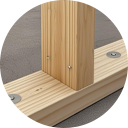
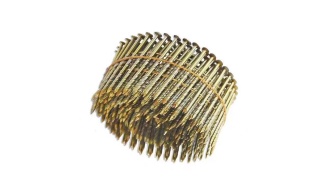
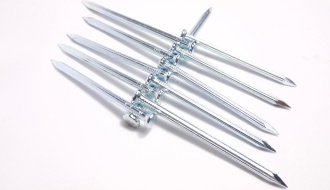
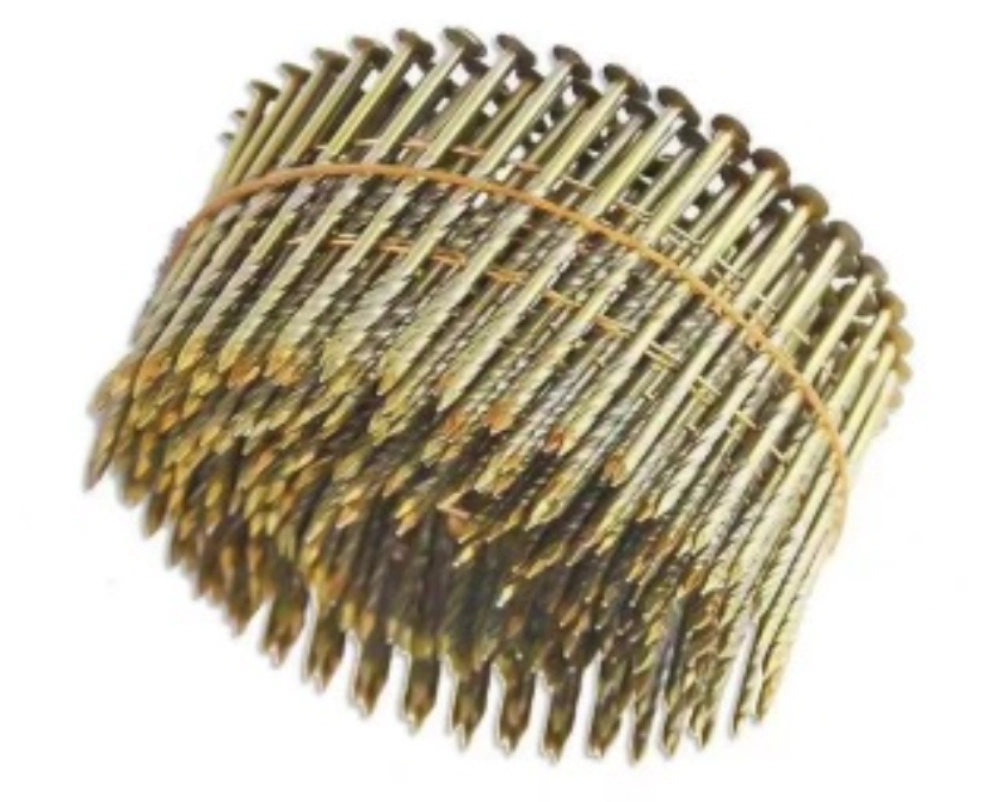
ST Nails are made for pneumatic nail guns and are used to secure wood or light steel studs to concrete or brick walls. They are not drive pins and do not use gas cells or powder loads. Qinjia’s ST nails use heat-treated 45# steel, a 2.15 mm shank diameter, and lengths from 15 mm to 64 mm.
Those details matter when checking pneumatic nail gun nails. The gun must accept the ST nail series, length, and collation supplied. Air pressure does not correct an incompatible magazine or fastener shape.
Gas-Actuated Tools and Gas-Compatible Drive Pins
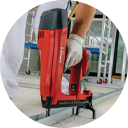
Gas-actuated tools use a tool-specific gas or fuel system and ignition mechanism to drive compatible pins into concrete or steel. Confirm the exact pin series, head and shank configuration, and tool model because the approved format can vary by manufacturer. The current tool manual remains the controlling compatibility reference.
Do not place a gas-compatible pin into a pneumatic ST nail tool because the application looks similar. First fix nail gun nails are defined by the system that drives them as well as by the material they enter.
Powder-Actuated Tools and Their Different Requirements
Powder-actuated tools use a controlled cartridge charge. Their pins, loads, power levels, operator rules, and base-material limits form a separate fastening system. They should not be grouped casually with gas or pneumatic tools.
For a broader look at tool roles, Qinjia’s guide to framing nail gun uses and nail selection provides a useful bridge between the task, tool, and fastener. The operator should still follow the current tool manual and local jobsite requirements.
Match the Fastener to the Base Material
After identifying the tool, confirm what is being joined and what lies beneath it. A fastening method that works in timber can fail or damage the surface in concrete, hollow masonry, or steel.
Wood and Light Steel Stud Fixing With ST Nails
ST nails are intended for fixing wood or light steel studs to concrete or brick substrates. Their heat-treated 45# steel and thicker shank support penetration into a hard base. They are not intended as ordinary wood-to-wood framing nails.
For ST nails for concrete wall fixing, confirm the stud material, substrate condition, required embedment, and tool compatibility. A longer nail is not automatically stronger if the tool cannot drive it correctly or the substrate cannot accept the embedment.
Concrete and Masonry Applications for Drive Pins
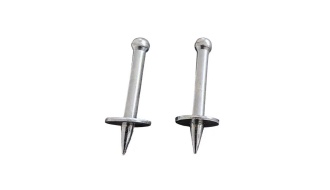
PD Drive Pins and DN Drive Pins are product-specific references. Selection should follow the compatible tool, fixture thickness, substrate, and required pin configuration rather than name recognition alone. Confirm each series and tool pairing against the relevant product page or tool documentation before ordering.
Concrete varies with age, aggregate, surface condition, and location near an edge. Masonry units may be solid or hollow. A site trial can reveal spalling, bending, incomplete seating, or excessive penetration before a full installation begins.
Do Not Substitute Fasteners Across Tool Systems
A fastener that fits loosely into a magazine is not necessarily compatible. Substitution can affect feeding, driving depth, tool wear, and operator safety. Nail gun fastener compatibility should be documented by tool model and approved fastener, not by appearance.
Keep pneumatic nail gun nails, gas pins, and powder-actuated pins separated in storage. Clear labels reduce the chance that a crew loads the wrong consumable during a busy shift.
Check Size and Collation Details Before Ordering
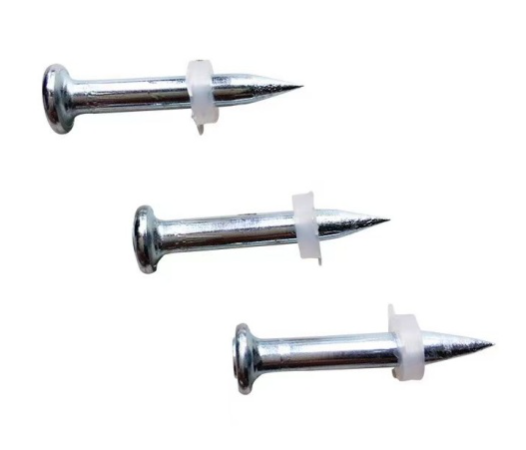
Compatibility checks continue beyond the product family. Length, shank, head, strip angle, collation material, and pack format all influence whether a fastener feeds and performs correctly.
Confirm Nail Length and Shank Requirements
Qinjia’s ST range covers 15-64 mm lengths with a 2.15 mm shank diameter. The selected length must account for the fixture and required entry into the base material. The tool’s approved length range remains the first limit.
For first fix nail gun nails, record the exact length and shank requirement on the purchase order. Avoid descriptions such as “medium” or “standard,” which do not give the supplier or warehouse a measurable acceptance point.
Review Strip or Collation Compatibility
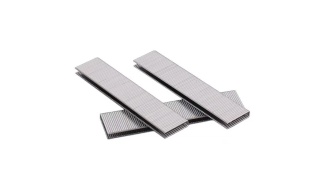
Check the number of fasteners per strip, strip shape, collation material, and orientation. Even within a general tool category, different magazines may use different formats. A sample strip should feed without force and should not break apart during ordinary handling.
Collation debris can also affect use. Paper, plastic, or wire systems behave differently, so the buyer should match the fastener to the tool and the cleanup or surface requirements of the job.
Match Packaging to Jobsite Consumption
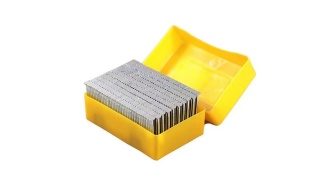
ST nails may be packed in quantities such as 400, 800, 1,000, or 2,000 pieces per box. The suitable pack depends on crew size, daily consumption, storage conditions, and how materials are issued.
Smaller packs can support controlled distribution across several crews. Larger packs may reduce handling for repetitive work. Labels should identify the product series, length, quantity, and compatible tool reference.
Test the Combination Before Bulk Purchase
A controlled sample test is less expensive than finding a mismatch after cartons reach the jobsite. Test with the actual tool, fixture, and representative substrate.
Compatibility should be approved at the tool-model level. For each proposed combination, record the tool make and model, power source, accepted fastener series, length and shank range, collation format, fixture, and substrate. If the tool manual does not list the proposed series, treat the combination as unapproved until the manufacturer or supplier confirms it in writing.
Check Tool Manufacturer Requirements
Read the tool manual for allowed fastener dimensions, power source, magazine type, maintenance, and prohibited substitutions. If the manual and supplier description conflict, pause the order and resolve the difference.
This step is central to nail gun fastener compatibility. A supplier can describe the fastener, but the tool manufacturer defines what the machine is designed to accept.
Run several installations with the actual tool, fixture, and representative substrate. Check feeding, driving depth, head seating, fixture damage, bending, surface spalling, and repeatability. Adjust only within the tool instructions; increasing pressure or power to force an unsuitable fastener can conceal the mismatch while creating tool or substrate problems.
Inspect Driving Depth and Nail Seating
Run several installations and inspect whether heads sit correctly, fixtures remain undamaged, and fasteners avoid bending. Watch for inconsistent depth, feed interruption, surface spalling, or a pin that stops before seating.
Adjust only within the tool’s instructions. Increasing pressure or power to force an unsuitable fastener can hide the mismatch briefly while creating tool or substrate problems.
Record the Approved Tool-Fastener Combination
After testing, record the tool make and model, fastener series, dimensions, collation, substrate, fixture, and settings. Keep the approved sample or packaging label with the purchase record.
This record simplifies reorders of pneumatic nail gun nails and prevents a later buyer from relying on a vague description. It also helps a distributor answer compatibility questions consistently.
Conclusion
Match Power, Material and Fastener Type Together
Reliable nail gun nails selection requires one combined decision: power system, tool model, fastener series, fixture, and base material. None of these checks should be made in isolation.
Use Samples Before Releasing a Bulk Order
A sample strip and a representative substrate can expose feeding, seating, bending, and surface problems. This is especially useful for ST nails for concrete wall work and unfamiliar drive-pin combinations.
Keep Separate Specifications for Different Jobsites
Do not merge pneumatic, gas, and powder-actuated consumables into one generic specification. Separate records make ordering, storage, and site use clearer.
Contact Qinjia About Nail Gun Nails
Send the tool model, power system, fastener dimensions, fixture, substrate, pack quantity, and sample requirements through Qinjia’s contact page. These details allow the supplier to review nail gun nails against the intended system before bulk ordering.
FAQ
Can ST Nails Be Used With Any Nail Gun?
No. ST nails are pneumatic nail gun nails and must match the tool’s magazine, accepted dimensions, and application. They are not intended for gas or powder-actuated tools.
What Is the Difference Between ST Nails and PD Drive Pins?
ST nails are used with compatible pneumatic tools for stud-to-concrete or brick fixing. PD drive pins belong to a different direct-fastening product family and must be matched to their specified driving tool and application.
Should DN Drive Pins and ST Nails Be Ordered for the Same Tool?
Not unless the tool manufacturer explicitly approves both, which should not be assumed. Treat DN drive pins and ST nails as separate systems and verify each product against the exact tool model.

 Consult
 Whatsapp
 Leave Message
 top
top