

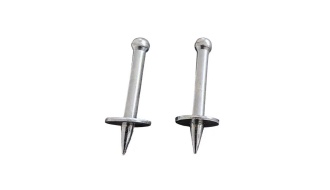
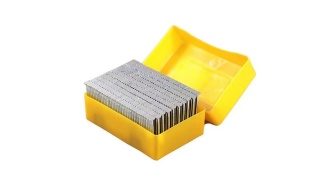
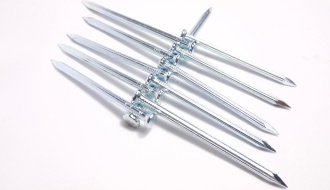
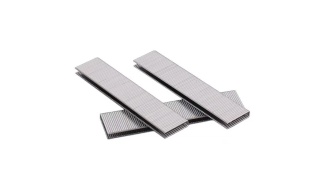

Cement Pins: How Concrete Nails Differ from Standard Wire Nails
If you have ever attempted to drive an ordinary nail into a concrete surface, you most likely finished with a curved strip of metal and an expression of irritation. This happens often, but experienced contractors avoid selecting random nail containers without thought. In masonry and demanding building tasks, a fastener requires more strength. At Qinjia, we have invested considerable time in developing items known in the sector as cement pins or concrete nails, exactly to fix this issue.
What Makes Concrete Nails Different from Standard Wire Nails?
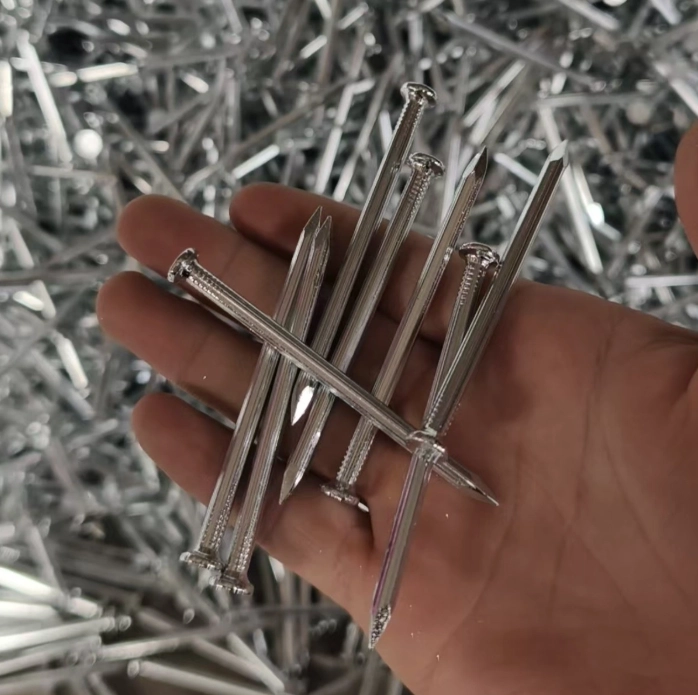
Ordinary wire nails suit assembling a basic wooden structure well, yet they remain rather malleable when set against substances in current building systems. The primary variation rests in their construction for managing force. A typical nail bends easily from the blow necessary to enter rock, while a concrete nail gets made to penetrate deeply and hold firmly.
High-Carbon Steel and Specialized Heat Treatment
The essential component lies in the steel used. We select high-carbon steel, notably 45# steel for numerous professional ranges, and submit it to an intensive heat treatment method. This step holds real purpose, as it modifies the metal’s internal makeup to render it highly resistant and unyielding. The contrast appears like using a blunt blade for tough cuts instead of a precise one. Such resistance lets the nail advance directly into solid concrete or brick without crumpling.
Enhanced Holding Power and Penetration
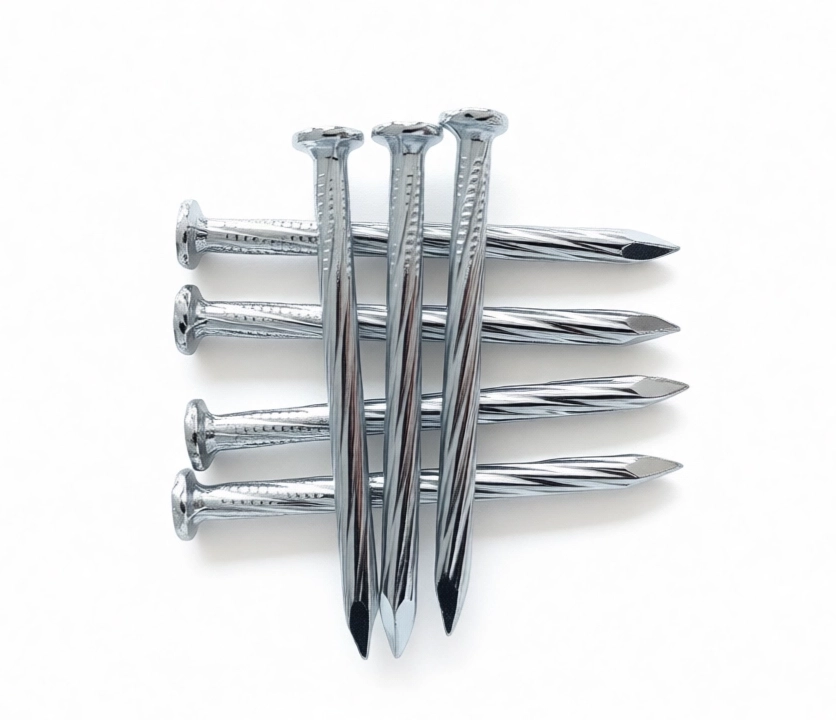
Driving the nail in counts, but ensuring it remains secure matters equally. Common nails depend on basic rubbing against wood strands. However, concrete fails to clasp in the identical manner. Therefore, our concrete nails include distinct shank forms, such as smooth, grooved, or spiral patterns, which increase contact area with the stonework. When connecting wood to concrete or mounting a framework, this added clasp prevents the assembly from loosening gradually.
Specialized Surface Finishes for Durability
Concrete forms a severe setting. Moisture can linger, and cement’s composition often corrodes bare metal effectively. Choosing an inexpensive, bare nail leads to quick oxidation, causing visible marks on surfaces or, worse, weakening the build. We supply coatings including zinc plating, bluing, and phosphating. These barriers protect well, particularly in external work or moist areas, guaranteeing the fastener endures alongside the structure.
Picking suitable materials covers part of the task. One must also examine the nail’s body, the shank. Based on the target material, a particular form may perform much better.
Which Shank Type Should You Choose for Your Project?
At Qinjia, we create three key shank kinds since a single style does not fit every building scenario. For newly set concrete or weathered brick, the shank shape affects the driving effort and the confidence in its retention.
Smooth Shank for Efficient General Fastening
The Concrete Nails Smooth Shank serves as the reliable option for daily stonework. Its level surface reduces opposition during entry compared to rougher types. Thus, it fits general building or inside tasks needing swift, neat insertion. It proves economical and steady for usual concrete duties requiring simple fixation without issues.
Grooved Shank for Superior Grip in Hard Masonry
For aged, denser concrete or compact brick, select the Grooved (Fluted) Shank Concrete Nails. They feature straight grooves along the length. When inserted, the concrete fills these slightly, forming a firmer physical bond. This acts as protection against removal during tension.
Spiral Shank for Maximum Withdrawal Resistance
When vibration or weight concerns you, the Concrete Nails Spiral provides the top choice. View it as a mix of nail and threaded fastener. Upon striking, it turns a bit, etching a spiral route in the substance. Hence, it offers the strongest hold against extraction. For heavy attachments prone to shifting, include this in your equipment.
Yet superior planning holds little value without careful production. Here, practical operations align with promotional claims.
How Does Qinjia Ensure the Quality of Its Fasteners?
Market offers many low-price nails that fracture on contact, creating hazard for the handler. For that reason, we maintain full standards at our Hebei site. We prioritize reliable sourcing and firm quality procedures to satisfy customers in North America, the Middle East, and further areas.
Full-Process Quality Inspection Protocol
Checking only at completion and wishing well falls short. Control begins with incoming steel and extends to sealed packages ready for transport. We perform occasional verifications in production and complete reviews prior to dispatch. Batches failing hardness standards stay behind. The rule stays basic.
Advanced Torque and Hardness Testing Equipment
To lead effectively, we equip with proper devices. The facility employs rotation checkers and compact force gauges to confirm screw and nail endurance under load. Additionally, we conduct corrosion simulations for finishes and use exact tools for resistance and measurements. We determine precise breaking points for nails, sparing you unexpected failures during work.
Compliance With International Third-Party Standards
In large projects, promises alone often insufficient. Thus, we follow worldwide norms and gladly offer substance documents and audit summaries. Should a buyer require external validation from entities like SGS or BV, we support it. Production matches buyer plans and examples, delivering exactly the specified items.
High-quality fasteners impress, yet practical uses in daily settings matter too.
What Are the Primary Applications for These Cement Pins?
Though named “concrete nails,” applications reach far past simple cement blocks. From dealings with suppliers and builders, these appear across construction phases, starting from basics to endings.
Structural Wood-to-Concrete Connections
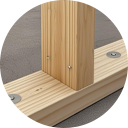
This forms the core use of concrete nails. In basement framing or base plate fixing to foundations, fasteners must bridge flexible wood to firm masonry. Our nails’ strong resistance enables this, supplying a stable point that holds despite wood changes.
Interior Partition and Ceiling System Installation
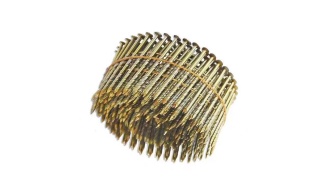
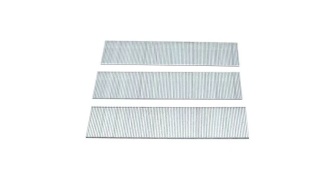
Inside, nails secure tracks of metal or wood for dividing walls. For premium finishes, apply ST nails to framing, then Brad nails to fine edges. Selection fits each level in the room’s layered setup.
Infrastructure and Utilities Management
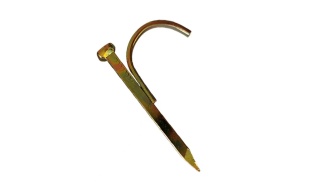
Trades like wiring and piping favor our targeted items. Pipe hook nails, for instance, aid in routing cables efficiently. Without separate holders and bolts, the integrated design allows quick wall mounting, keeping lines tidy and fixed. This cuts time notably on major sites.
As a supplier or overseer seeking steady collaboration, items form half; operations count likewise.
How Can International Clients Partner With Qinjia?
Our standing rests on simple cooperation. Markets differ slightly, so we avoid uniform impositions on associates. In places from Australia to Turkey or Southeast Asia, our methods adapt suitably.
Flexible OEM and Customization Services
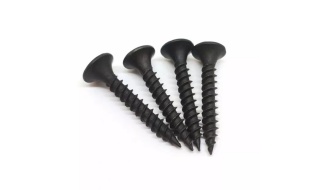
Seeking branded containers? Easily done. Full OEM and ODM aid available. We manage from length variations of 1″ to 8″ to pack styles like compact boxes, wraps, or large pails. Mixed loads suit needs, combining drywall screws, staples, and concrete nails in one shipment.
Streamlined Ordering and Global Logistics
Steps proceed clearly: quote issuance, sample dispatch for review, production launch, and post-check delivery. Shipping options flex to sea, air, or fast service, coordinating with your carrier or ours for China imports.
Comprehensive After-Sales and Technical Support
Presence continues after payment. We supply specs and guidance for teams. Batch problems trigger replacement or return policies via site evidence. Long-term focus leads us to adjust based on end-user input.
FAQ
Q1: Can I use these nails in very old, high-strength concrete?
A: Yes. We advise grooved or spiral shank types with complete heat treatment for such tasks. They deliver the required penetration for aged, very dense areas.
Q2: Will these nails rust if I use them for an outdoor deck or fence?
A: For outdoor exposure, choose galvanized or blued versions. These offer strong anti-rust protection. In wet spots, share details for optimal coating advice.
Q3: What’s the main difference between an ST nail and a regular concrete nail?
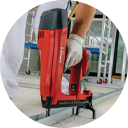
A: Driving method differs mainly. Standard types take hammer blows. ST nails suit air-powered guns, being thicker and sturdier for fast framing like stud-to-wall attachments.

 Consult
 Whatsapp
 Leave Message
 top
top