


Common Nail Sizing Simplified: A Practical Guide for Builders and DIYers
Stepping into a hardware shop or flipping through a trade catalog often feels like trying to unravel a hidden code. You spot figures followed by a “d,” wire sizes that appear to run in reverse, and custom fasteners that resemble advanced gadgets more than basic metal pieces. Yet selecting the correct size goes beyond ensuring the nail simply avoids breaking through the wood’s far side; it ensures your build remains secure and stable over time.
At Hebei Qinjia Metal Products, we have worked for many years in the production field in Hebei, refining items from ordinary concrete nails to sophisticated gas-actuated setups for markets around the world. We understand that whether you serve as a supplier in North America or a builder at a site in Turkey, the aim stays consistent: locate the proper fastener that completes the task quickly without spending extra on incorrect details.
I. Introduction to Nail Sizing and Fastener Fundamentals
If you have ever puzzled over why a 3-inch nail carries the name “ten-penny nail,” then you are facing the traditional “penny” method. In earlier times, the “d” (which means denarius, an ancient Roman coin) indicated the cost of 100 nails. Although we no longer purchase a small amount of money for 100 nails these days, the terms have lingered in various regions. Builders rely on this quick way to discuss length without confusion.
However, length represents just part of the challenge. You must also consider the gauge, which basically means the diameter or thickness. A fastener that is overly wide could crack a fragile trim section, whereas one that is excessively narrow might bend immediately upon striking a dense spot in the timber. Moreover, the material composition plays a key role. For example, our group emphasizes high-carbon steel in masonry tasks because typical wood nails would merely flex like soft strands when encountering a solid brick surface.
Selecting the appropriate material holds as much weight as choosing the size. General woodworking often employs low-carbon steel, but when facing demanding materials like concrete or metal beams, you require hardened high-carbon steel that withstands strong forces without failing.
II. High-Performance Concrete and Steel Fastening Solutions
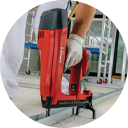
When you shift from basic hammering to rapid building methods, the usual guidelines for sizing adjust somewhat. In current construction areas, efficiency rules everything. This is precisely where gas-actuated tools enter the picture. Rather than repeating hammer strikes dozens of times, you employ a fuel-driven device to propel a pin straight into the base material.
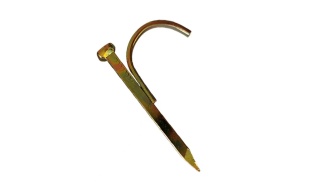
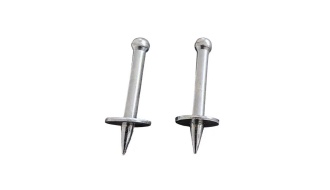
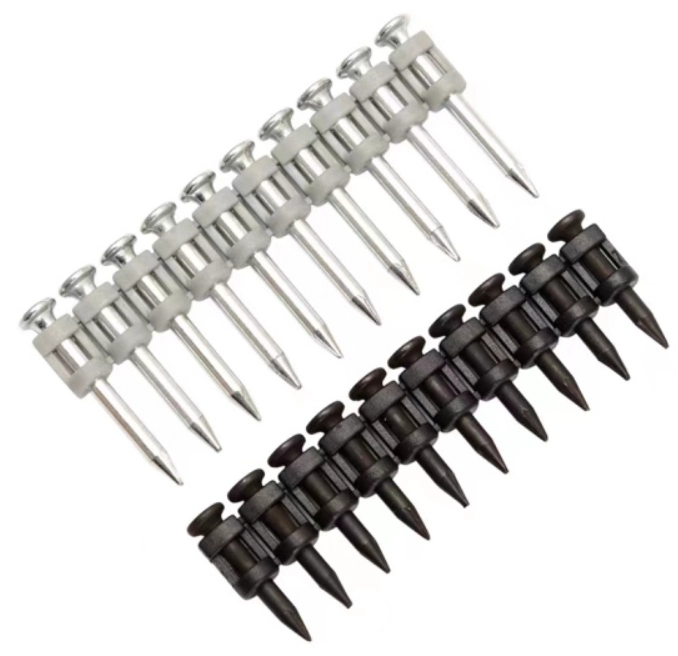
Gas-Drive Pins for Speed and Strength For connections between steel and concrete, or even steel to steel, gas drive pins serve as the preferred option. These differ greatly from everyday nails. They tend to be briefer and far more durable. Most of these pins measure between 12mm and 62mm in length. The head width usually spans about 6mm to 8mm, crafted to match the barrel of a gas-actuated nailer. If you handle large steel frameworks or sturdy concrete barriers, these provide the quick and reliable attachment you need.
The Heavy Hitters: PD and NK Series Occasionally, a regular gas pin falls short, particularly if the concrete remains fresh or unusually dense. That is when targeted drive pins such as the PD and NK series prove essential. These handle the most demanding applications. While gas pins offer broad use, these particular drive pins frequently pair with powder-actuated devices for deep entry into challenging masonry. Everything depends on aligning the device’s force with the pin’s resilience to ensure the fastener embeds fully rather than rebounding from the face.
III. Specialized Fasteners for Framing and Structural Work
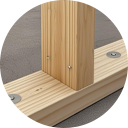
Now, if you tackle structural framing, which forms the core skeleton of a space, you typically avoid firing small pins into metal. Instead, you often manage wood-to-concrete links or lightweight steel frames. This underpins interior builds, and the dimensions here matter greatly since these fasteners support the full load of partitions.
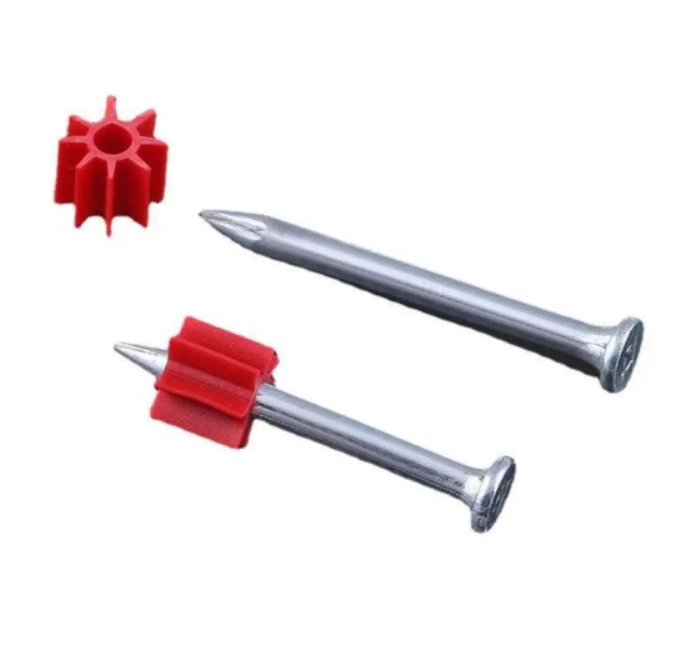
ST Nails: The Structural Workhorse For fastening wood frames or slim steel rails to concrete surfaces, ST nails stand as the common choice. We produce these from 45# high-strength steel and apply thorough heat treatment, so they possess the durability to enter without breaking. They feature a broader body than standard nails, which delivers the shear resistance required for a firm foundation. Usually, you will encounter these in sizes from 15mm to 64mm long.
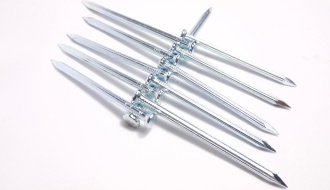
Classic Concrete Nails At times, you simply opt for the conventional approach. For modest tasks or spots where powered tools cannot reach, time-honored concrete nails remain vital. These include a grooved or plain body and are intended for driving with a substantial hammer. Given that concrete might hold moisture, we commonly supply these with zinc coating or a darkened finish to prevent corrosion. It offers a straightforward, budget-friendly method to achieve a firm hold on a masonry or block face.
IV. Precision Sizing for Finishing and Interior Systems
After completing the main framing, you turn attention to visible elements like moldings, fixtures, and panels. Here, robust and bold items yield to compact and discreet ones. Employing a heavy framing nail on a decorative frame would ruin the material. Precision becomes essential in this phase.
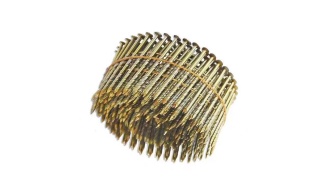
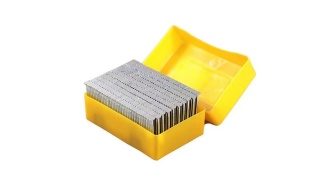
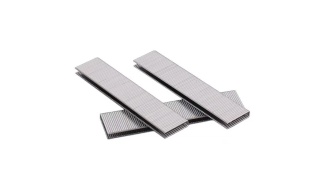
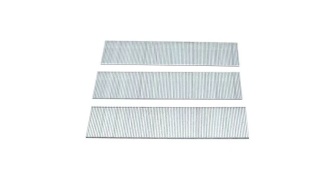
Brad Nails: The Invisible Touch Brad nails (typically 16GA or 18GA) rank highly in cabinetry and trim applications. Their slender profile reduces the risk of splitting slender oak or pine sections. With minimal head size, they sink into the surface, creating only a small mark that filler can easily conceal. In cabinet and detail work, these appear in lengths from 10mm to 64mm, varying by gauge.
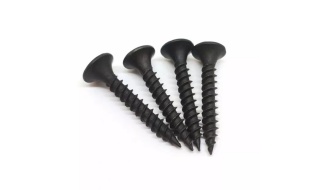
Drywall Screws: Getting the Grip Right Panels rely less on nails nowadays; screws have become the norm since they resist loosening with time. The measurements here demand care. For entry into timber supports, choose screws with broad threading, as the deep grooves engage the grain effectively. For metal channels, select narrow threading that pierces the material smoothly. The tapered head aims to embed just under the panel surface without damaging the facing, resulting in a smooth plane ready for coating.
V. Technical Specifications and Selection Criteria
Identifying the proper size marks a solid beginning, but you should also evaluate the surroundings. Does this involve a humid lower level? Or perhaps a seaside build where salty winds erode metals? In such cases, the nail’s protective layer gains importance equal to its dimensions.
In our plant, we subject each lot to rigorous testing, examining factors from threading speed to load capacity. We assess details like:
1. Surface Treatment: Choices range from dark phosphating for panels to zinc plating for corrosion protection, serving as the primary barrier against wear.
2. Tool Compatibility: Fasteners do not suit every device. You need to align the bundling method and body width with your particular air or fuel-powered equipment.
3. Compliance: For our technical buyers, we supply documentation, including alloy certifications and review summaries, confirming the material aligns with stated standards.
FAQ
Q1: Can I use ST nails for framing wood-to-wood?
A: Actually, it’s not a great idea. ST nails are made with a very thick shank specifically to bite into concrete. If you use them to join two pieces of wood, they’re so thick they’ll likely split the lumber right down the middle. Stick to standard framing nails or wood screws for that.
Q2: Do gas drive pins need a special license or powder loads?
A: Unlike powder-actuated systems that use a literal blank cartridge, gas drive pins use a fuel cell and a battery. They are generally easier to use and don’t require the same level of heavy-duty licensing in many regions, though they still pack plenty of power to get through steel and concrete.
Q3: Why is my drywall screw tearing the paper instead of sitting flush?
A: This usually happens if you’re using the wrong thread type or if the “bugle head” isn’t shaped correctly. Make sure you’re using fine threads for metal studs and coarse for wood. If the head is too sharp, it’ll cut the paper; you want it to “dimple” the surface so you can mud over it easily.

 Consult
 Whatsapp
 Leave Message
 top
top