

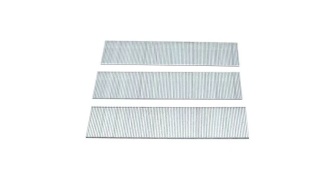

Self-Tapping Screws in Action: Benefits Over Standard Screws in Construction
In the busy field of current building work, workers cannot afford to lose time on fasteners that break or wear out during a task. Whether someone serves as a supplier in the Middle East or a builder at a location in Australia, they understand that the most suitable screw goes beyond the lowest price, since it represents the type that completes the work without a pre-made guide hole causing delays. Hebei Qinjia Metal Products, also known as Timelessfastener, has dedicated years to improving these compact yet vital parts, ensuring they endure actual site conditions and rough handling.
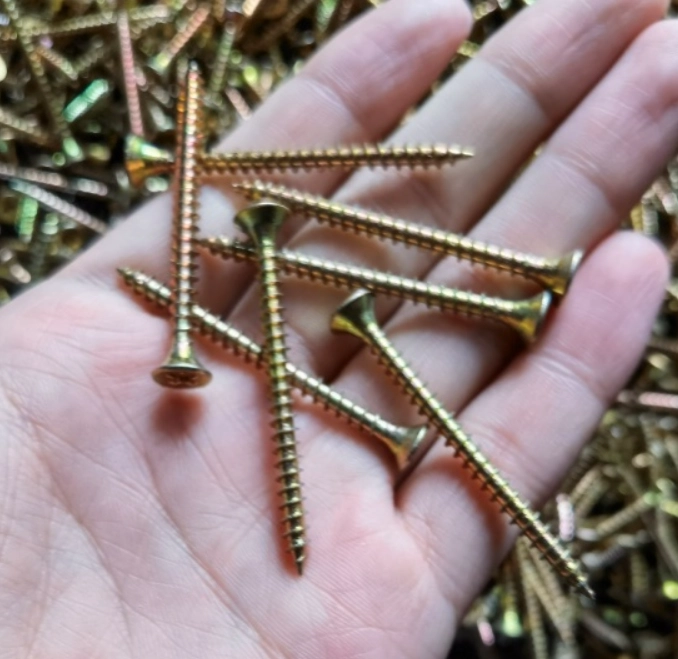
Why Do Professionals Prefer Self-Tapping Fasteners for Modern Projects?
If anyone has ever paused to bore a hole for each screw, they recognize the major drag on output that this creates, and self-tapping screws altered the approach by handling two tasks together, which explains their popularity among experts who aim to proceed quickly while maintaining a firm attachment.
Efficiency Gains From Integrated Drilling and Threading
The primary advantage lies in straightforward quickness, because these screws get built to cut into the substance and form their own route, thereby eliminating a full phase of the procedure, and for large-scale tasks such as setting up divider walls, this leads to several hours of reduced effort across a week, as it supports a smooth progression of activities to reach the following part of the structure earlier.
Superior Holding Power in Specialized Substrates
Regular screws typically depend on surface contact only, but self-tapping types, particularly those formed from high-carbon steel, establish a stronger physical connection with the underlying substance, and whether it involves slim steel frames or solid stonework, the manner in which the grooves interact with the material ensures they do not shake free gradually, providing the confidence that once installed, they remain secure.
Reduction in Material Splitting and Pre-drilling Time
People have observed the damage when a wide screw encounters a narrow wood section or a weak plaster panel, as it tends to fracture the surface, yet self-tapping forms employ keener, more forceful tips that function similar to a small boring tool rather than a dull splitter, so this allows insertion nearer to the board’s side without the entire piece breaking apart, which in turn cuts expenses on damaged supplies.
In discussions of particular uses, plasterboard often emerges first in thoughts, since it demands a precise method to achieve proper results without harming the surface.
How Does the Qinjia Drywall Screw Optimize Interior Partition Systems?
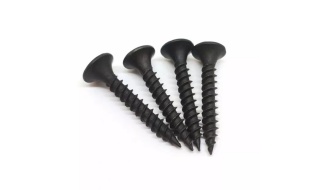
At Qinjia, staff have witnessed the frustration from a faulty plasterboard screw, such as heads coming loose or the surface layer ripping due to improper seating, and for this reason, the drywall screw gets crafted to manage the unique pressures of inner framing, regardless of whether the base consists of timber or metal.
Sharp Points and Fine Threads for Light Steel Studs
When fastening into slim steel, a narrow groove becomes necessary to hold the metal firmly without wearing it down, and Qinjia’s narrow-thread plasterboard screws include a pin-like keen tip that penetrates the metal right upon touching, avoiding any slipping on the face or marring the outer layer, thus delivering a neat and rapid entry each instance.
Bugle Head Design for Flush Finishes on Gypsum Boards
The bugle form of the head exists for a clear purpose, as it gets shaped to embed precisely deep enough into the plasterboard to allow coverage by filler paste without damaging the top paper covering, and damaging that layer would compromise the panel’s strength, whereas this design guarantees the screw levels evenly so that surface workers can proceed without additional smoothing or repairs.
Black Phosphated Coating for Enhanced Corrosion Resistance
No one desires to spot corrosion marks seeping through the coating a year following project completion, and the majority of Qinjia’s plasterboard screws feature a black phosphated layer, which offers a reliable barrier against dampness present in moist filler mixes or steamy work areas, serving as an economical method to ensure the surfaces maintain appearance over extended periods.
Although plasterboard involves careful handling, engaging with particle board and furnishings calls for a screw capable of managing substantial turning force and gripping into softer, more stringy substances.
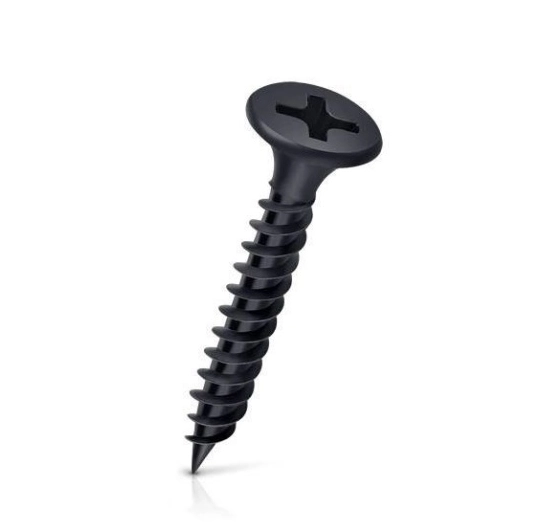
What Makes Chipboard Screws Essential for Wood and Furniture Assembly?
Particle board, also called chipboard, gains a reputation for brittleness, where a typical wood screw frequently mangles the interior and forfeits its hold, and this is precisely why a chipboard screw proves vital, getting tailored especially to deal with those blended materials without generating disorder.
Coarse Threads Engineered for Dense Composite Boards
Qinjia’s particle board screws possess broader, deeper grooves that capture greater amounts of substance during insertion, rather than merely displacing the wood strands, as they secure into them, and this characteristic supplies the drawing force required when connecting two panels closely.
High-Carbon Steel Construction with Heat Treatment
Qinjia avoids using weak alloys, and to guarantee these screws withstand the rotation from a powered tool without the tops breaking, the company employs high-carbon steel subjected to a thorough heating process, which imparts the durability needed to enter compact substances without giving way.
Versatility in Cabinetry and Flooring Applications
These screws extend beyond furniture uses, since their strong retention in synthetic panels makes them ideal for placing underlay floors and storage units, providing a dependable link crucial for premium home projects where users detect even minor noises.
Producing an effective screw marks one achievement, but verifying that each item in a large 20-ton delivery matches exactly represents the greater test that Qinjia addresses diligently at the Hebei facility.
How Does Qinjia Ensure Consistency and Quality Across Global Markets?
Qinjia recognizes that clients frequently operate far away, preventing simple visits to the plant for oversight, and the company has established its standing through a delivery network that avoids shortcuts, emphasizing the aspects important to final users.
Strict Quality Control From Raw Material to Final Inspection
The process begins with the incoming wire supply, as Qinjia monitors all stages from the steel’s arrival to the packed containers’ loading, and while occasional checks occur, the firm conducts evaluations amid manufacturing to identify problems with groove uniformity or tip keenness prior to reaching the boxing phase.
Compliance With International Fastener Standards and Specifications
Regardless of requirements for a material document or a particular SGS or BV review report, Qinjia provides support, producing fasteners aligned with widespread norms in the US, Middle East, and Australia, thereby eliminating concerns over matching in worldwide endeavors.
Specialized Testing for Torque and Hardness Reliability
The on-site lab includes equipment such as rotation force checkers and groove pace analyzers, where samples of plasterboard and particle board screws undergo intense trials to determine the exact load they endure before yielding, and if results fall short of internal goals, those items stay out of distribution.
Selecting the appropriate fastener simplifies once grasping the core principles of the task, as it centers on pairing the screw with the substance and the surrounding conditions it faces.
Which Screw Variety Best Suits Your Specific Construction Environment?
Facing a display of various containers can seem daunting at first, but the decision boils down to basic selections regarding the target drilling surface and the level of safeguarding required from external factors.
Coarse vs Fine Threads for Different Stud Materials
A basic guideline states to apply narrow grooves for slim steel frames and broad grooves for timber frames, since narrow ones offer increased touch areas with slender metal, whereas broad ones excel at securing into wood strands without enlarging the opening.
Zinc Plating and Bluing for Diverse Anti-Rust Needs
For enclosed tasks remaining moisture-free, black phosphated or blued screws typically suffice, but in humid zones or seaside locations, galvanized or zinc-coated choices become preferable, as the added layer functions as a guard, preventing decay from corroding the metal.
Customized OEM Packaging and Specification Options
Qinjia offers more than basic containers, since for suppliers seeking personal labels or unique sizes absent from regular lists, the company accommodates such needs, ranging from compact packs to large tubs for sites, aiding in delivering goods in forms best suited for end buyers.
FAQ
Q1: Can I use drywall screws for building an outdoor fence?
A: Qinjia does not suggest this option. Drywall screws remain slender and tailored for plaster panels. Although heat-treated for firmness, they may lack the bend needed for wood’s natural shifts outdoors, and the usual black layer resists weather less than a thick galvanized covering.
Q2: What’s the main difference between your ST nails and these screws?
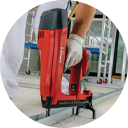
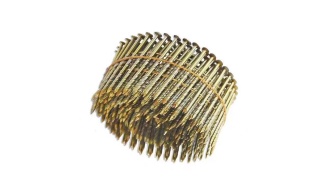
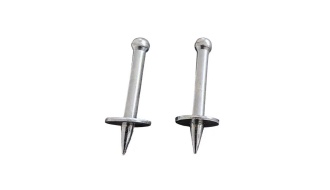
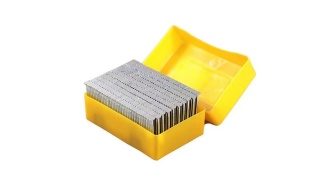
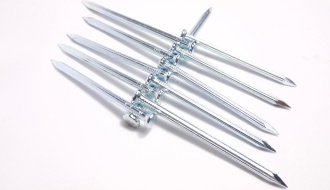
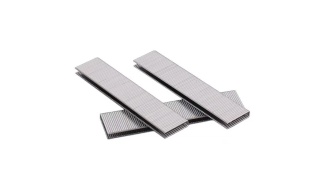
A: The distinction lies in the equipment and purpose. ST nails feature greater thickness, consist of 45# steel, and get propelled by air-powered guns for frame attachments like timber to concrete. Screws deliver a grooved hold that allows easier extraction and suits completion tasks such as plasterboard or furnishings.
Q3: Do your chipboard screws require a pilot hole?
A: For typical particle board and mild timbers, the keen self-tapping tip permits bypassing the guide hole, which conserves considerable time during work. Yet, when dealing with very firm hardwoods or placing a screw near a panel’s edge, creating a minor guide hole ensures the substance avoids cracking.

 Consult
 Whatsapp
 Leave Message
 top
top