


Repairing and Straightening Concrete Pins: Tools, Techniques & Best Practices
When you work on a construction site, few issues frustrate like discovering a container full of twisted concrete pins. This common problem disrupts the workflow for many builders. At Qinjia, we have dedicated years to producing fasteners in Hebei, and we understand precisely why these pins warp upon striking a tough barrier. Although we focus on creating a reliable supply network for our clients in North America and the Middle East, we recognize that even superior high-carbon steel can falter under improper circumstances.
Grasping the reasons behind a warped nail serves as the initial move toward ensuring your upcoming line of fasteners enters properly and remains secure. The matter extends beyond simply applying more force; it involves the principles of steel properties and the base material you encounter.
Why Do Concrete Pins Bend During Installation?
In most instances, a pin warps due to an unsuitable combination of the metal and the masonry surface. If the nail lacks a thorough heat treatment, it simply cannot withstand piercing a hardened concrete layer. We select high-carbon steel because it endures the first strike without deforming excessively.
Use of Low-Carbon Steel Without Heat Treatment
When a nail consists of inexpensive, pliable steel, it fails immediately upon facing opposition. Our concrete nails undergo a detailed heat treatment to achieve a firmness that allows penetration into brick and solid barriers. Without such precise tempering, the nail resembles a mere strand of wire, utterly unable to confront a 4000 PSI layer.
Striking the Nail at an Improper Angle
To be frank, after several hours of wielding a hammer, accuracy begins to wane. If you strike the head of a concrete pin even marginally off-center, the energy does not flow directly along the shaft. Instead, that lateral force must redirect, and it often results in warping the nail. This basic issue in mechanics leads to a damaged fastener and an irritated laborer.
Selection of Incompatible Shank Designs for Hard Surfaces
At times, the laborer chooses the incorrect option for the task. A smooth shank nail suits certain applications, but if the concrete proves especially aged and rigid, that nail may merely slide or veer away. Selecting a shank that fails to align with the firmness of your base material invites a collection of deformed steel.
Can You Straighten a Bent Concrete Pin Safely?
Workers often attempt to gently realign a warped nail with their hammer to avoid fetching a replacement. This approach appears convenient at first, yet it proves unwise in practice. Once the steel deforms, its inner composition weakens, and attempting to reshape it typically exacerbates the damage.
Risk of Material Fatigue and Snapping
Since our pins feature high-carbon composition and receive heat treatment for durability, they exhibit greater brittleness compared to typical wood nails. These pins prioritize rigidity over pliability. When you warp a hardened pin and then seek to realign it, you introduce a tension spot likely to fracture, potentially launching a shard of sharp metal through the air.
Compromised Holding Power and Structural Integrity
Even if you succeed in making it appear somewhat aligned, that nail will not secure as effectively as intended. The retention strength of a concrete nail relies on friction and the displacement of surrounding masonry. A realigned nail possesses a diminished section, so it lacks the original resistance to extraction, posing a significant hazard in load-bearing applications.
Replacement Recommendation Over Manual Repair
Ultimately, discarding the warped item and selecting a new pin proves more cost-effective and secure. We package our nails in large quantities or compact containers precisely because we anticipate occasional losses during operations. Replacing a nail requires mere moments, whereas correcting a collapsed frame due to a faulty fastener demands considerable effort.
Which Shank Type Prevents Bending and Failure?
A key factor in dodging the complication of warping involves choosing the appropriate nail variant for your particular assignment. At Qinjia, we manufacture three primary concrete nail types, and each interacts with the concrete in a distinct manner. By aligning the shank with your material, you will notice that warping occurs far less frequently.
Smooth Shank for Maximum Speed and Economy
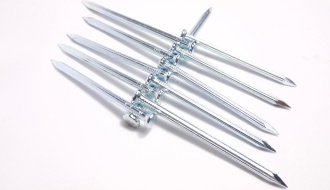
The Concrete Nails Smooth Shank serves as the standard choice for everyday use. It features a plain, uniform surface that inserts rapidly. This option suits milder brick or fresher concrete, where excessive anchoring features prove unnecessary. It remains budget-friendly and completes routine interior masonry tasks efficiently.
Grooved or Fluted Shank for Increased Surface Grip
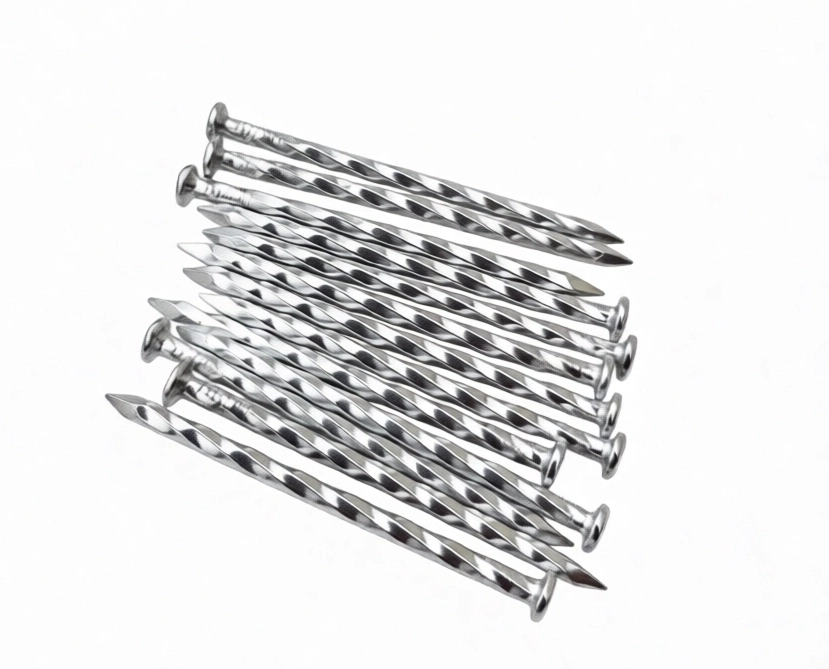
If concerns arise about the nail deviating or warping in challenging barriers, the Concrete Nails – Grooved (Fluted) Shank offers a superior alternative. The subtle vertical grooves along the nail function as guides, assisting the pin to maintain alignment during entry into the material. Moreover, these grooves provide additional contact area for the concrete to adhere, thereby enhancing retention strength substantially.
Angular Spiral Shank for Ultimate Rotational Locking
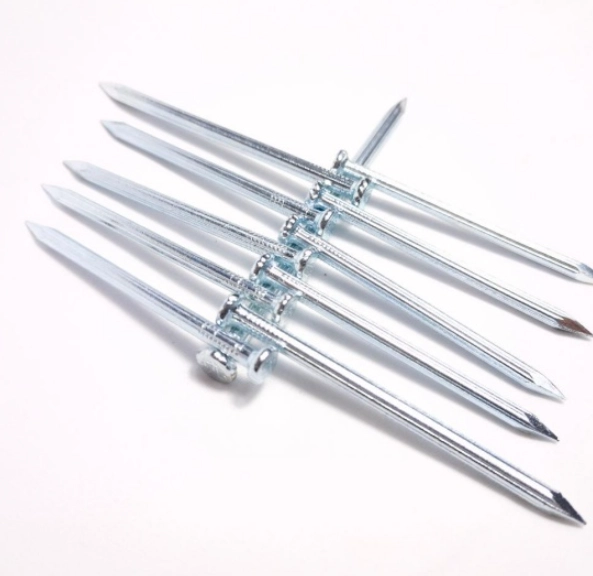
For demanding projects, opt for the Concrete Nails Angular Spiral. As you drive this nail in, its spiral configuration induces a gentle rotation, similar to a screw’s action. This mechanism establishes a firm mechanical bond that resists withdrawal effectively. If your attachment faces ongoing vibration or substantial load, this variant delivers the required performance.
How to Optimize Fastening for High-Strength Concrete?
Occasionally, the concrete demands more than a conventional hammer-and-nail method. In such scenarios, adapting your strategy becomes essential. The focus shifts from exerting greater effort to employing appropriate equipment that embeds the pin without mishap.
Utilization of Gas-Actuated Driving Systems
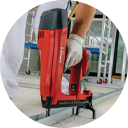
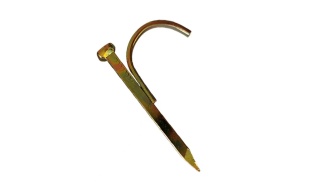
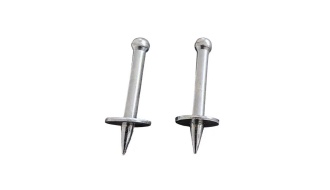
For extensive commercial endeavors, abandon the hammer entirely. Our Gas Drive Pins suit specialized guns that propel them at high velocity. The rapid impact from a gas-powered device prevents any opportunity for the nail to warp; it simply penetrates the surface directly. This method boosts productivity and reduces physical strain on workers.
Pre-Drilling Pilot Holes for Extreme Density
Regarding exceptionally unyielding concrete barriers that resemble metal, drilling a small guide hole beforehand may prove necessary. Although this adds an initial step, it offers the nail’s point a starting point to avoid glancing off the surface. This longstanding technique ensures pins enter straight when the base material resists direct insertion.
Implementation of Strict On-Site Quality Control
In our facility, we employ torque testers and salt spray equipment to verify that our screws and nails meet standards. On your site, conducting a brief inspection of incoming batches remains advisable. If you detect a nail with a dulled end or irregular coating, isolate it promptly. Relying on consistent, premium products from Qinjia allows you to minimize error corrections and maximize project completion.
What Support Does Hebei Qinjia Provide to Distributors?
We extend beyond merely dispatching containers of nails; our commitment involves ongoing partnership. Located in China’s central fastener production area, we comprehend that distributors require more than products—they need a collaborator familiar with regional demands. Whether your operations span Turkey or Australia, we assist in delivering suitable items to your clientele.
Professional OEM and Custom Packaging Services
If you aim to develop your own label, we stand ready to assist. Our comprehensive OEM services include applying your branding to packaging or adjusting formats to suit local builder preferences. From compact boxes to large pails, we provide the adaptability needed to align with your requirements.
Technical Guidance and Compatibility Recommendations
Uncertain about matching nails to specific tools? Our experts gladly offer advice. We supply detailed specifications—such as lengths ranging from 1″ to 8″ and diameters from 2.0mm to 5.5mm—so you fully understand your offerings. Additionally, we provide suggestions on compatibility with various pneumatic or gas-operated devices.
Transparent Ordering and Logistics Workflow
We strive to simplify the transactional aspects. Orders generally involve a 30% initial payment, with the balance due prior to container loading. We furnish complete documentation—including inspection certificates and inventory lists—to eliminate uncertainties upon arrival at your destination port.
FAQ
Q1: Can I use regular wood nails for concrete if I hit them hard enough?
A: Absolutely not. Wood nails utilize softer steel composition. They disintegrate or warp instantly against a concrete barrier, potentially causing injury like metal fragments to the eye. For masonry applications, you require the high-carbon, heat-treated variants we produce.
Q2: Do these concrete nails rust if I use them outside?
A: They might if limited to plain or polished steel. However, for exterior work, select our galvanized or blued versions. The zinc layer serves as a protective barrier against humidity, delaying corrosion for an extended period.
Q3: What’s the main difference between an ST nail and a regular concrete nail?
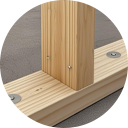
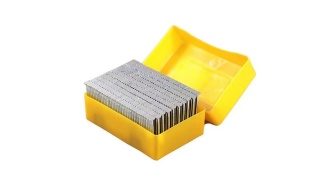
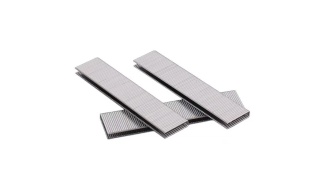
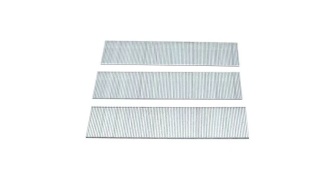
A: A regular concrete nail typically requires hammer driving. In contrast, an ST nail features greater thickness and suits pneumatic nail guns. You would employ an ST nail for rapid attachment of wood studs to concrete walls during large-scale framing tasks.

 Consult
 Whatsapp
 Leave Message
 top
top