

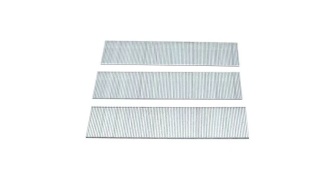

How to Choose the Right Nail: Concrete Nails or Masonry Nails
When you’re standing on a job site in the middle of a framing project, the last thing you want is a fastener that snaps or, worse, just slides right back out of the wall. At Qinjia, we’ve spent years working with distributors and contractors from the Middle East to Australia, and if there’s one thing we’ve learned, it’s that the “right” nail depends entirely on what you’re hitting.
Concrete isn’t just concrete—sometimes it’s soft brick, sometimes it’s reinforced high-strength slabs. Choosing between a smooth, spiral, or angular shank isn’t just about looks; it’s about making sure your work stays put for the next twenty years.
Why Should You Choose High-Carbon Steel Concrete Nails?
Before you even look at the shape of the nail, you’ve got to look at what it’s made of. Most “cheap” nails you find in a local hardware store might look the part, but they lack the backbone needed for masonry. Here is why high-carbon steel is the industry gold standard.
Superior Hardness through Heat Treatment
We use high-carbon steel that goes through a rigorous heat treatment process. This isn’t just a buzzword—it’s what gives the nail its “bite.” Without proper tempering, a nail will simply buckle the moment it hits a hard concrete surface. Our nails are built to be stiff enough to penetrate without the embarrassing “U-shape” bend half-way through the drive.
Versatile Corrosion Resistance Options
Let’s be real: nobody likes rust streaks running down a clean wall. Depending on where you’re building, you can pick from zinc plating, bluing, or phosphating. If you’re working indoors on a dry partition, bluing works great and saves a bit of cash. But if you’re hitting an exterior brick wall where rain is a factor, galvanized (zinc-plated) is the only way to go to keep things looking professional.
Exceptional Holding Power in Masonry
The whole point of a concrete nail is to stay where you put it. Because of the high carbon content, these nails create a massive amount of friction against the concrete or brick. They don’t just sit in the hole; they wedge themselves in there so tight that you’d have a hard time getting them out even with a crowbar.
What are the Benefits of Smooth Shank Concrete Nails?
The smooth shank is the classic. It’s the go-to for most guys on-site because it’s predictable and fast. If you’re not dealing with extreme structural loads or high-vibration areas, this is usually your best bet for getting the job done without overcomplicating things.
Effortless Penetration for General Tasks
Smooth Shank Concrete Nails are exactly what they sound like—no frills, just a straight, sharp point. Because there are no ridges to catch on the material, they drive in much faster and cleaner than other types. This is a huge plus when you have a thousand nails to get through before lunch.
Cost-Effective Fastening Solutions
If you are managing a large-scale project, every cent per box adds up. Smooth nails are the most economical choice we offer. They provide plenty of “grip” for standard wood-to-concrete connections without the extra manufacturing cost of rolling threads or spirals onto the shank.
Wide Range of Standard Sizes
We keep a massive variety in stock, from short 1-inchers for thin trim work up to heavy-duty 8-inch spikes for thicker timber. Whatever the thickness of your lumber or the depth of your substrate, we’ve usually got the exact length sitting in the warehouse ready to ship.
When Should You Use Angular Spiral Shank Nails?
Sometimes smooth just doesn’t cut it. If you’re working with “green” concrete that’s still curing, or if you’re nailing into older, crumbly brickwork, you need something that won’t just pull out the moment someone leans on the frame. That’s where the Angular Spiral Shank comes into play.
Increased Frictional Resistance
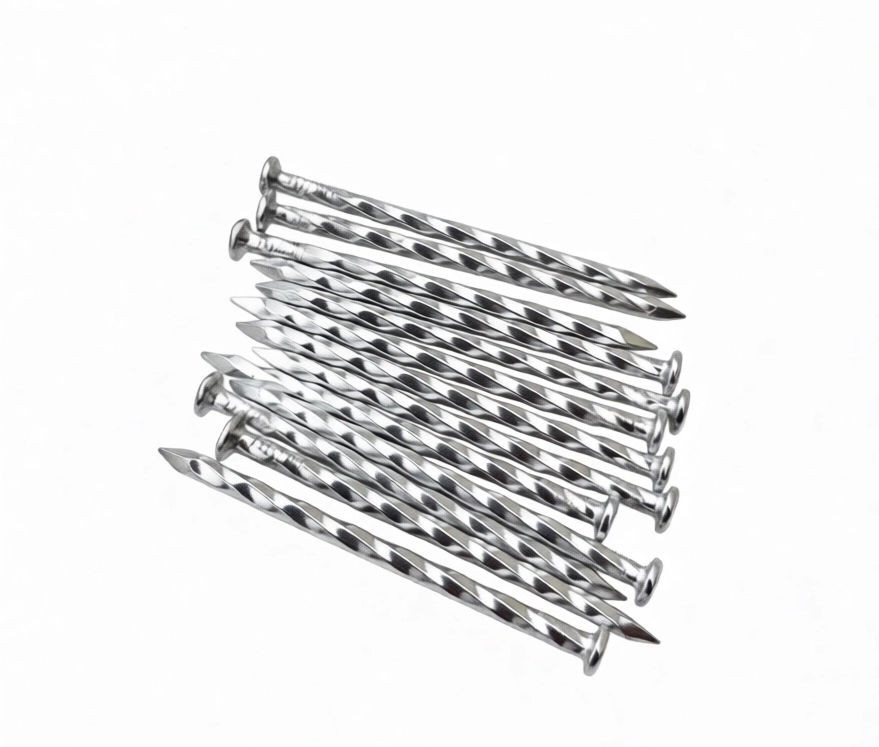
The angular spiral isn’t just a decoration. These grooves increase the surface area of the nail. Think of it like a mountain climber using more of their hands and feet to stay on a cliff. The concrete fills into those little angular gaps, creating a mechanical lock that a smooth nail just can’t match.
Prevention of Loosening over Time
In buildings where there is a lot of movement—maybe near a heavy road or in an industrial setting with vibrating machinery—smooth nails can eventually “walk” their way out. The angular design resists this back-and-forth movement, keeping your base plates and studs tight against the wall for the long haul.
Optimized for Harder Substrates
When you’re dealing with aged, high-density concrete, a smooth nail might actually bounce back or fail to grab. The angular edges help the nail “cut” into the harder masonry just enough to get a solid seat, making it a reliable choice for renovation projects in older buildings.
How do Spiral Shank Nails Improve Performance?
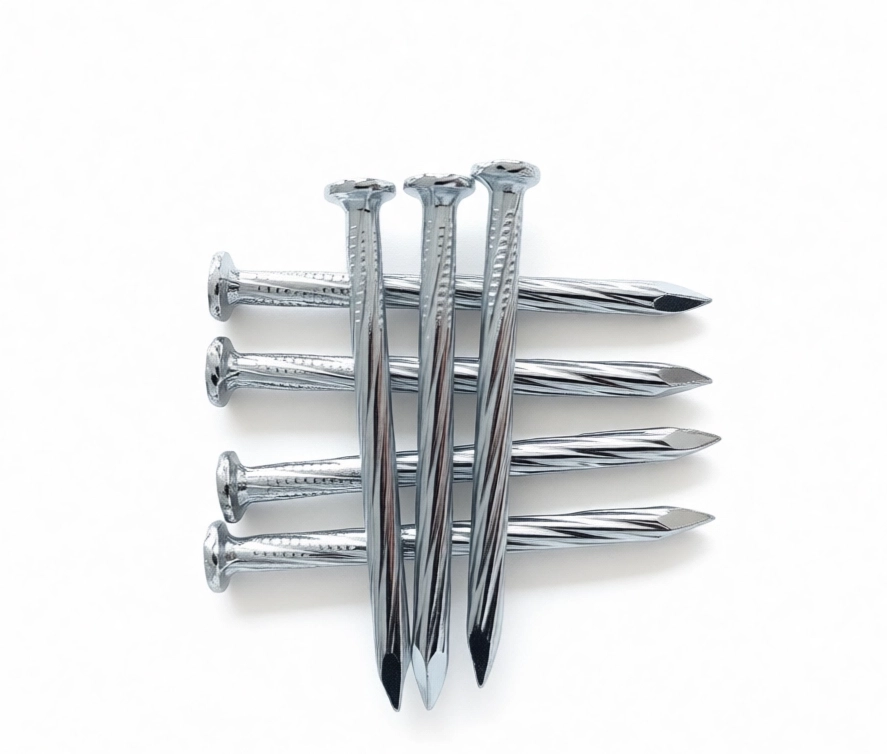
Now, if you want the absolute “king” of holding power, you go for the Spiral Shank Concrete Nail. These are often confused with screws, and for good reason—they work on a similar principle, but you drive them in with a hammer or a gun instead of a driver.
Threaded Grip for Maximum Security
The spiral design means the nail actually rotates slightly as it enters the concrete. This creates a threaded path inside the masonry. It’s about as close as you can get to a permanent bond without using epoxy or expansion bolts. Once these are in, they are staying in.
Reduced Risk of Material Cracking
One of the biggest headaches in masonry work is blowing out a chunk of concrete or cracking a brick right at the end of the job. Because the spiral shank “winds” its way into the material, it exerts a different kind of pressure than a smooth nail, which often helps prevent those ugly cracks in more brittle materials.
Professional Grade Structural Applications
For structural framing—like when you’re securing heavy-duty wood studs to a concrete foundation—this is the professional’s choice. It’s the “insurance policy” of fasteners. You use these when you don’t want to have even a tiny doubt about the structural integrity of the connection.
How Does Qinjia Ensure Professional Product Quality?
At the end of the day, a nail is only as good as the factory it came from. You can have the best design in the world, but if the heat treatment is off by a few degrees, you’re just selling scrap metal. Here is how we make sure every box of Qinjia nails actually does its job.
Comprehensive Full-Process Inspection
We don’t just check the nails at the end. We monitor everything from the moment the raw wire arrives at our Hebei facility until the boxes are loaded into the container. We do random spot checks during production to catch any issues before they become a “batch” problem.
Advanced Testing Equipment Utilization
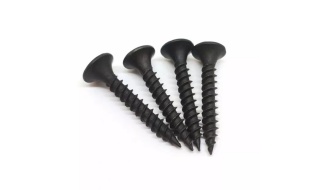
We’ve invested in the heavy stuff: thread speed testers for our drywall screws and handheld torque testers to make sure our fasteners don’t snap under pressure. We also run salt spray tests to prove our galvanized coatings can actually handle a bit of weather without turning orange in a week.
Adherence to International Standards
We aren’t just making nails for the local market. Our products are exported to the USA, the Middle East, and beyond. This means we work to international standards and are more than happy to coordinate with third-party inspectors like SGS or BV if your project requires that extra level of certification.
FAQ
Q1: Can I use your concrete nails in high-strength reinforced concrete?
A: Yes, you definitely can, but we’d suggest going with our high-carbon, heat-treated models specifically. If the concrete is particularly “hot” (high PSI), a spiral shank will give you a much better success rate than a basic smooth one.
Q2: Do these nails rust if I use them for an outdoor deck plate?
A: If you use the polished/black versions, they might eventually show some oxidation. For anything outdoors, you really want to ask for our zinc-plated (galvanized) finish. It adds that layer of protection needed to fight off moisture.
Q3: What’s the main difference between your ST nails and these concrete nails?
A: The main thing is how you “fire” them. Concrete nails are usually hammered in by hand. ST nails are much thicker and made specifically for pneumatic nail guns. If you’re doing a whole house of framing, you use ST nails with a gun to save your arms. If it’s a quick fix, concrete nails and a hammer are the way to go.

 Consult
 Whatsapp
 Leave Message
 top
top