

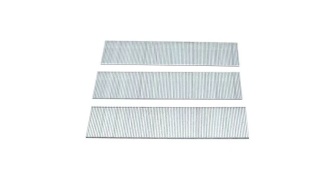

Installing Concrete Pins: Best Practices for Strong and Secure Results
Getting a nail to stay put in solid concrete isn’t just about swinging a hammer harder. It’s a mix of using the right steel, the right surface grip, and a few “trade secrets” that keep the job from falling apart six months down the line. At Qinjia Products, we’ve spent years watching how different fasteners behave in the field, from humid construction sites in Southeast Asia to high-rise projects in the Middle East.
Why Is Choosing the Right Shank Design Crucial for Concrete Applications?
You might think a nail is just a nail, but when you’re dealing with masonry, the “skin” of that nail—the shank—does all the heavy lifting. If the shank is too smooth, it might slide out; if it’s too brittle, it snaps. Here is how the design actually changes the outcome of your build.
High Carbon Steel Construction for Maximum Penetration
Standard nails just won’t cut it for stone or brick. Our concrete pins use high-carbon steel that goes through a strict heat-treatment process. This makes them “hard” enough to punch through a concrete wall without turning into a pretzel the moment they hit resistance.
Grooved Shank for Increased Surface Friction
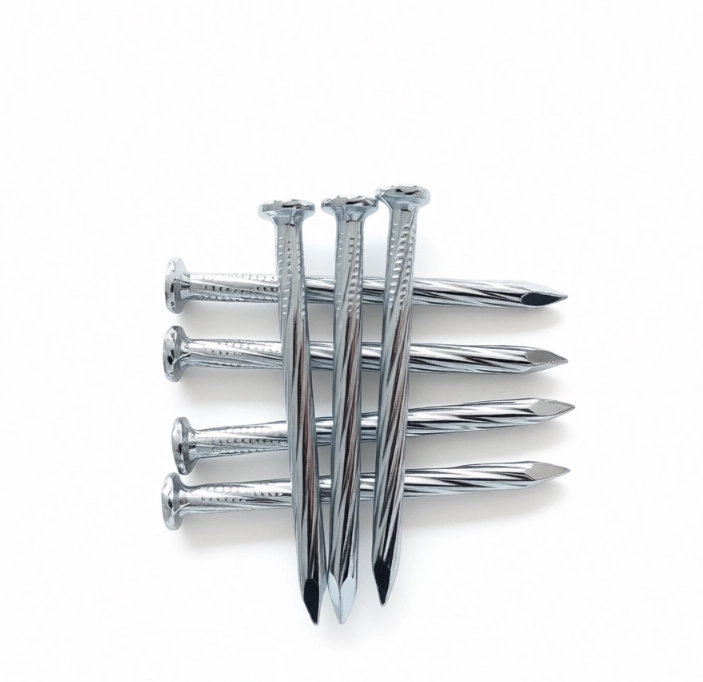
The Concrete Nails – Grooved (Fluted) are our go-to for most contractors. Those vertical channels—or flutes—cut into the concrete as you drive the nail in. This creates a ton of friction, meaning once it’s in, it really doesn’t want to come back out.
Specialized Spiral Patterns for Superior Withdrawal Resistance
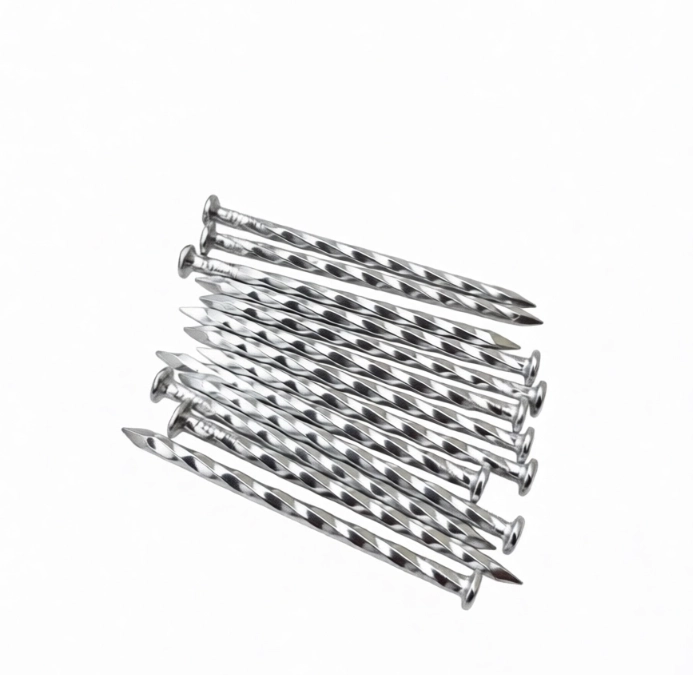
If you’re worried about vibration or weight pulling the nail out, you look at Angular Spiral or Spiral designs. These act a bit like a screw; they rotate slightly as they enter the substrate. This mechanical “lock” is a lifesaver for overhead work or spots where the structure might shift a bit over time.
How Do Qinjia Concrete Nails Ensure Long-Term Durability?
It’s one thing to get a nail into the wall; it’s another thing for it to still be holding strong ten years later when the building has settled. Durability comes down to what happens after the nail is manufactured.
Advanced Surface Treatments for Corrosion Resistance
Nobody wants to see rust bleeding through a finished wall. We offer different finishes like zinc plating, bluing, and phosphating. If you’re working indoors where it’s dry, bluing is fine, but for anything that might see a bit of moisture, that zinc coating is your best friend to stop rust in its tracks.
Strict Quality Control from Raw Material to Shipment
We don’t just “hope” the nails are good. From the moment the raw steel arrives to the final box being taped shut, we run checks. We actually use torque testers and speed tests to make sure the threads and points do what they’re supposed to do. If a batch doesn’t meet the hardness standard, it never leaves the floor.
Optimal Hardness and Toughness Balance
There is a sweet spot in metalworking. If a nail is too hard, it’s brittle like glass and will snap if you hit it sideways. If it’s too soft, it just bends. Our heat-treatment recipes are tweaked so the nails have enough “give” to handle the impact of a hammer or gas gun while staying stiff enough to pierce the wall.
What Are the Best Practices for Efficient Installation?
You could have the best nail in the world, but if you’re using a light household hammer on a 3-inch fluted pin, you’re going to have a bad day. Efficient installation is about matching the muscle to the metal.
Proper Tool Selection for Different Fastener Types
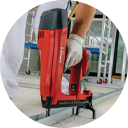
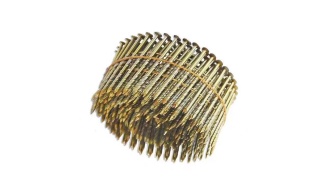
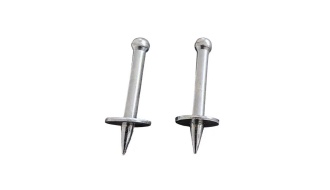
For small DIY jobs, a heavy framing hammer is fine for concrete nails. But if you’re a pro doing a whole floor of baseboards, you’re going to want our Gas Drive Pins and a pneumatic gun. It’s way faster, saves your shoulders, and the depth of drive is much more consistent.
Accurate Sizing Based on Substrate Thickness
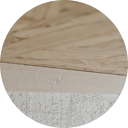
A common mistake is picking a nail that’s too short. You generally want at least 1/2 to 3/4 of an inch of the nail to be inside the actual concrete, not just the wood you’re attaching. We make lengths from 1 inch all the way up to 8 inches, so there’s no excuse for “guessing” the size.
Pre-Installation Inspection of Concrete Strength
Old concrete gets incredibly hard—sometimes harder than the pins if they aren’t top-tier. Before you start hammering away, check if you’re dealing with standard brick or high-strength reinforced concrete. If it’s the tough stuff, you’ll definitely want our high-carbon, heat-treated models to avoid a box of wasted, bent nails.
Which Applications Benefit Most from Qinjia Fastening Solutions?
Our warehouse is full of different shapes and sizes because every job has a different “pain point.” A furniture maker needs something totally different than a guy building a warehouse.
Structural Bonding of Wood to Concrete
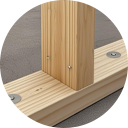
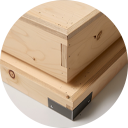
When you’re putting up furring strips or wood studs, our ST Nails or grooved concrete nails are the heavy hitters. They bridge the gap between organic wood and inorganic stone, making sure that frame isn’t going anywhere.
Secure Mounting of Electrical and Mechanical Systems
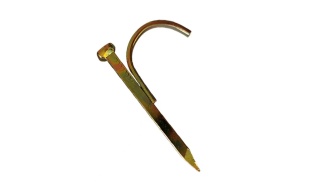
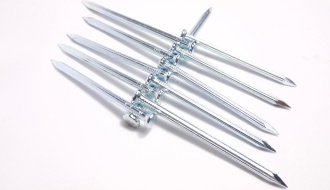
Keeping wires and pipes from sagging is a safety issue, not just an aesthetic one. Our Pipe Hook Nails come with a built-in plastic clip. You just hammer the steel pin into the masonry, and the clip holds the conduit or cable tight against the wall—super simple, super fast.
Reliable Interior Partition Wall Construction
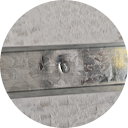
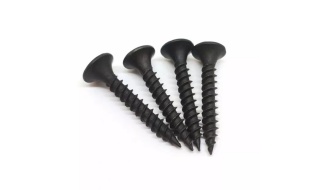
For the dryliners out there, we’ve got the Drywall Screws with those sharp bugle heads. Whether you’re screwing into wood studs (coarse thread) or light steel tracks (fine thread), these are designed to sit flush so your finishing crew doesn’t have to deal with “pop-outs” later.
How Can Global Distributors Optimize Their Supply Chain?
We know that for our partners in places like the USA, Australia, or Turkey, it’s not just about the product—it’s about the paperwork and the shipping. A late shipment is just as bad as a broken nail.
Flexible OEM and Custom Packaging Options
If you want your own brand on the box, we can do that. We offer everything from small 1kg boxes to bulk sacks and plastic wraps. We’ve found that many of our clients prefer specific “counter-ready” packaging for their retail shops, and we’re happy to accommodate that.
Comprehensive Quality Documentation for Compliance
Customs can be a headache if your paperwork is messy. We provide all the material certificates, salt spray reports, and packing lists you need to prove the quality to your local regulators. We also welcome third-party inspectors like SGS or BV to come in and check our work before it ships.
Streamlined Logistics and One-Stop Sourcing
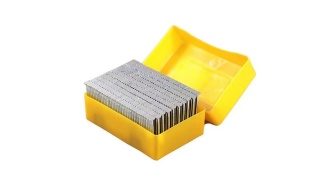
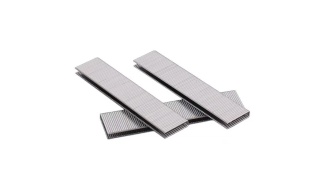
You don’t have to fill a whole container with just one type of nail. Many of our customers do “mixed containers”—maybe some concrete nails, some staples, and some drywall screws all in one go. We can work with your regular shipping guy or introduce you to our trusted freight partners to get the goods to your port without the drama.
FAQ
Q1: Can I use your ST nails for framing a house with wood-to-wood connections?
A: Actually, we don’t recommend that. ST nails are quite thick and are really meant for attaching wood or light steel to concrete. If you use them for wood-on-wood, they’re likely to split the timber. For finishing work on wood, you’re better off with our Brad Nails.
Q2: Do your concrete nails rust if I use them for an outdoor patio project?
A: They can if you use the “bright” or “blued” ones. For anything outdoors, you definitely want to go with our Galvanized (zinc-plated) finish. It’s got that extra layer of protection against rain and humidity that keeps the nail from eating away over time.
Q3: What’s the main difference between using a hammer with concrete nails and using a gas nailer?
A: It mostly comes down to volume and energy. Hammers are fine for a few nails here and there, but they can be imprecise and slow. Gas drive pins are for high-speed production—they penetrate deeper more consistently and are way easier on your wrists if you have 500 pins to drive in a day.

 Consult
 Whatsapp
 Leave Message
 top
top