


How Self-Tapping vs Self-Drilling Screws Impact Assembly Efficiency and Costs
If you’ve been in the construction or furniture game for a while, you know that the “cheapest” screw on the invoice is rarely the cheapest one on the job site. We see it all the time: a contractor saves a few cents on a bulk order of fasteners, only to lose hundreds of dollars in labor when heads start snapping or threads won’t bite into the concrete. At Qinjia, we’ve spent years watching how the right hardware makes or breaks a project’s timeline across markets from North America to Southeast Asia.
Why Choosing the Right Screw Matters for Project Costs?
Most people think of screws as a commodity, but in reality, they are a massive variable in your profit margin. If your crew is struggling with poor-quality fasteners, they’re moving slower. It’s that simple.
Impact of Installation Speed on Labor Expenses
In a big drywall or framing job, every second you shave off a single drive adds up to hours by the end of the week. If a screw isn’t sharp enough or the torque isn’t consistent, your workers end up pre-drilling or fighting the material. Using high-carbon steel fasteners that actually bite on the first spin means the job gets done faster. We focus on heat-treated options because they don’t deform under pressure, letting your team move from one stud to the next without stopping to clear a jammed gun.
Material Waste Reduction Through Precise Fastening
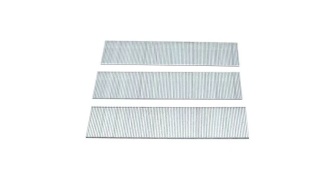
There is nothing more frustrating than splitting a piece of expensive timber or cracking a piece of gypsum board because the screw was too aggressive or the shank was too thick. Using specialized fasteners like 18GA or 16GA Brad nails for finishing work prevents that splitting. When you use the right gauge and thread for the specific material—whether it’s wood-to-wood or metal-to-concrete—you stop throwing money in the trash bin via ruined materials.
Long-term Maintenance Savings From Quality Coatings
You don’t want a call from a client two years later because “rust streaks” are running down their walls. Whether it’s black phosphated, zinc-plated, or blued finishes, the surface treatment is what keeps the structure sound. We offer various coatings because we know a job in a humid Southeast Asian coastal town needs more protection than one in a dry indoor warehouse. Investing in the right finish now means you aren’t paying for repairs later.
How Do Qinjia Chipboard Screws Optimize Wood Assembly?
For those working in furniture, cabinetry, or general woodworking, the chipboard screw is your bread and butter. It’s got to be tough, but it also has to be smart enough to handle man-made boards without blowing them apart.
High Hardness Steel Ensuring Quick Penetration
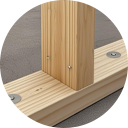
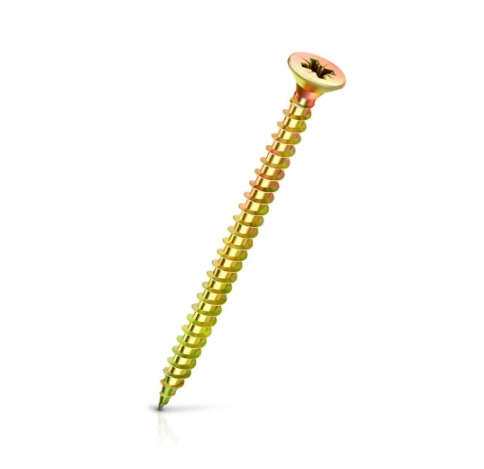
Our chipboard screws aren’t just “metal.” They are engineered with a specific hardness level that allows them to cut through dense particle boards and hardwoods without needing a pilot hole in many cases. This “self-tapping” nature is thanks to our strict heat-treatment process. It’s about getting that screw to go in straight and stay there.
Coarse Thread Design for Strong Holding Power
Chipboard is essentially glued-up wood bits, so it doesn’t have the natural grain “grip” of solid oak. You need a deep, coarse thread to really grab onto those fibers. Our design ensures that once the screw is in, it’s not backing out. This prevents the “wobbly chair” syndrome in furniture manufacturing and keeps joints tight for years.
Versatile Applications in Furniture and Joinery
Whether you’re assembling flat-pack cabinets or doing custom joinery, these screws are the go-to. Because we offer OEM services and custom packaging, we can match the screw specs—from length to head type—to exactly what your assembly line requires. It’s about having a fastener that fits the workflow, not making the workflow fit the fastener.
What Makes Drywall Screws Essential for Interior Systems?
Drywall work is all about volume and finish. You’re driving thousands of screws, and every single one needs to sit perfectly flush so the finishers can do their job without cursing your name.
Specialized Bugle Heads for Flush Finishes
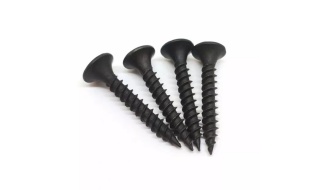
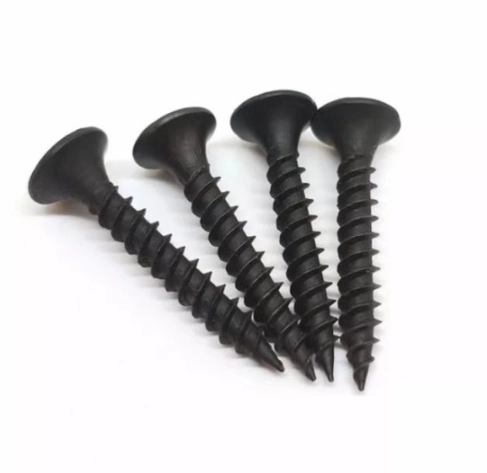
The “Bugle Head” is a game changer for interior partitions. It’s designed to sink into the gypsum board just enough to be hidden by mud, but not so deep that it tears the paper face. If the paper tears, the screw has no holding power. Our drywall screws are shaped to hit that “sweet spot” every time.
Efficiency Gains From Sharp and Fine Threads
We offer two main types: coarse threads for wood studs and fine threads for light steel tracks. Using a fine-thread screw on a steel stud is the difference between a 2-second drive and a 10-second struggle. The sharp points are designed to pierce the metal track instantly, which saves a massive amount of wear and tear on your power tools and your installers’ wrists.
Compatibility With Diverse Stud and Track Systems
Modern construction uses a mix of materials. Our M3.5 to M4.2 diameter range covers almost every standard partition or ceiling system you’ll run into. Having a reliable supply of these in bulk—whether you need black phosphated for standard use or zinc-plated for damp areas—keeps the supply chain moving.
How Does Manufacturing Quality Affect On-site Efficiency?
You can have the best design in the world, but if the factory has a “bad day,” your project suffers. At Qinjia, we treat the manufacturing process like a science because we know the stakes on a construction site.
Stringent Quality Control From Material to Shipping
We don’t just check the final box. Our quality control starts with the raw material and continues through every stage: forming, heat treatment, and coating. Random spot checks happen constantly because a single batch of brittle screws can ruin a contractor’s reputation. We even welcome third-party inspections from groups like SGS or BV to prove we aren’t just talking the talk.
Advanced Testing Equipment for Torque and Hardness
We’ve got the gear to back up our claims. Our lab uses screw torque testers and speed test machines to make sure our drywall screws actually perform under real-world pressure. If a screw can’t handle the torque of a high-speed driver, it doesn’t leave our floor.
Consistency in Dimensions Reducing Tool Jamming
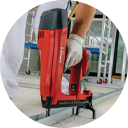
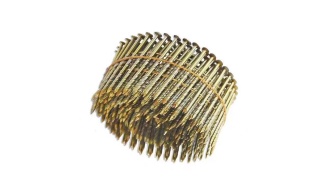
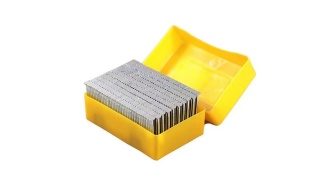
If you’re using pneumatic nailers or auto-feed screw guns, consistency is everything. A nail that’s a fraction of a millimeter too thick will jam your ST nail gun or Brad nailer. We maintain tight tolerances on our 18GA and 16GA lines to ensure they feed smoothly, so your team isn’t spent unjamming tools every twenty minutes.
Can Customized Solutions Further Reduce Assembly Costs?
Every market is different. What works for a residential builder in Australia might not be the best fit for a major infrastructure project in the Middle East. That’s where the “human” side of our business comes in.
Tailored OEM Services for Specific Engineering Needs
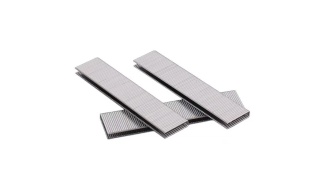
Sometimes a “standard” screw just doesn’t cut it. Whether you need a specific head marking, a unique length, or a specialized coating for extreme environments, our OEM and ODM support allows us to tweak the formula. We can produce samples and do custom “C-ring” or staple sizes to match your specific machinery.
Integrated Supply Chain for Reliable Batch Delivery
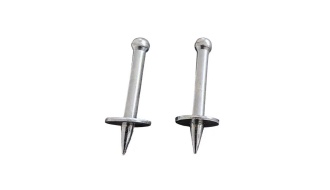
We support multi-category container loading, which is a huge win for medium-sized distributors. You don’t have to buy a whole container of just one type of screw. You can mix your Concrete nails, ST nails, and Drywall screws into one shipment. This keeps your inventory lean and your cash flow healthy.
Technical Guidance to Prevent Common Fastening Errors
We don’t just ship boxes; we provide the “how-to.” We offer usage guidance and compatibility advice to make sure you aren’t using a Brad nail where an ST nail is required for structural support. Getting the right technical advice before the first nail is driven is the ultimate way to keep your costs down.
FAQ
Q1: Can I use ST nails for framing a wooden house?
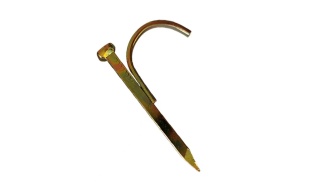
A: Actually, no. ST nails are specifically designed with a thicker shank and high hardness to fix wood or light steel studs into concrete or brick walls. For wood-to-wood framing, they are usually too thick and might split the timber. You’re better off with standard framing nails or screws for that.
Q2: What is the real difference between a “Self-Tapping” and a “Self-Drilling” screw?
A: It’s a common mix-up! A self-tapping screw (like our drywall or chipboard screws) creates its own thread but usually needs a sharp point to start or a pilot hole in very hard materials. A self-drilling screw has a tip that looks like a drill bit and can actually drill through thicker metal without any help.
Q3: Why should I care about “Heat Treatment” for concrete nails?
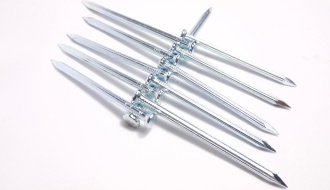
A: If a concrete nail isn’t heat-treated properly, it will either bend like a noodle or shatter like glass when you hit it with a hammer or a gun. Our high-carbon steel nails go through a rigorous heat-treatment process to ensure they are hard enough to penetrate masonry but tough enough not to snap.

 Consult
 Whatsapp
 Leave Message
 top
top