


Concrete Nails vs. Wood Nails: Which Is Stronger
When you’re standing in the hardware aisle or looking through a supplier catalog, a nail might just look like a piece of metal with a pointy end. But if you’ve ever tried to drive a standard wood nail into a basement wall, you know exactly what happens: it bends, the head pops off, or it just bounces back at you.
At Qinjia, we’ve spent years manufacturing fasteners for markets from North America to Southeast Asia. We see pros making these choices every day. Let’s break down why concrete nails are the heavyweights of the fastening world and how to pick the right one for your job.

Why Is Material Composition the Key to Strength?
You can’t just take a regular nail and call it a day when dealing with masonry. The secret sauce is in what the nail is actually made of and how it’s treated before it hits the box.
High-Carbon Steel vs. Standard Low-Carbon Steel
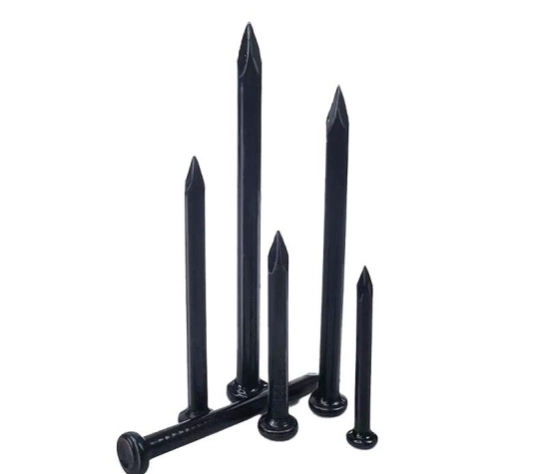
Wood nails are usually made from low-carbon steel because wood is flexible; the nail needs to be able to “give” a little as the wood swells or shrinks. But concrete doesn’t move. To penetrate a stone-hard surface, our concrete nails are forged from high-carbon steel. This material gives the nail the “backbone” it needs to stay straight under heavy hammer blows.
Specialized Heat Treatment Processes
Raw high-carbon steel is good, but heat treatment is what makes it professional grade. At Qinjia, we put these nails through a rigorous quenching and tempering process. This changes the molecular structure of the metal, making it incredibly hard but not brittle. If a nail is too hard without the right tempering, it snaps like glass; our process ensures it has the “toughness” to drive deep into 45# steel-grade applications or hard brick.
Superior Holding Power in Dense Substrates
Think about how a wood nail works—it pushes wood fibers aside, and those fibers squeeze back to hold it in place. Concrete doesn’t have fibers. It has a crystalline structure. A concrete nail has to be strong enough to create its own path and then stay there through sheer friction and mechanical fit. In our testing labs, we use torque and hardness testers to make sure that once these are in, they aren’t coming out without a fight.
How Do Different Shank Designs Impact Performance?
Once you have the right metal, you have to look at the shape. The “shank”—the long part of the nail—is where the real engineering happens. We offer three main types at Qinjia, and each one changes how the nail behaves once it leaves your hammer or gun.
Angular Spiral Nails for Maximum Grip
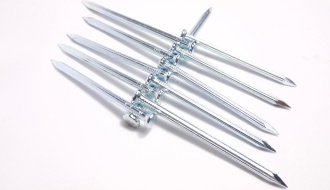
Our Concrete Nails Angular Spiral are the go-to for high-stress jobs. The “angular” part means the twists have sharp edges. As you drive this nail in, it actually rotates slightly, almost like a screw. This creates a massive amount of surface area contact. If you’re working with older, cured concrete that’s notoriously difficult to grip, this is the one you want. It’s about as close as you can get to a permanent bond without using epoxy.
Spiral Nails for Versatile Construction
The Concrete Nails Spiral is your all-rounder. It has a smoother twist than the angular version, which makes it a bit easier to drive in while still offering way more “pull-out” resistance than a smooth nail. We see a lot of these used in general masonry and brickwork where you need speed but can’t compromise on the hold.
Smooth Nails for Standard Masonry Tasks
Sometimes, simple is better. Our Concrete Nails Smooth are exactly what they sound like. They are the easiest to drive and work great for softer concrete or mortar joints between bricks. If you’re doing a quick job and the load isn’t extreme, these are a cost-effective way to get it done without over-engineering things.
Are Concrete Nails More Durable in Harsh Environments?
Strength isn’t just about not breaking; it’s about lasting. A nail that’s strong today but rusts away in two years isn’t actually strong. This is where surface treatment comes into play, especially for outdoor projects.
Zinc Plating and Anti-Rust Coatings
Concrete holds moisture, and moisture is the enemy of steel. We offer several finishes, including electro-galvanized (zinc), bluing, and specialized anti-rust coatings. The zinc layer acts as a sacrificial shield—it corrodes so the steel doesn’t have to. This is huge for outdoor walls or projects in humid climates like Southeast Asia or the Middle East where we ship regularly.
Resistance to Bending and Shear Forces
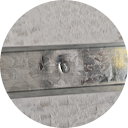
Shear force is that “sideways” pressure—like a heavy shelf pulling down on a nail in the wall. Because of the thicker diameter and the 45# steel we use in products like our ST nails, these fasteners can handle a lot of weight hanging off them without sagging or snapping.
Long-Term Stability in Upholstery and Frames
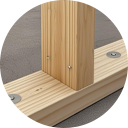
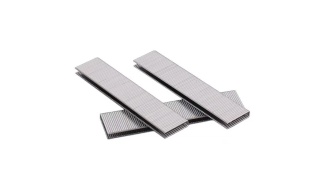
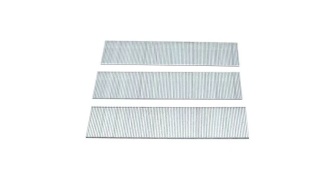
It’s not just about the big nails. Even our smaller fasteners, like ST Nails or Brad Nails, are designed for specific structural roles. While Brad nails are for the pretty “finishing” work where you want the nail to be invisible, ST nails are the “bones” that hold wood or light steel studs to concrete walls. They keep the whole structure stable for the long haul.
Which Tooling Best Complements These Fasteners?
You can have the best nail in the world, but if you’re using the wrong tool, you’re going to have a bad time. The “strength” of the connection also depends on how cleanly the nail is driven.
Traditional Manual Hammering Methods
For most of the concrete nails we’ve talked about—smooth, spiral, and angular—a good old-fashioned hammer is the standard. It’s simple, but it requires a bit of skill to hit it straight every time. If you’re just putting up a few hooks in a garage, this is all you need.
High-Efficiency Pneumatic ST Nailers
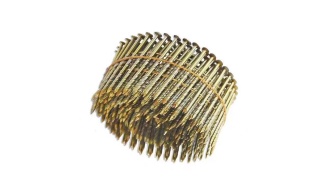
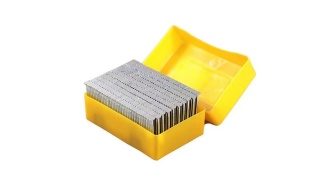
If you’re a contractor doing a whole basement or a commercial partition, you aren’t using a hammer. That’s where ST Nails come in. These are designed for pneumatic (air-powered) guns. They give you massive speed and consistent depth, which is vital for securing wood studs to concrete floors without the nail sticking out or going in too deep.
Gas-Actuated Systems for Instant Fastening
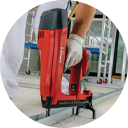
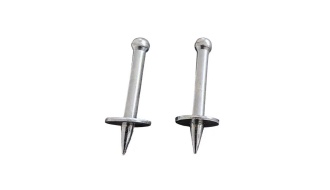
For the absolute fastest work, we produce Gas Drive Pins. These don’t even need an air compressor; they use a small gas fuel cell to blast the pin into steel or concrete. It’s a specialized system, but if time is money on your job site, it’s the way to go.
How Should You Choose the Right Fastener for Your Project?
At the end of the day, picking the “strongest” nail is about matching the fastener to the reality of your job site. A nail that’s too strong for the material might crack it, and a nail that’s too weak will just fail.
Assessing the Hardness of the Base Material
Before you buy, know what you’re hitting. Is it “green” concrete (fresh) or 50-year-old cured concrete? For the hard stuff, always go with our high-carbon, heat-treated models. If it’s a softer brick, a smooth shank might be plenty.
Matching the Shank Type to the Load Requirement
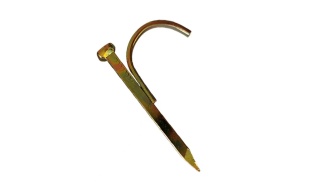
If you’re hanging something heavy, go with the Angular Spiral. The extra grip is worth the extra effort to drive it in. If you’re just fixing a thin piece of trim or a pipe hook nail for some cabling, you can go with something simpler.
Following Timelessfastener’s Quality Standards
We don’t just ship boxes and hope for the best. Every batch goes through random sampling and factory inspection. Whether you need a MTC or a third-party report from SGS, we make sure that what you’re putting into your walls is actually as strong as we say it is.
FAQ
Q1: Can I use wood nails in concrete if I drill a pilot hole first?
A: Honestly, it’s not a great idea. Wood nails are made of softer steel. Even with a pilot hole, the nail might bend or, worse, it won’t have the grip needed to stay secure. Use a dedicated concrete nail—it’s cheaper than fixing a failed project later.
Q2: Do concrete nails rust faster because they are in masonry?
A: Concrete can actually hold moisture against the nail. That’s why we highly recommend our galvanized or blued finishes for any wall that might get damp. If it’s an outdoor project, definitely go for the galvanized option.
Q3: What’s the main difference between an ST nail and a Gas Drive Pin?
A: It’s mostly about the tool. ST nails are for air-powered pneumatic guns. Gas Drive Pins use a gas-powered gun that doesn’t need a hose, making it more portable and usually a bit more powerful for thick steel or heavy concrete.

 Consult
 Whatsapp
 Leave Message
 top
top